Autoestrada para o céu

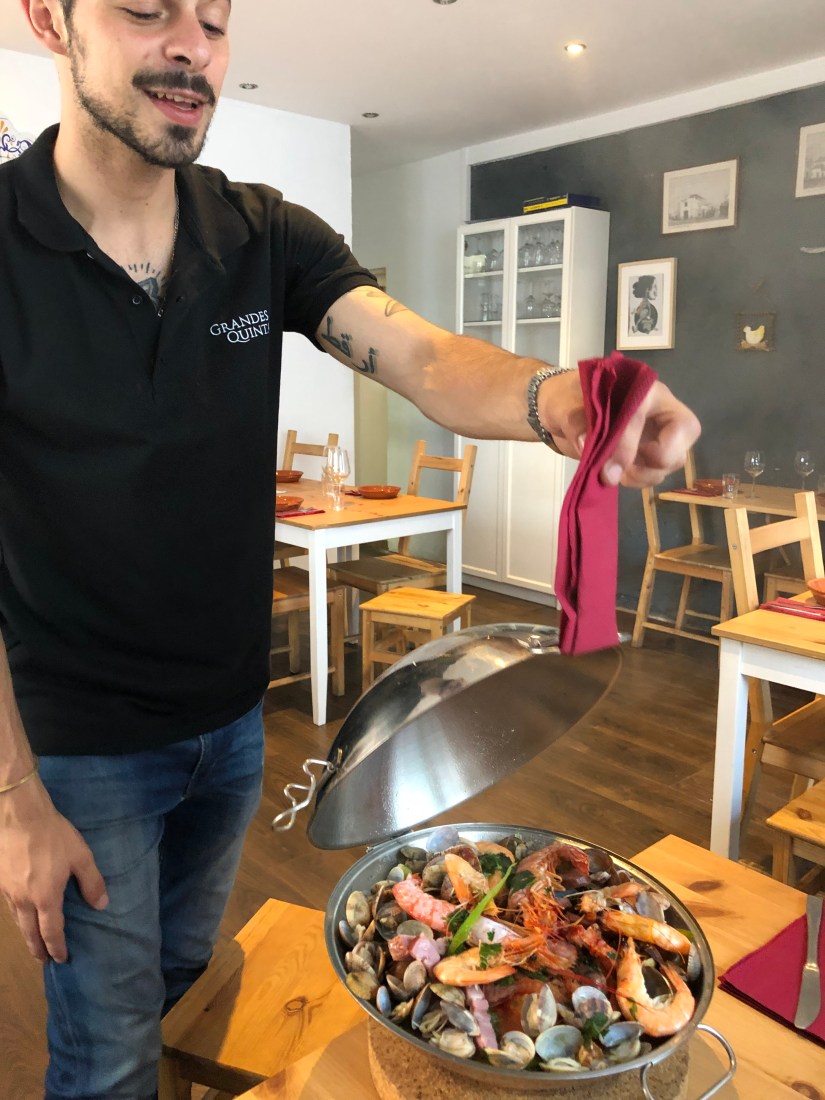
Our evening in Faro began, as we had hoped, with the cataplana, in this case Cataplana à Algarvia, a hot mess of clams, shrimp of various sizes, bacon, pork, onions, tomatoes, and garlic, cooked and served in a stainless steel clamshell like a deep-dish sloppy paella, minus the rice.

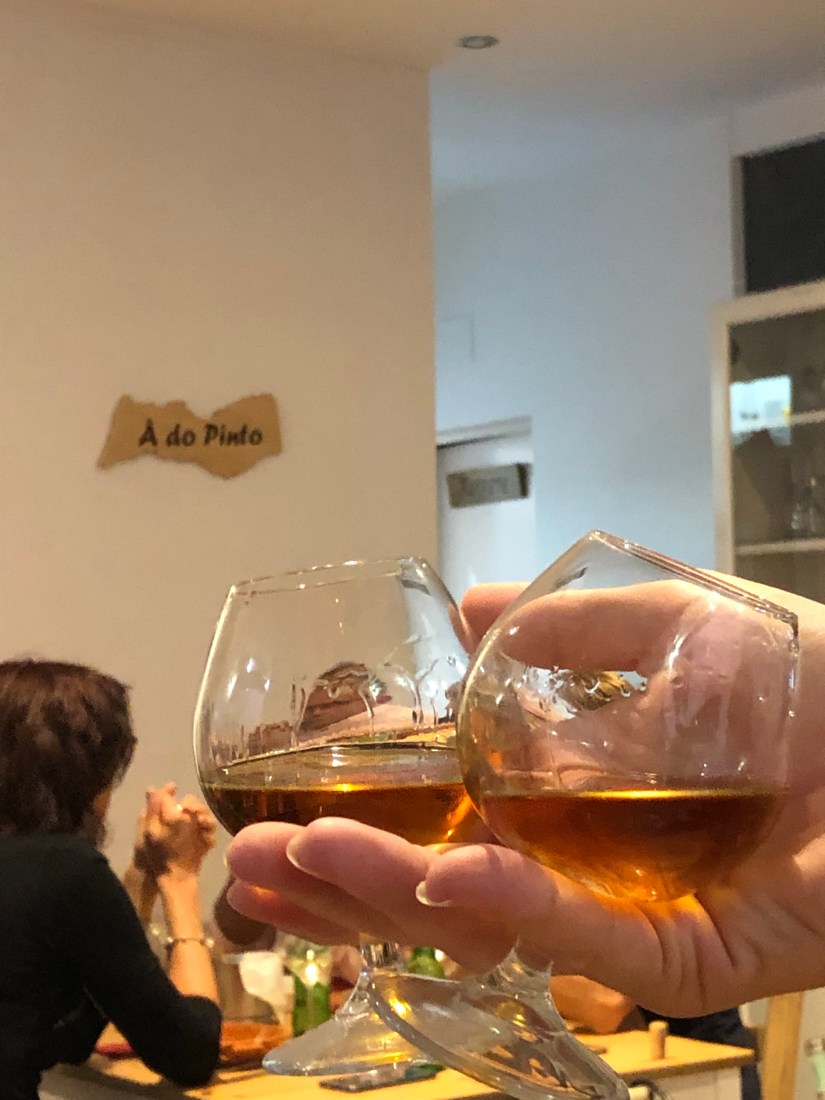
We got so tight with our waiter at tiny À Do Pinto that he came to the table at the end of our meal with a bottle of brandy and poured us two snifters on the house, plus a shot glass for himself and one for the chef, a middle-aged woman in a hair net who came out to join us, with smiles and cross-cultural congratulations all around.

Exhilarated by this, we sat in our hotel’s rooftop bar for a couple more copos, watching the lights and the action along the waterfront below. Despite last night’s revelry, we were up at 7:30 this morning, raring to begin our second riding day. There was the inevitable tending to work email over another elaborate hotel breakfast spread, after which we felt well fueled for a longer head-windy day to the beach town of Lagos.

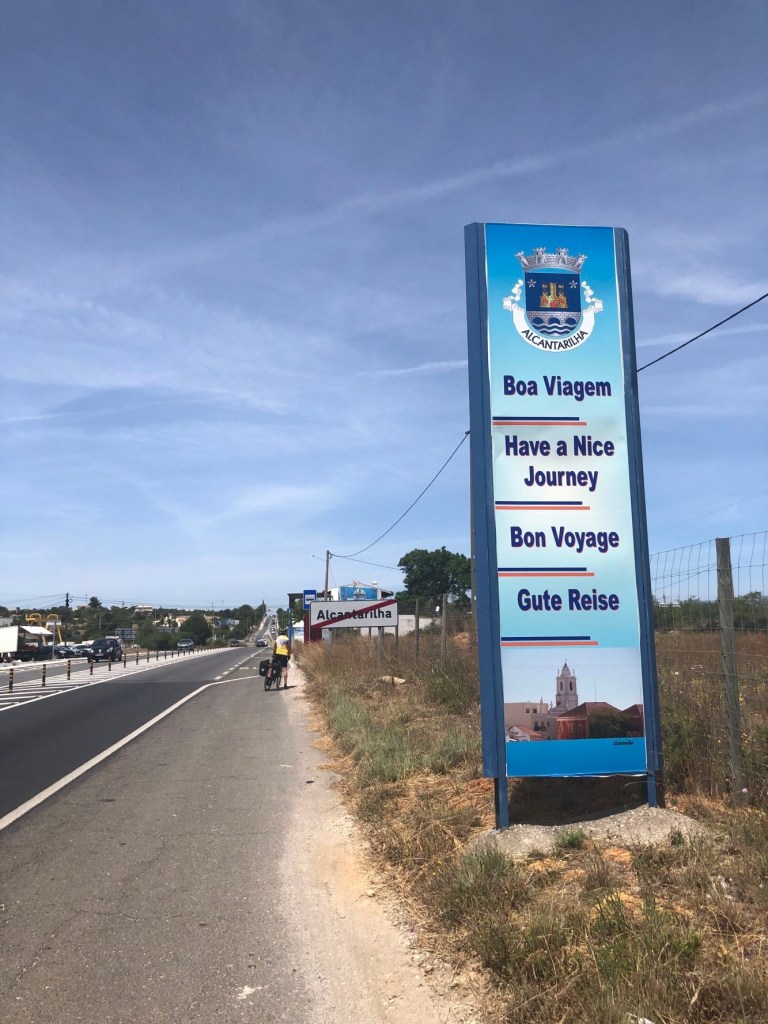
One thing we’ve noticed this trip is that the Portuguese really don’t want to speak Spanish. French, sure, English, all right, German, definitely, Italian, quite so. But nothing is translated into Spanish. There’s no love lost between these two countries, shared border or no, and no wonder: Spain has a long history of not doing right by Portugal, including unleashing the inquisition upon its much smaller western neighbor. Small wonder menus and road signs conspicuously eschew Español….

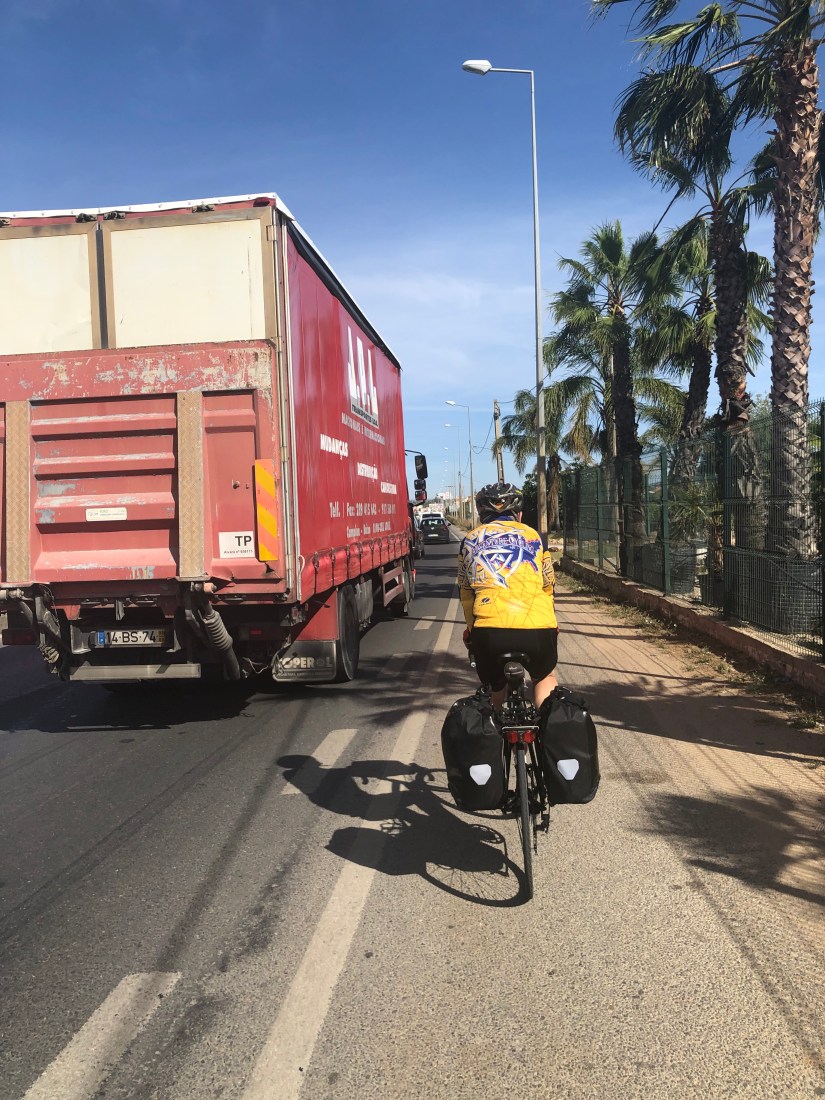
The traffic on this regional arterial, the free alternative to a parallel toll road, was heavy most of the day, and the shoulder, such as it was, came and went without warning. Leaving Faro, things were particularly dicey, shades of Laguna Beach on the Pacific Coast tour: minimal shoulders, where there were any, and those crowded by vegetation sprawl, and giant trucks blowing by a bit too close for comfort. Most drivers, as usual, were respectful, and unlike in the states few felt compelled to attempt a daring pass on too narrow a way or around a blind corner. The gregarious cab driver who took us to the train in Lisbon must be right: the Portuguese are more patient than most.

We navigated roundabout after roundabout, always signaling our intentions and proceeding with caution punctuated by daring go-for-its when the wall of traffic occasionally subsided for a few seconds. Sometimes, unexpectedly, there would be a stretch of road so quiet that we could hear the hum of our tires. It didn’t last long.

We rode along sprays of roadside flowers and blossoming trees and bushes, many of which would be annuals, at best, in our high dry desert home, but here in the Algarve’s Mediterranean climate they bloom perennially. And the shoulders are besmirched by relatively little litter, at least compared to the roads along the US Pacific coast.

The other roadside attractions fell into a pattern: orange stands were ubiquitous (though per sack prices varied considerably), as were gas stations and car dealers (diesel! automatic!).

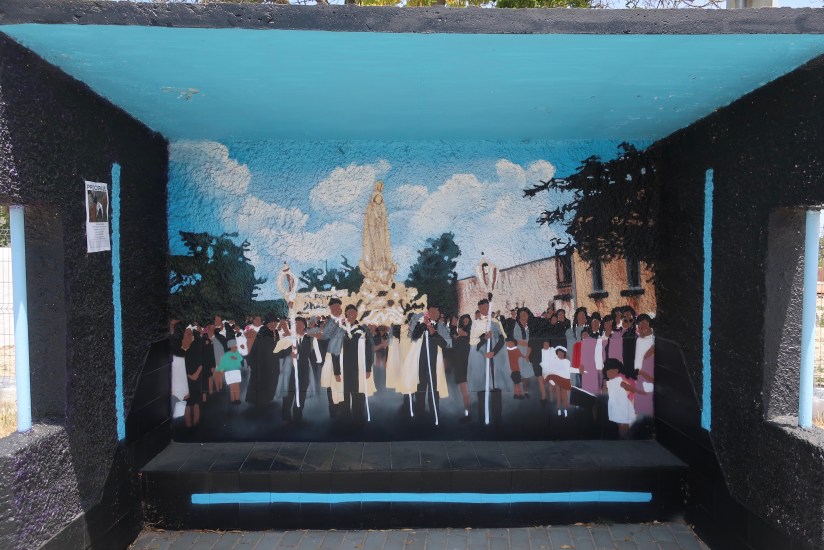
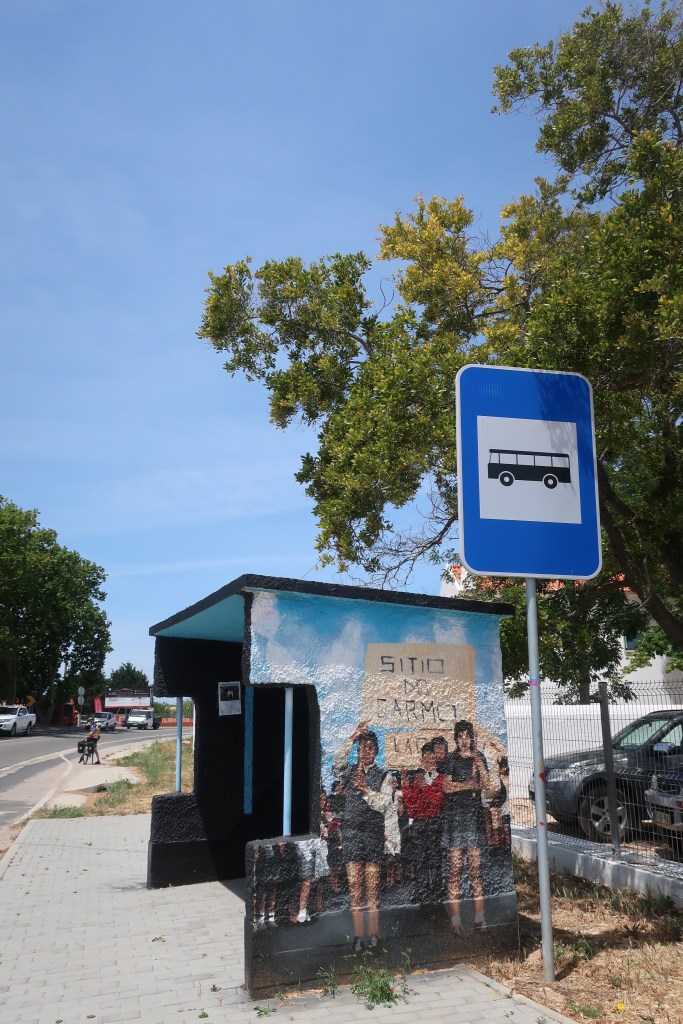
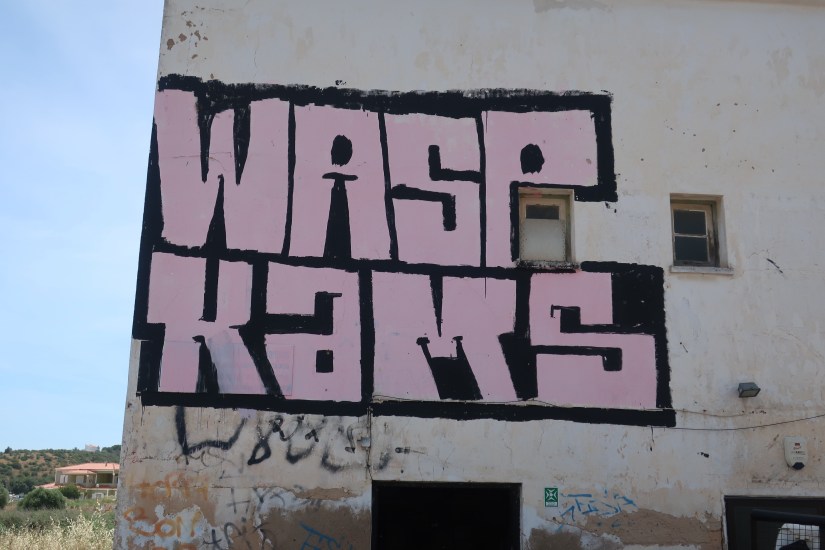
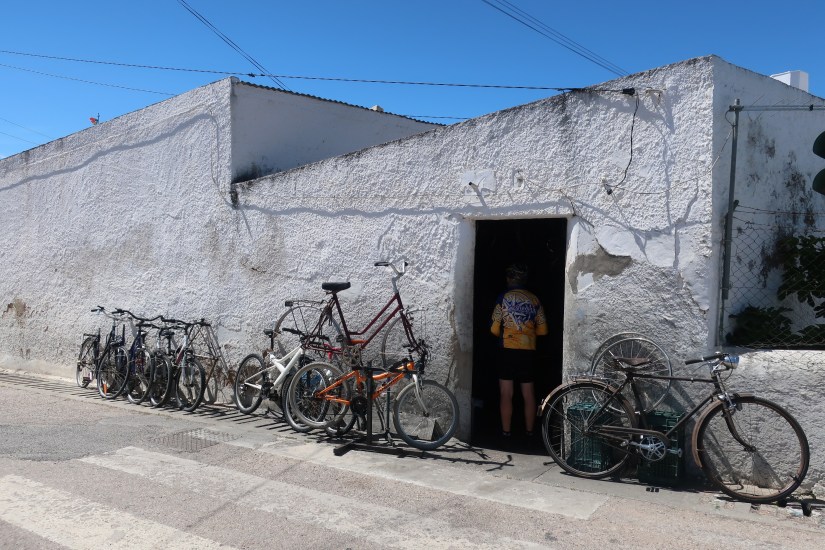
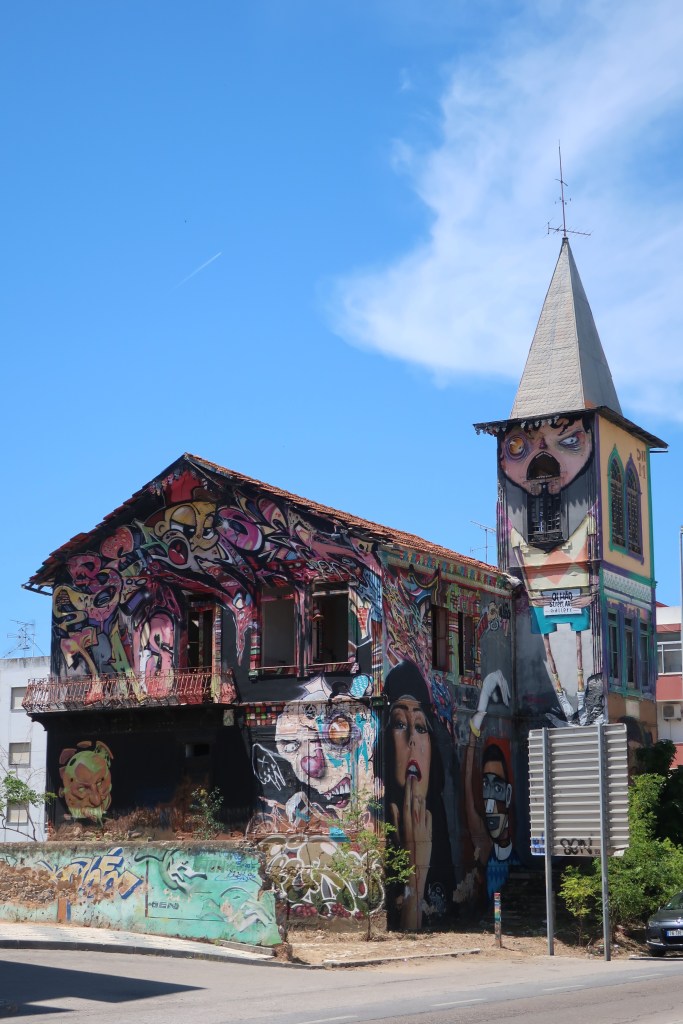
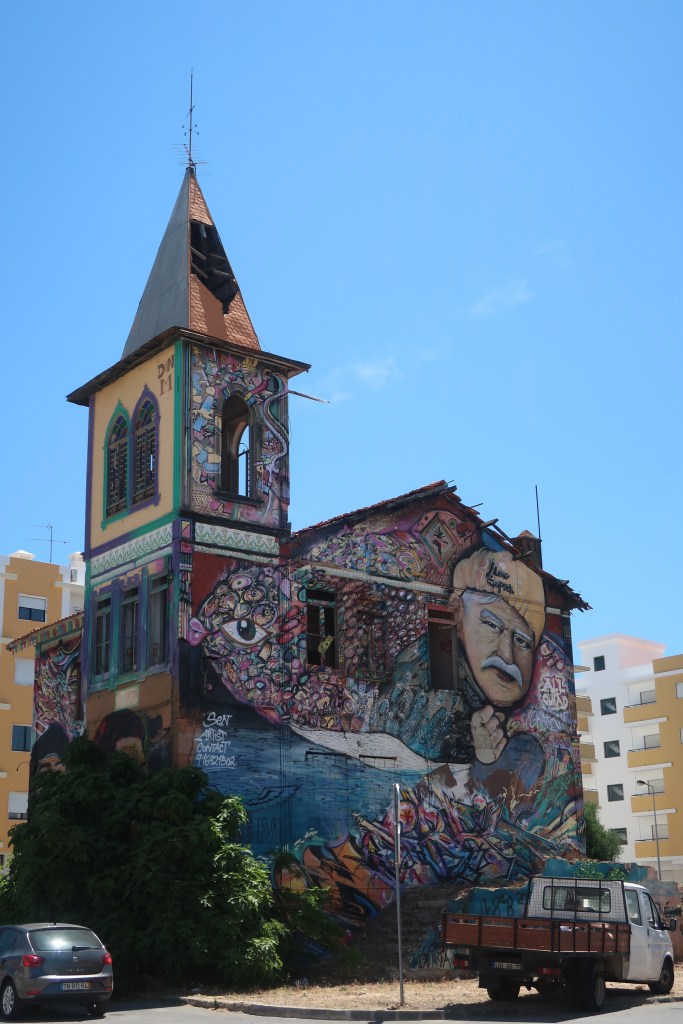
The graffiti we’ve come to associate with Portugal is a constant presence, pieces decorating the most random buildings: uninhabited falling-downs artfully painted, pool-cover shops and bus stop shelters transformed into works of public art. We keep seeing the tags “WASP” and “KAMS”; no one seems to know whether these are signatures or messages (white Anglo-Saxon Protestant?).

Although riding well inland, thanks to our inability to efficiently navigate the rat’s nest of discontinuous tertiary roads closer to the coast, we had occasional glimpses of the sea to the south, looking across miles of housing developments and apartment blocks catering to vacationing or expatriated Europeans taking refuge from far colder, wetter climates.

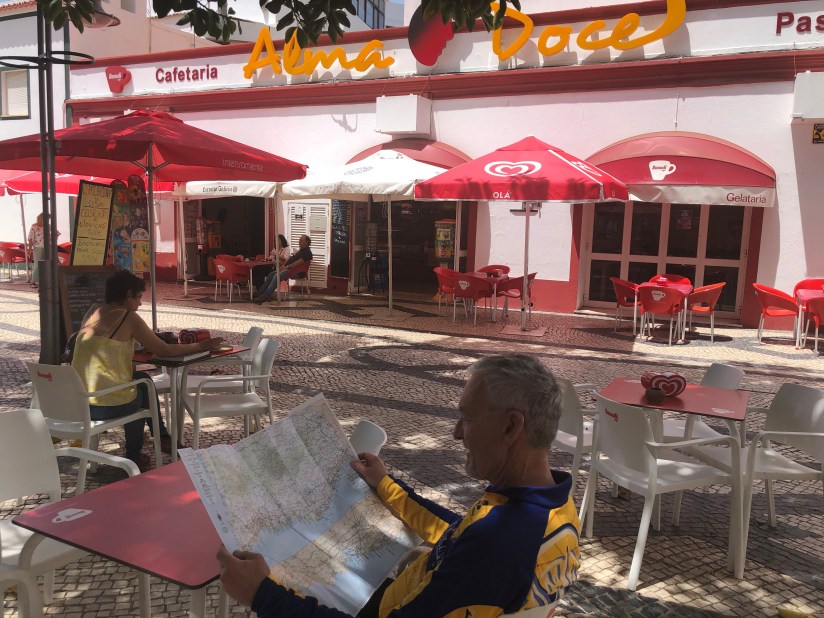
We took lunch in downtown Lagoa, a few dozen yards from the main road, sitting at the shady cafeteria Alma Doce, enjoying pork cutlets (costelledas de cebolada) and bacalhau alma doce (deep-fried cod) with French fries, washed down with many big bottles of ice-cold fizzy water and accompanied by melancholic squeezebox played fitfully by man at folding table selling tattered old paperbacks.

Another 17 or so miles to Lagos, more and more into the 10-15 mph wind, on road much the same as it had been all day. More orange stands, more cars, more petrol stations, more graffiti, more inviting roadside cafes/snack bars/pastelarias that look, each and every one, like the kind of place that creates and holds together a small community. Every now and then another reminder of where we are.

A few miles before we rolled into Lagos the road turned south, the headwind became a blessed tailwind, and this time (“Regardez!”), these sweaty foreigners found their riverside hotel with no difficulty. Showers, clean clothes, and down to the old town to celebrate.

Today was 51.45 miles, with 2103’ of elevation gained. We can feel it.

Primeiro Dia do Nosso Passeio de Bicicleta

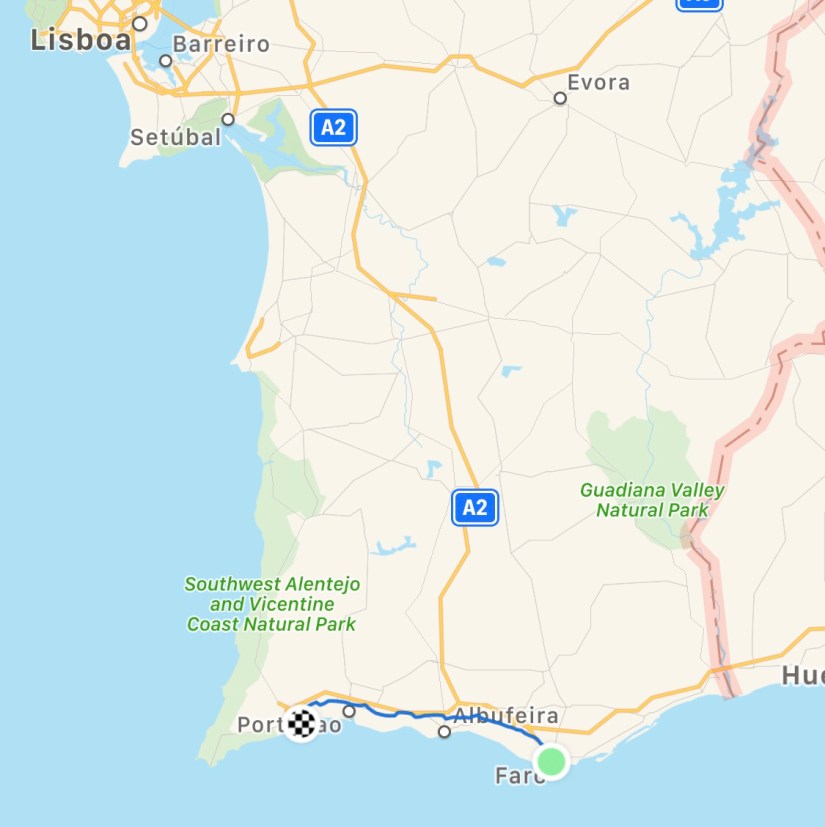
Day One: Tavira to Faro, 22 miles

We’d arrived in Lisbon mid-morning after a series of nail-biting connections and in a few hours of walking reacquainted ourselves with a city we’d first visited, on a quest to find Henry Fielding’s gravesite, four and a half years ago. Dinner at Chapitó a Mesa, in the Alfama district, our table overlooking the whitewashed red-tile-roofed colorfully-muraled buildings terraced down to the River Tagus.

We hadn’t recalled the name when we’re made the reservation but we instantly recognized the wonderful eccentricity and killer views: this was the place we’d memorably eaten on the last night of our first visit. (We even bought another pair of earrings in the little gift shop, as we did back then.)

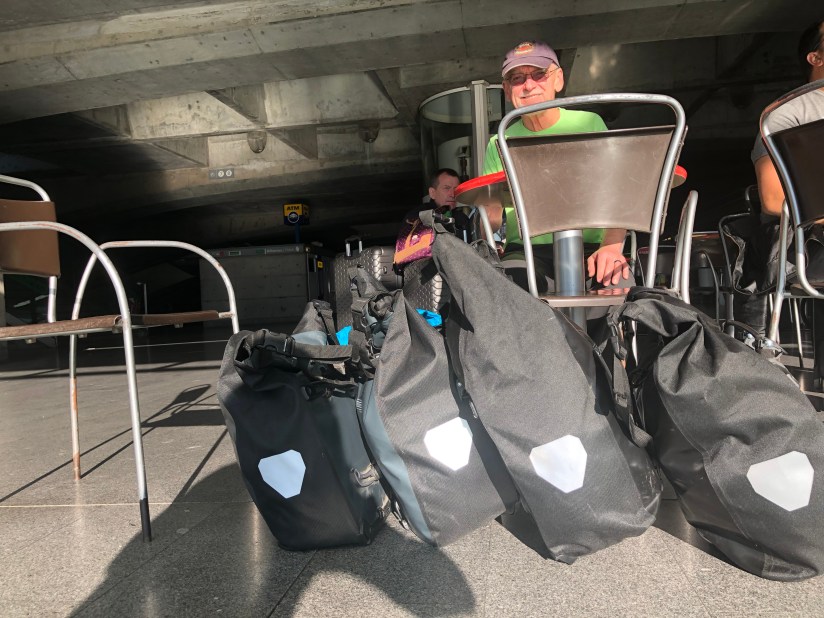
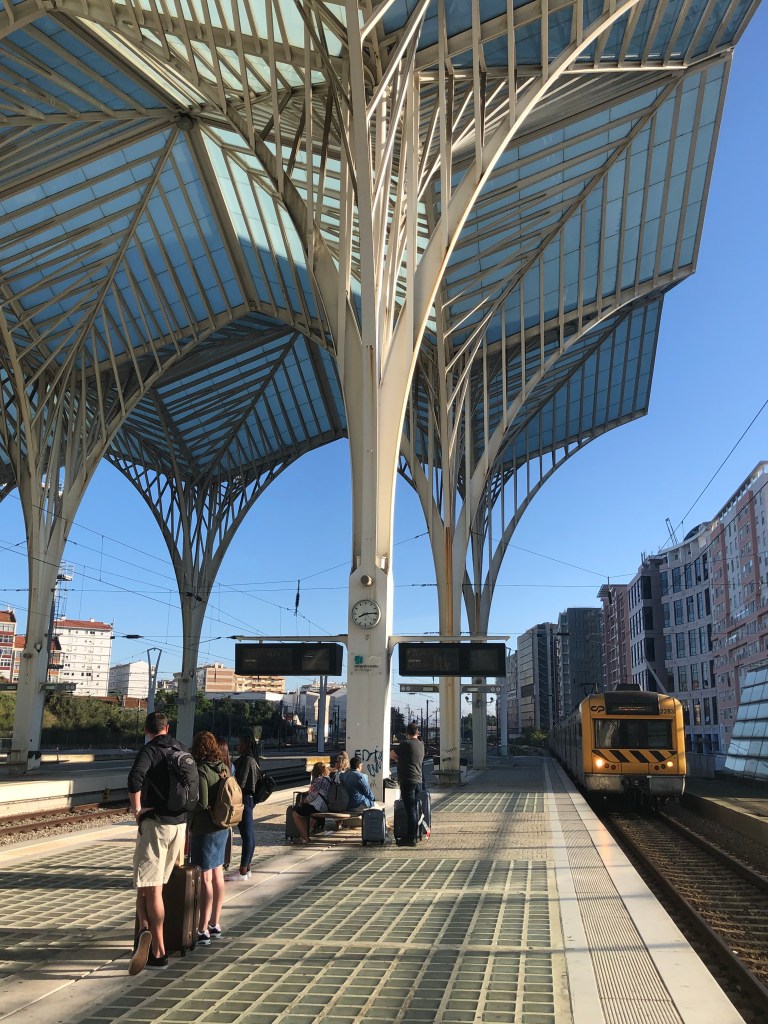
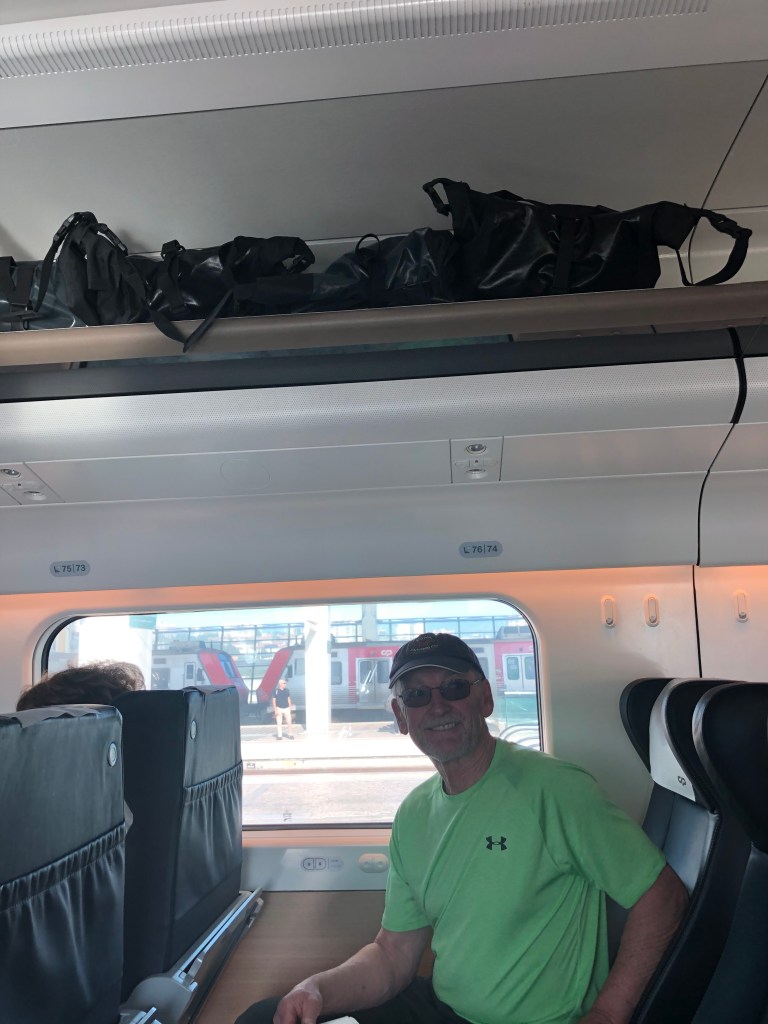
Early to bed, thanks to jet lag, and up fresh as two daisies—almost—in time for our morning train. We left our suitcases with the front desk of the lovely behotel Lisboa, and caught a cab to the Oriente train station with only our four panniers in hand. A quick shot of caffeine and a pastry, and then on the 8:23am bound for Faro.

Estação Oriente, designed by Santiago Calatrava

The landscape between Lisbon and Faro was undramatic but quietly beautiful, rolling green hills topped with olive trees, fig trees, orange trees, and vineyards, a potent reminder of some of the savory delights this country has to offer. The connection in Faro was very tight, but luckily we were only a platform away from the Tavira train, an altogether clankier, louder, hotter carriage. We arrived in Tavira at lunchtime, and carted our panniers to a riverside tapas place called Mar a Montes. Big blessed (light) local beers, tuna steak, and codfish while we watched people walking by and the ferry from the barrier island come and go.

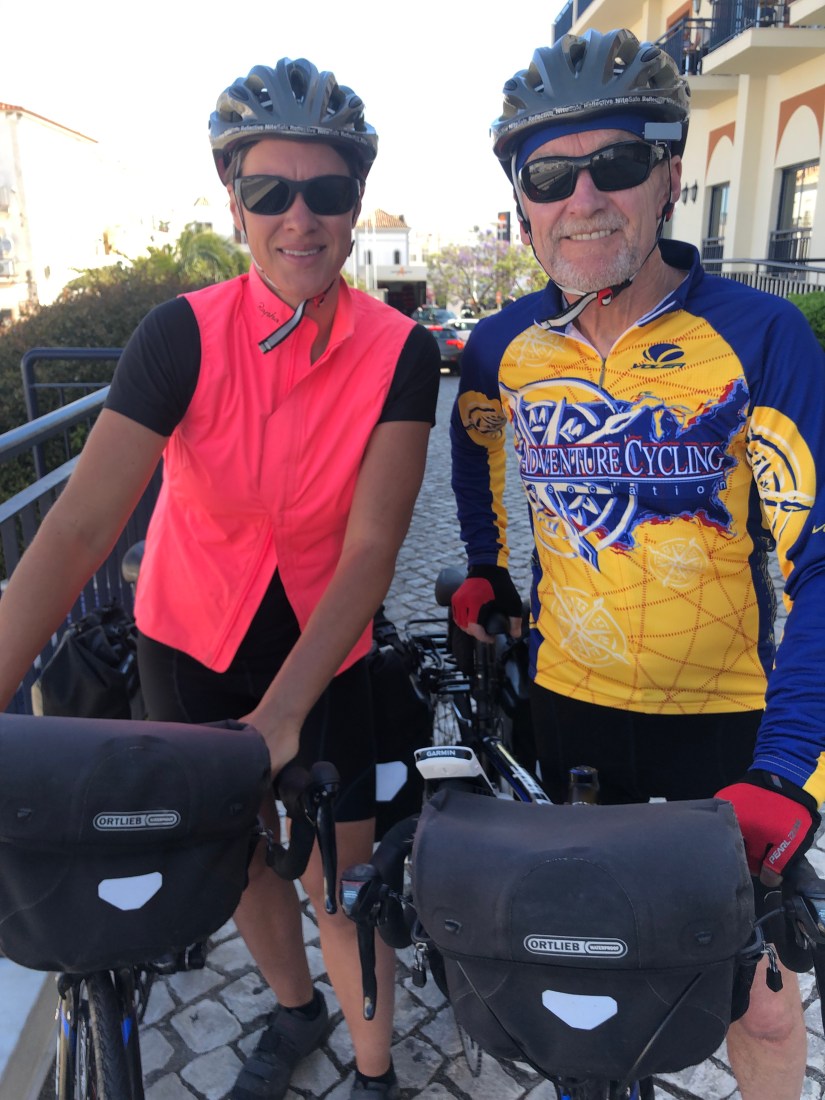
Our hotel was a short walk from there. The Hotel Vila Galé, “galé” meaning “galleon,” its logo a single-masted sailing ship, and we can think of no more suitable symbol for the maiden voyage of what will be the first of many, many European bike tours. Deep in the hotel’s basement parking garage sat our two boxed rental bikes, which we (read: David) wasted no time unpacking and setting up. They are a couple of aluminum-frame Fujis, the drive train somewhat inferior to what we’ve gotten used to…. We love our touring bikes back home, the Treks we rode last summer down the Pacific coast, and feel vaguely unfaithful to them when we mount these new and unfamiliar steeds. We’ve come to appreciate, already on this trip, how our bikes—carefully chosen, handlebars and saddle adjusted just so—feel like extensions of ourselves. These bikes are nothing like that, but we will get to know them as one gets to know passersby in a life. As an ice-breaker, we took these loaner steeds around Tavira, an eight-mile loop to get to know them and to get to know the town. Warm and thirsty, we stopped near the hotel for riverside white port-and-tonics.

White port and tonic, even better (and stronger) than they pour it in Porto

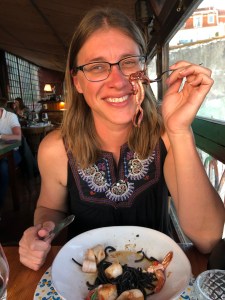
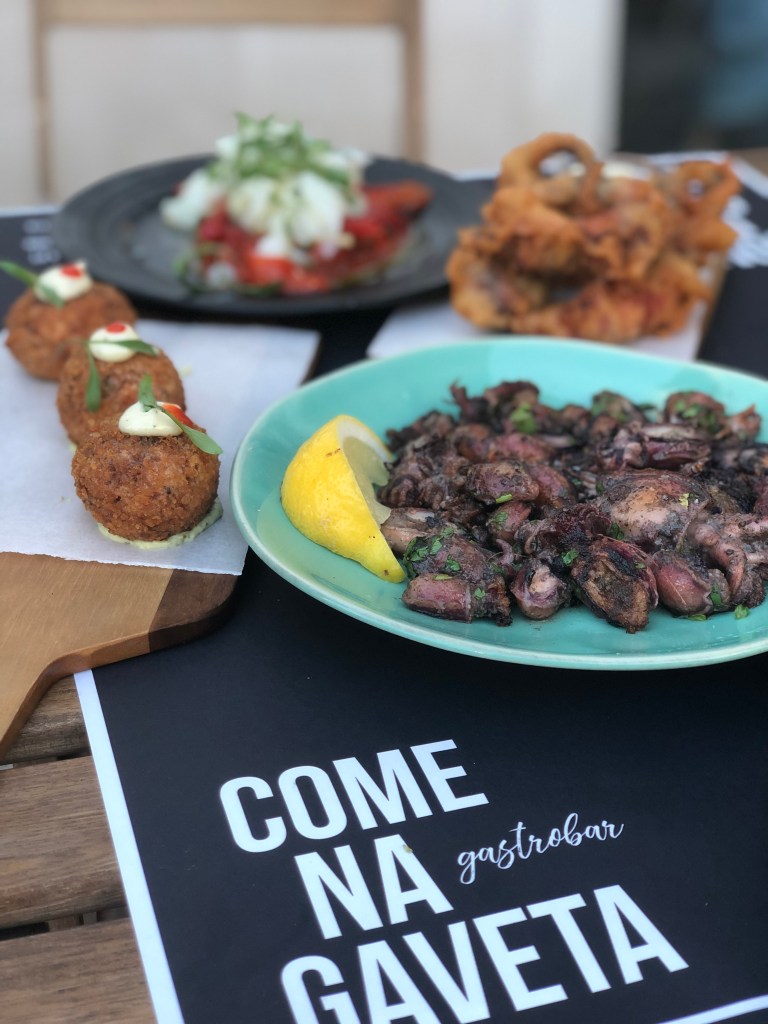
After a swim in the hotel pool we walked to dinner at Come na Gaveta, a sidewalk bistro with the usual fresh and simply prepared seafood, plus “octopus bombs,” octopus tempura … well, you get the idea: when in doubt, order the polvo (octopus).

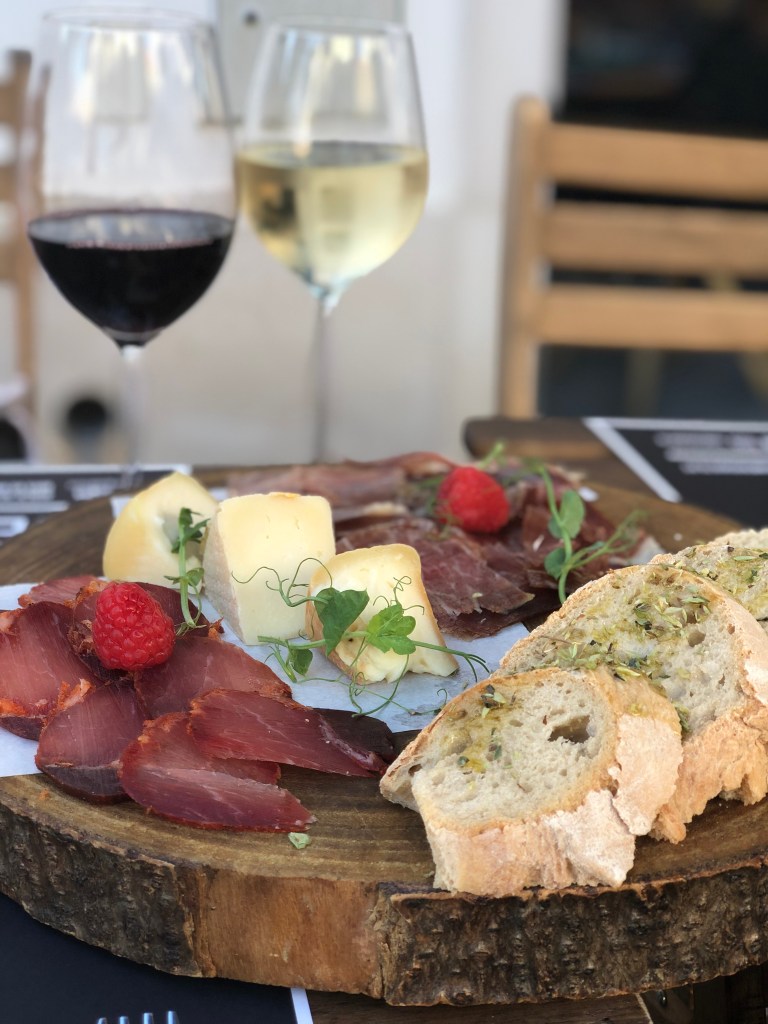
Starting out with a plate of local cheeses and preserved pork products
Octopus bombs on the left, cuttlefish on the right

And when in doubt, go to a hotel bar called the Alibaba, have a couple (“dohsh,” the locals would say) copos de vinho, and listen to the one-man band belting out altogether too melancholic tunes for a lively Wednesday in the Algarve.

Thursday, May 23. First riding day, a short day, so we were in no hurry to get going, which was good as we had to sleep in a little on our last jet-lagged morning, solve a few mechanical issues, and do justice to the massive hotel breakfast (real bacon, an almighty spread of fresh fruit and delectable soft cheeses, tomatoes au gratin, and every kind of egg imaginable).

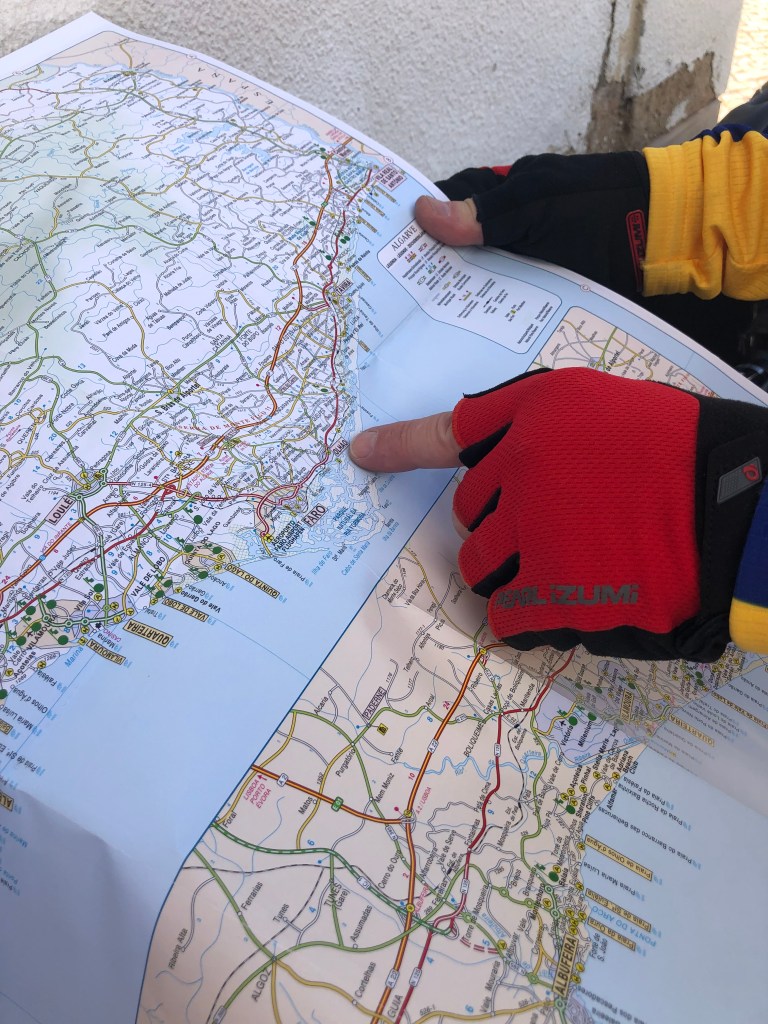
In short order we pedaled several dozen yards from the hotel entrance to the local service station, where two old-school paper road maps were going to have to take over from Ethel, our Garmin navigation device, who threw up her digital hands: she couldn’t help us in Portugal.

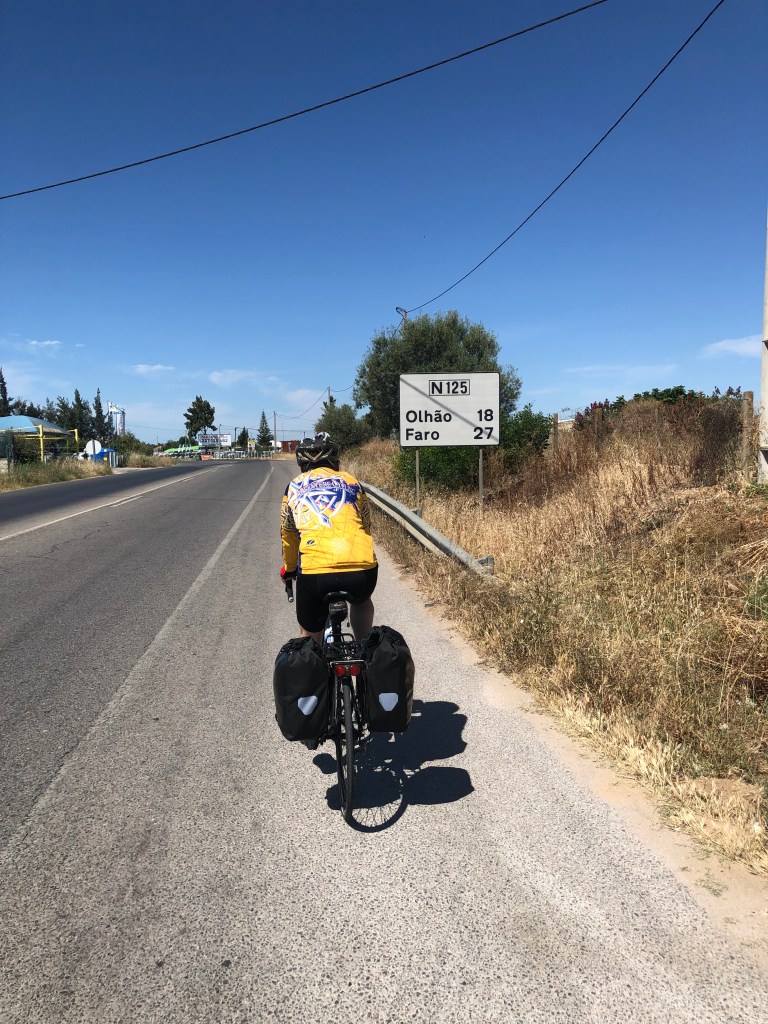
After a mile and half of tentative guesses and wrong turns, we finally found the main road, N125, which would take us out of town and all the way, one roundabout after another, to Faro. A fair amount of traffic, but our first impressions of Algarve drivers is that they’re surprisingly aware and respectful of bicyclists. We’ve seen a dozen or so Lycra dudes, serious cyclists who seem rashly to trust their impossibly skinny tires on the rough cobblestone ubiquitous in the “old towns” of Europe, and even fewer casual cyclists; we did meet, briefly, a duo of female German bike tourists making their way from Lisbon, into Spain, and back to Tavira. Despite the relative paucity of two-wheeled traffic, the drivers give us lots of room. Only one has honked so far, that after steering his or her red bug of a car halfway into “our” shoulder.

Buying inner tubes in Livramento. If there were bike shops in the Middle Ages, they would have looked like this one.

The best part of day one was not the mostly patient drivers or the well-maintained roads (they aren’t, but we’ve ridden much worse): it’s the big personalities of even the most nondescript small towns in Portugal, a colorful country whose natives like their street art. There are fewer of what those who know call “pieces”—short for masterpieces—here than in the big cities, but even the little roads have a rich graphic life, with cartoons and tags scrawled artfully on roadside walls, bridges, and buildings.

This building bore the name “Far West Style.”

Even once-sacred buildings seem not beyond the artists’ pale, including this (presumably deconsecrated) church in Olhao.

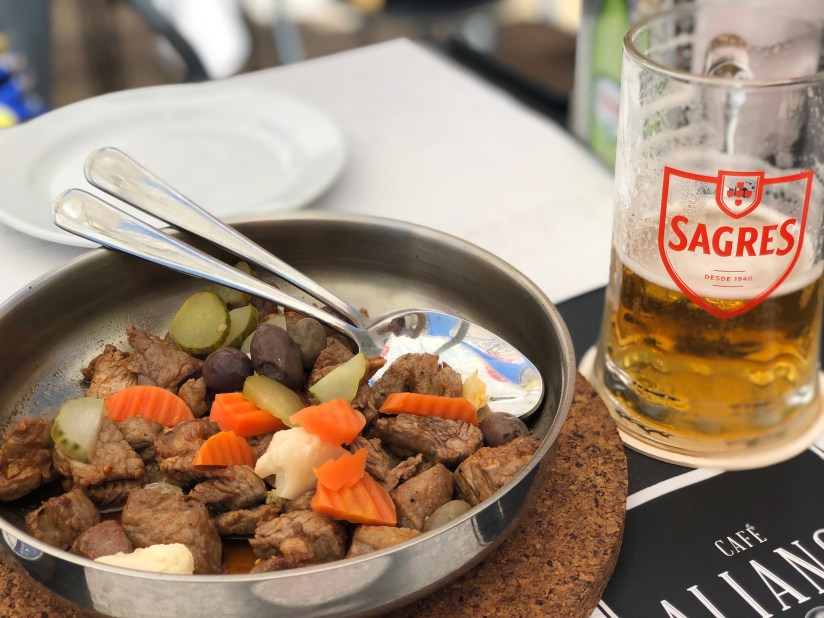
We arrived in Faro around 1:15, but an erratic and untrustworthy Google maps blue dot led us hither and thither, at length, in search of our hotel. We finally sighed a deep sigh and asked two friendly policemen to point us toward the Hotel Faro. The more helpful one, mistaking us for French as so many do, said with a tolerant smile and a flick of his wrist: “Regardez! Regardez!” Look, look, you sweaty foreigners: the hotel is right behind you. We checked in but couldn’t get into the room yet, so found a welcoming little café around the corner — the Café Aliança, third oldest in Portugal — where we had two large Sagres (the local light beer, pronounced Saa-grsh) and one pica-pau, a Portuguese favorite of tender, flavored beef, pickled cauliflower and carrots, pickles, olives and—thanks to an amicable host who had taken a shine to us—a little creamy beer sauce on top.

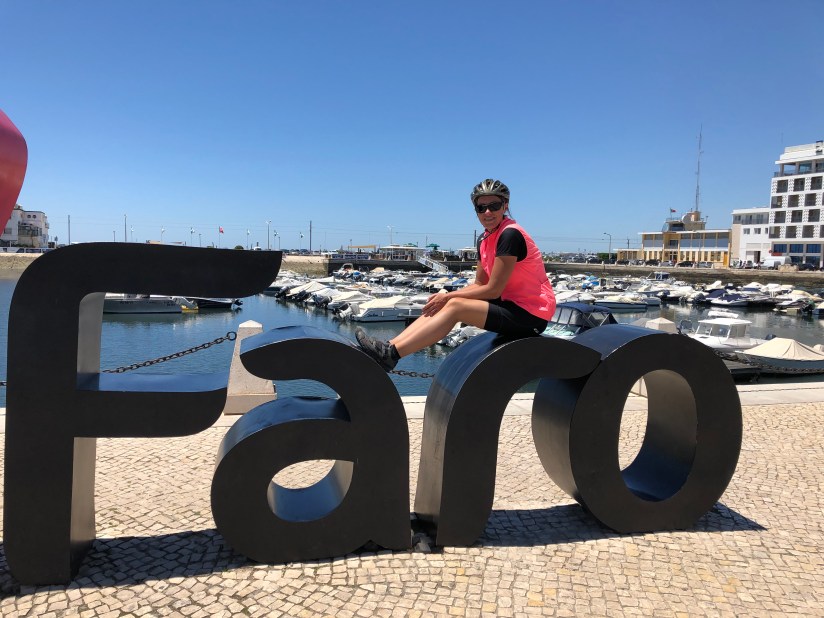
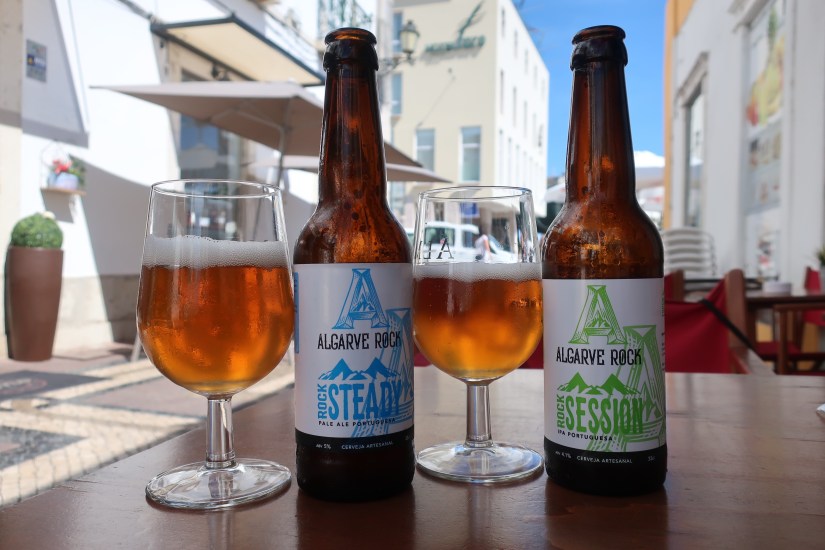
Bikes locked in yet another hotel basement, us showered and dressed for warm weather, we strolled the sunny cobblestone pedestrian streets of Faro, through narrow lanes lined with shops and cafes, overlooked by wrought-iron balconies, everything slightly dilapidated but still elegant and cheerful, open for business, ready to take on the summer hordes of tourists which we shall just miss. We wandered into the old walled town with its aristocratic palaces repurposed into civic offices and museums, and coming back out to the harborside, settled into a sidewalk table where local craft beer Algarve Rock was on offer.

And so to dinner, after a slight 22 flat miles (734 feet gained), thinking maybe tonight is the night for one of the Algarve’s famous cataplana dishes, some kind of meat-and-seafood mixture (usually featuring clams or cuttlefish) named for the clam-shaped cooking pot in which the food is prepared.

David’s PacCoast Bike Tour Retrospective

(Note: Stay tuned for Ashley’s own retrospective, coming soon!)


It’s been a week since Ashley & I returned from our Pacific Coast bicycle tour, which ended at the Mexican border on June 28th. img_1108
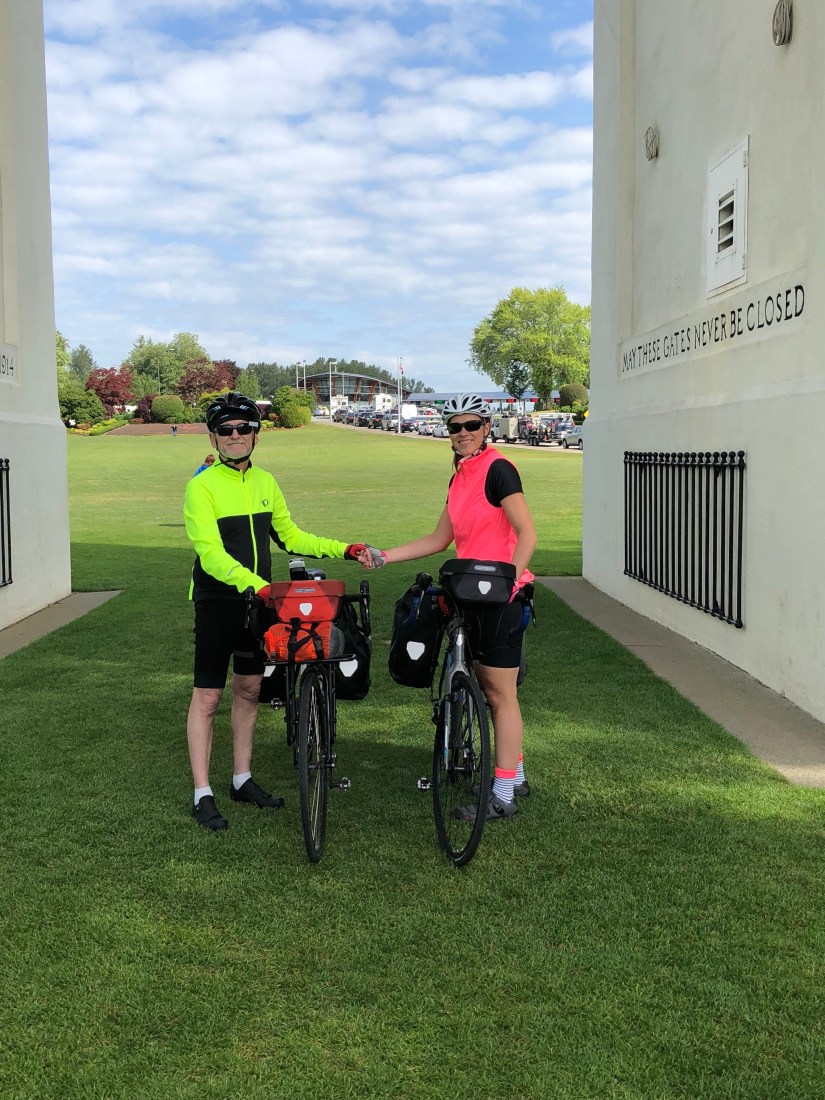
The beginning, on May 25th at the Peace Park on the US-Canadian border

Since then, we’ve done a few rides around Reno, and have already come to appreciate beyond words our newer, lighter road bikes, which leap forward with each pedal stroke rather than slowly lumber into motion like our heavily loaded touring bikes.
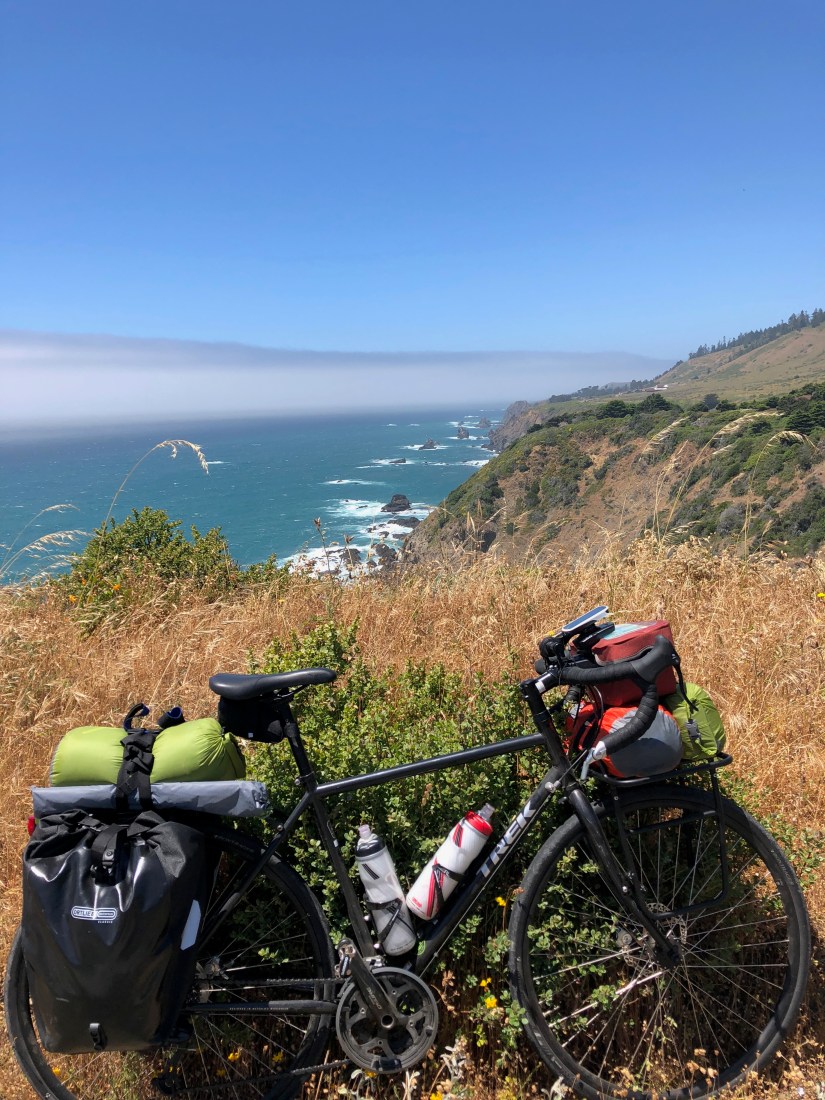
IMG_0712.jpgThis beast, a Trek 520, weighed in at about 75 pounds loaded, bike and water bottles included. Note the fog, politely keeping its distance offshore.

We did notice our lungs burning with the altitude, nearly a mile above where we’ve been riding at oxygen-rich sea level. But our legs feel strong, able to surmount formerly challenging hills with relative ease thanks to cranking those heavy bikes up and down coastal grades for 35 days. Total elevation gained on the trip = 87,553 feet. That amounts to over 16.5 miles, or an average of 2918 feet of climbing every one of 30 riding days. Biggest climbing day was #18, 5972 feet from Garberville to Fort Bragg CA on a 69-mile day. Weeniest was Day 31, Malibu to Santa Monica, a whopping 186 feet in 8.3 miles, which barely counts as an actual riding day.
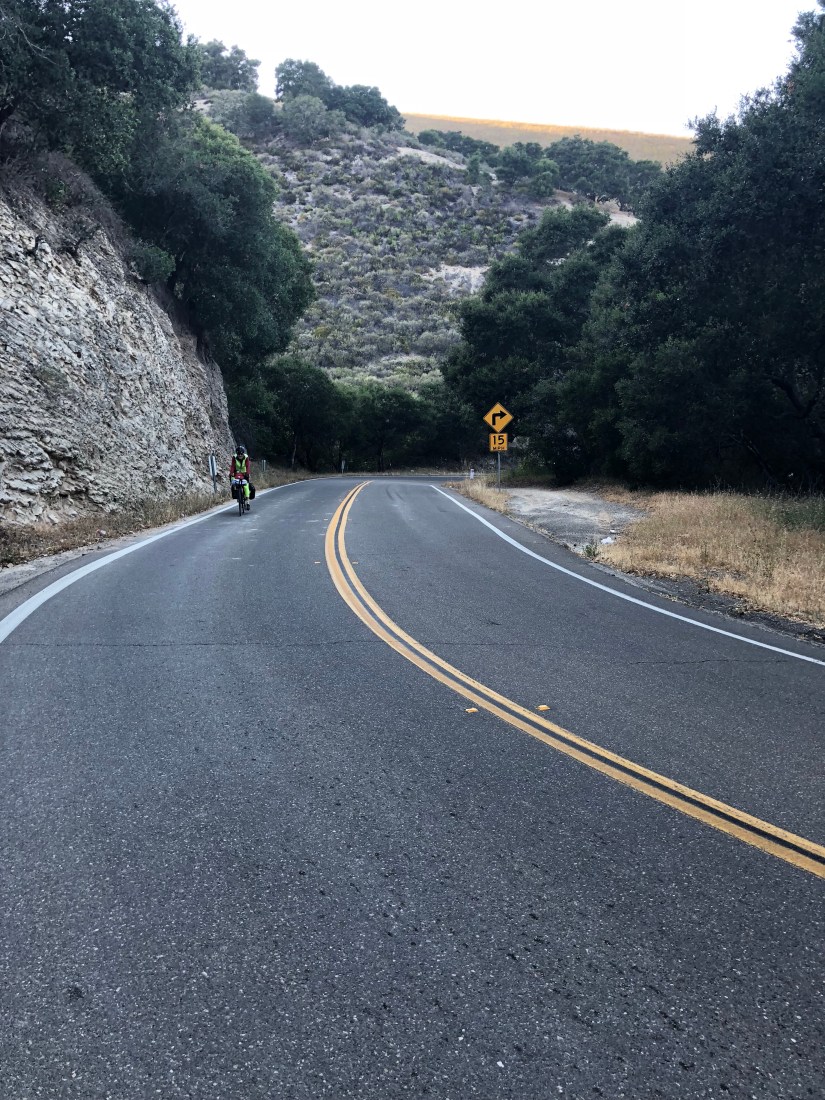
img_2273

The last big climb of the tour: the Purisima Hills between Guadalupe and LOM-poke CA, a 1000-footer that came near the end of a 100-mile day.
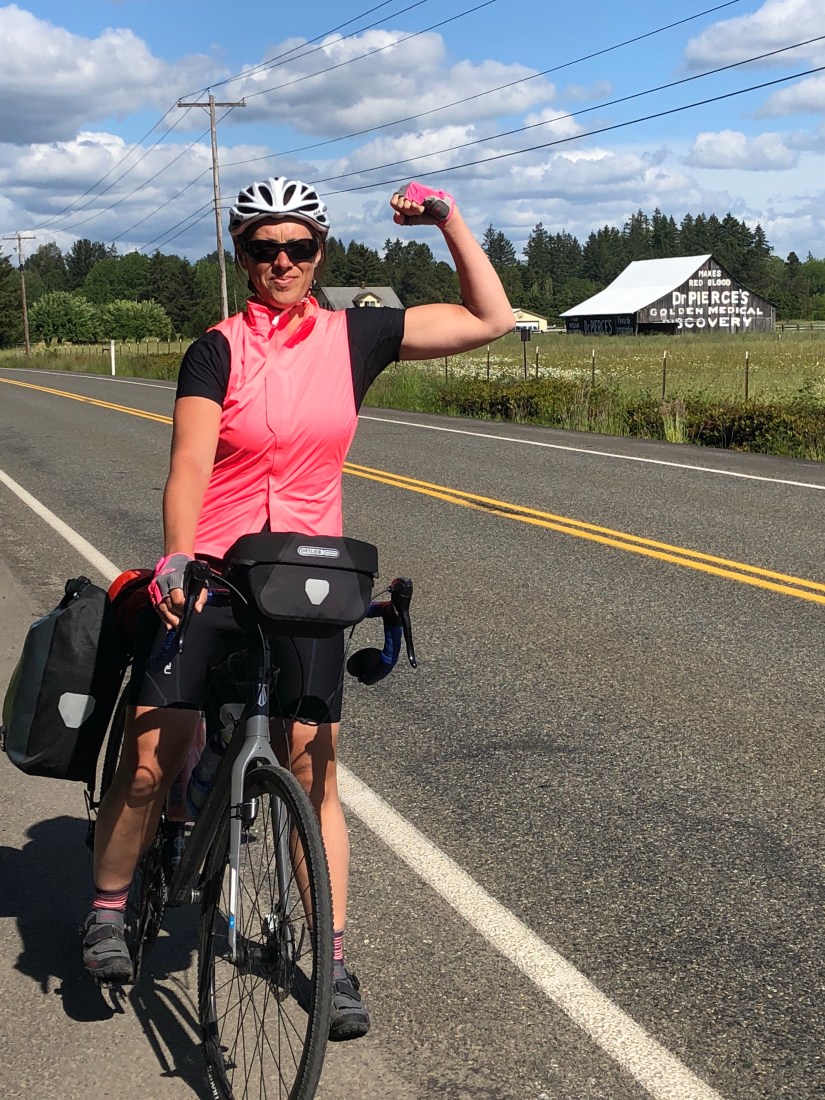
img_0173

Red-blooded Ashley takes a stand in rural western Washington.

I am still nostalgic for the open road, but glad, excited even, to be home. There is particular comfort in one’s daily routines when they’ve been disrupted for five weeks. There’s something reassuring about one’s own soap, shower, bedding, kitchen, desk. I love my reading chair, the spot on the carpet where I stretch every morning and listen to NPR, and the Adirondack chair on the front porch where I drink my coffee and spy on the neighborhood. It’s overwhelmingly wonderful to be able to choose from more than two shirts or three pairs of socks. And, of course, there’s the pitter-patter of little paws. Mark Twain said it best: “‘A home without a cat — and a well-fed, well-petted and properly revered cat — may be a perfect home, perhaps, but how can it prove title?”
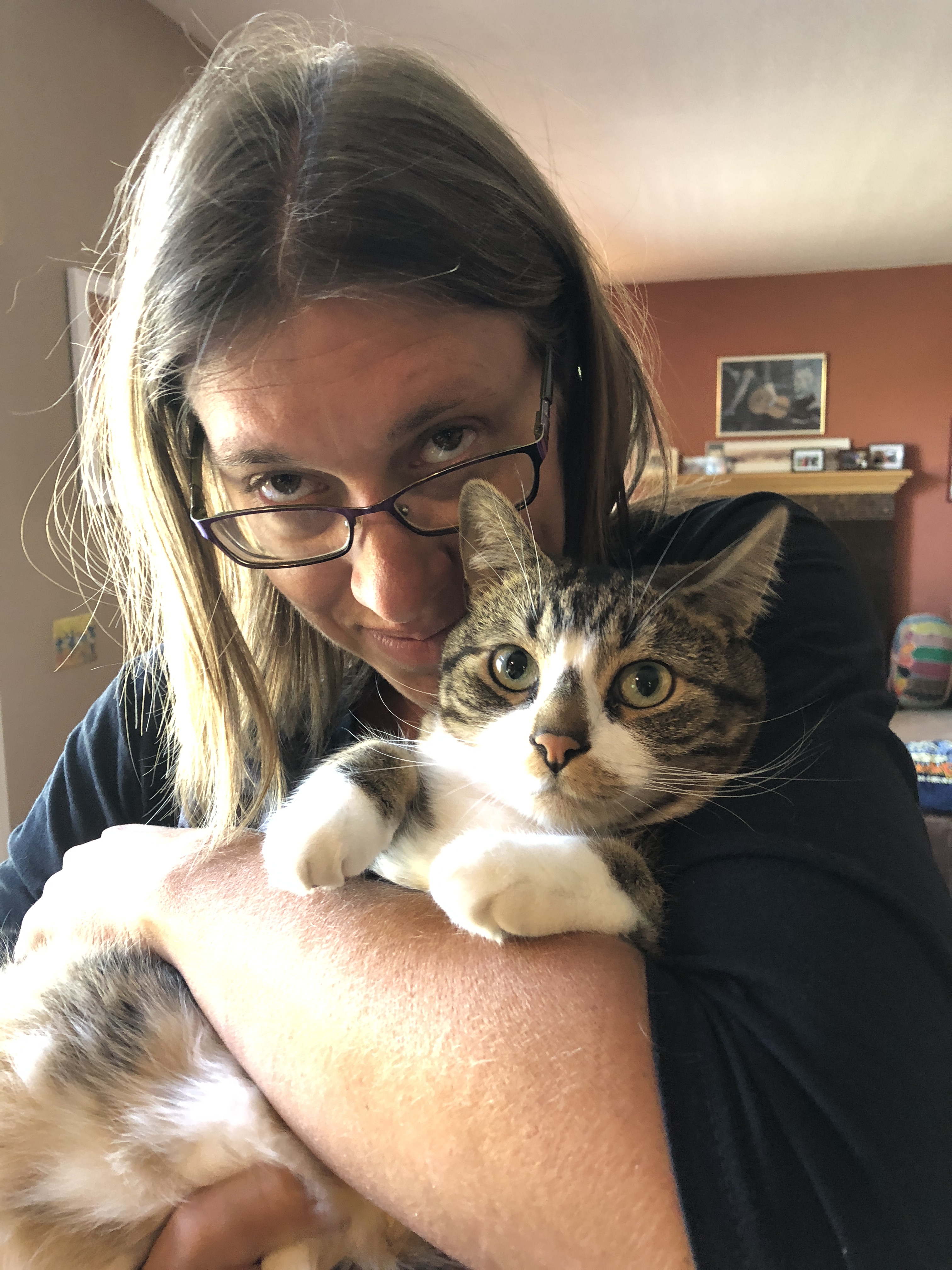
IMG_1687.JPG

Ashley & Lassen get reacquainted.

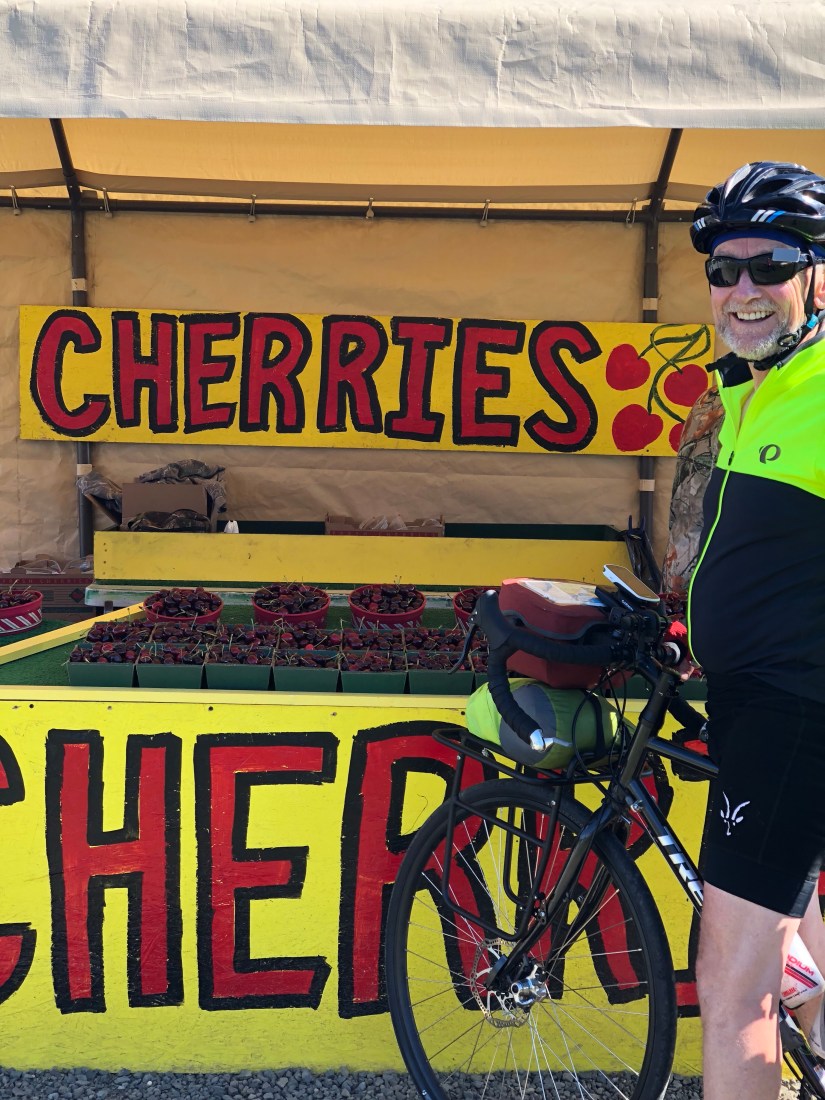
Our sense of place is reinforced by the cats, and the neighbors, and the Truckee River, and visits with family and friends. Our yard is exploding with flowers (even if the lawn got a little dry, and the roses are mostly faded, and we missed the cherries from our trees).
img_1538

We didn’t miss them on the Oregon coast, though.

We live in a beautiful place, in a quiet, well-tended neighborhood on the western edge of the Great Basin, in the shadow of the Sierra Nevada, and sometimes it takes an extended absence to really appreciate our good fortune.
IMG_1716.jpg

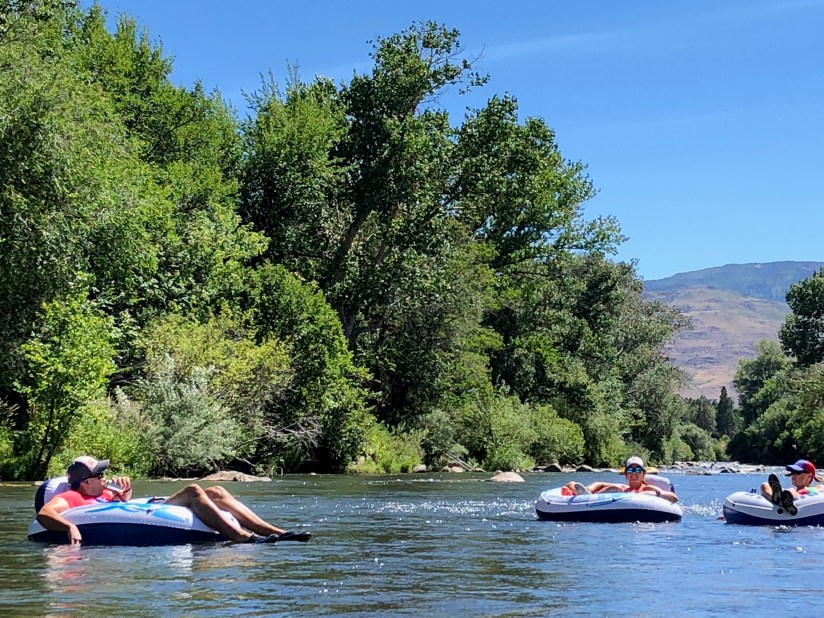
Day #7 of being home: Sergio, Winona & Ashley floating the Truckee from our backyard to downtown.

As T.S. Eliot wrote:

We shall not cease from exploration
And the end of all our exploring
Will be to arrive where we started
And know the place for the first time.

While a traveler by plane, train, or automobile might remember every day in detail of a one- or two-week journey, all 36 days of our tour are difficult for me to recall one-by-one in order without some effort, precisely because, traveling at an average speed of 10 miles per hour, there were so many more details. Maybe the days also blur together a little bit because a good part of each one was routine: eat a big and usually motel-grade breakfast, choose which shirt and shorts and socks were dry from rinsing out the night before or at least less smelly, repack the panniers, fill the water bottles with a 50%-water-50% Gatorade blend, check the brakes and perhaps top off the tires, don gloves, helmet, and glasses, review the route, groan a little bit for effect, flex one’s knees, roll the bikes through the door, check out of the room, and only then start off down the road, remembering maybe a hundred yards later to turn on our taillights.

IMG_0725

A mid-morning checkout from the Coast Inn at Point Arena. Taillights not yet on.

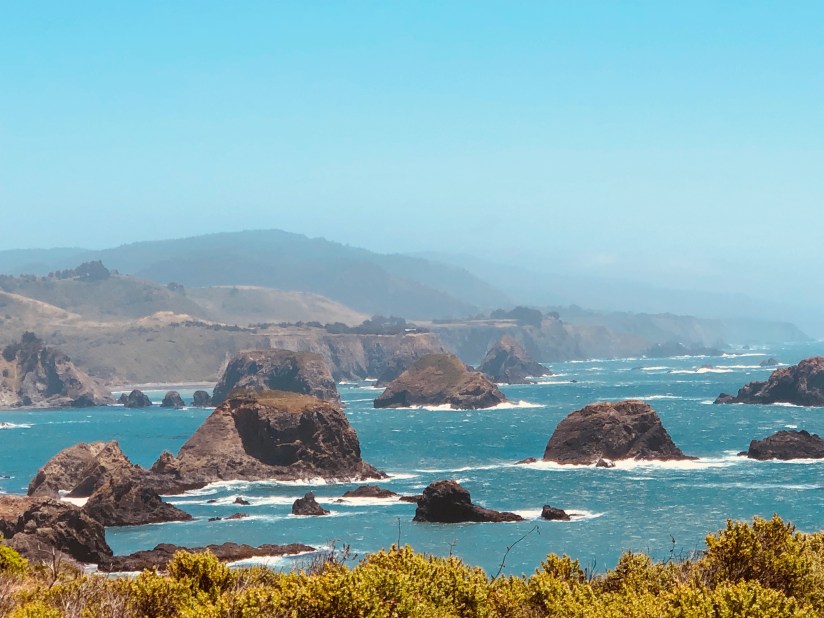
However, in addition to these routines, every day offered new roads, sights, smells, and logistical challenges. When I look back in my mind’s eye along our route, I find I can now conjure up a much more accurate and detailed mental map of the West Coast. As if from some low-flying supersonic reconnaissance aircraft, I can visualize the scenery, in geographical order from the Canadian border along Puget Sound, and the Oregon and California coasts, through metro areas and farming districts, past resorts and state parks galore, all the way to San Diego Bay – from fir and spruce forests beneath snowcapped volcanoes, along rivers and tidal mudflats, through redwoods and oak-dotted golden-grassy hills, up and down the capes and promontories of windswept Highways 101 and 1, to dry desert mountains, palm trees, and endless surfing beaches.
IMG_1881

Near Elk CA

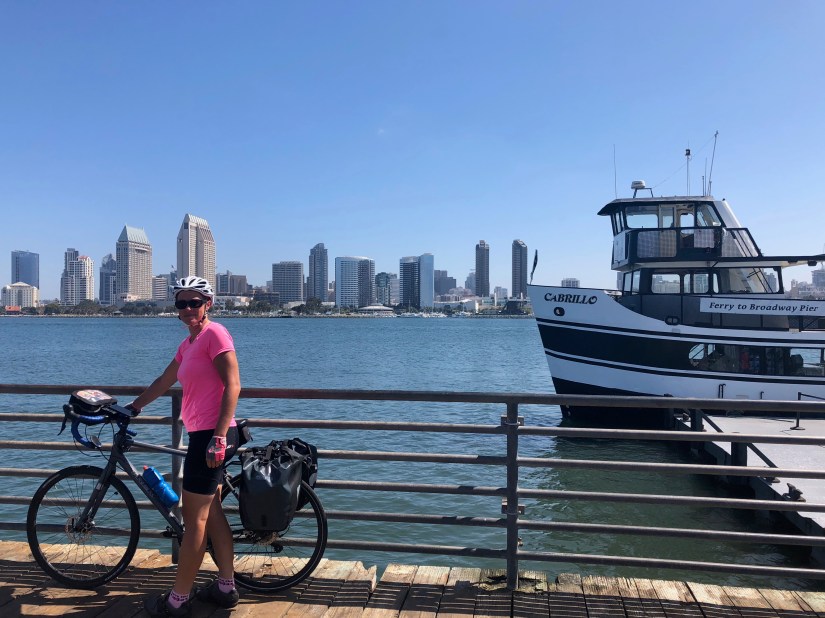
Most of these transitions were gradual, and looking back it’s hard to pinpoint any sudden or dramatic changes other than at the very end, when affluent and cosmopolitan San Diego …
IMG_1551.jpg

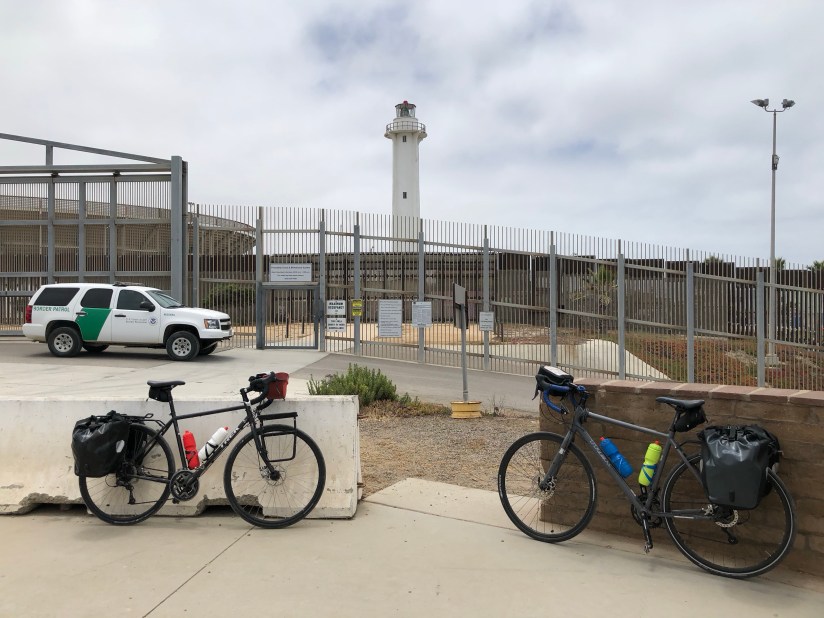
… gave way, in just a few miles, to the heavily fortified Mexican-American border at the ironically misnamed “Friendship Park”:
img_2609

I got yelled at by the Border Patrol for stepping too close to the wall.

Also, thanks to riding so many hours with only my own mind for company — except the occasional hand signal exchanged with Ashley (slap top of helmet = “you all right?” or wave hand downward like flag = “I’m going to stop here!”) and also excepting the rare opportunities to pedal and converse side-by-side — I’m more familiar with my inner landscape. For example, I have somehow developed a built-in, shockproof, high-fidelity iTunes app that plays in my mind’s ear every rhythmic, harmonic, and lyrical nuance of thousands of jazz, folk, and rock tunes. Sometimes this app will play a song I have not heard or thought about in decades. Sometimes – well, often – it will hang on a particularly obnoxious earworm, which I won’t give examples of here because, well, that’s how they reproduce. Other times, though, my “I-pod” would sample a particular bar or bars of music and, like a minimalist composer, repeat and elaborate it like a slowly evolving mantra, propelling me up the hill or into a headwind with its insistent energy, or else slowly driving me (temporarily) bonkers.
IMG_0575.jpg

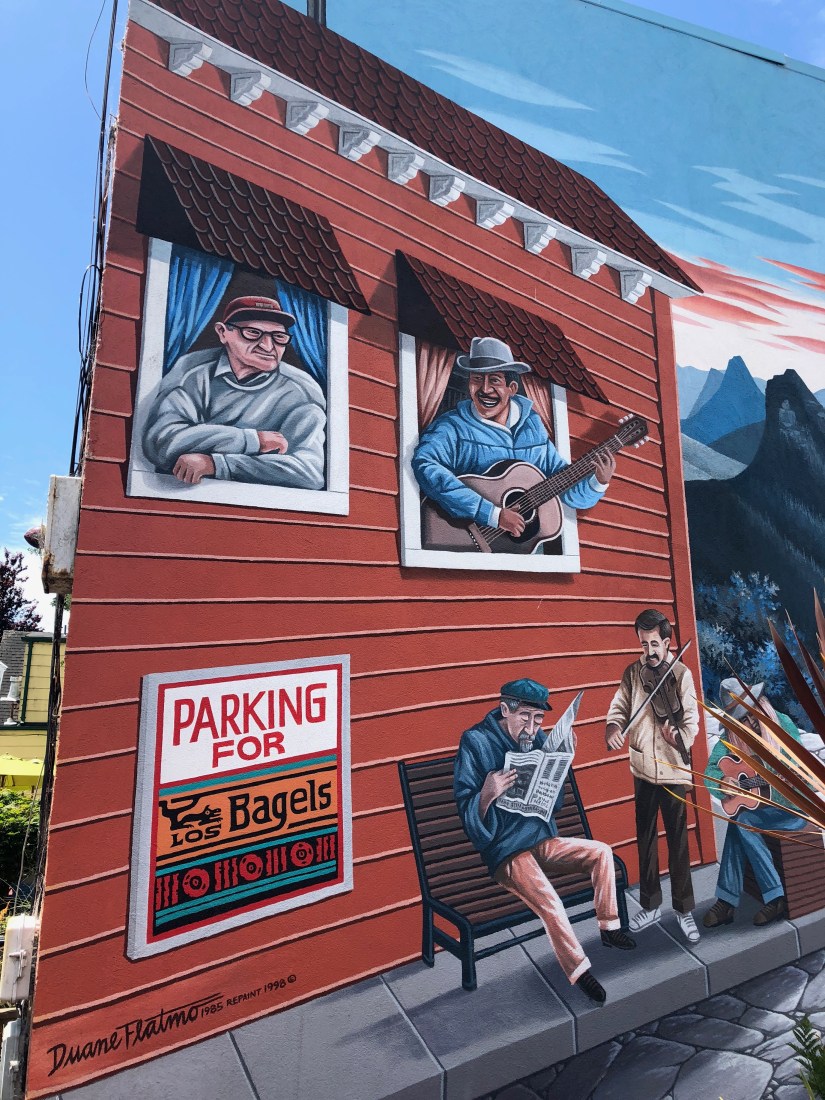
The musical mural outside Travis’s bagel shop in Arcata CA.

I would sometimes try to mute this app and think of other stuff: work, course syllabi, plans and projects for the summer and beyond, the national news, my checkered past. But I’m a compulsive note taker, and it was too frustrating to come up with an idea or insight and not be able to stop right then and jot it down. Plenty of time for more structured thinking later, I told myself. I came to appreciate, in the same way a traditional pilgrimage can free one from the limitations and obsessions of daily life, that riding 5-7 hours a day, dealing with discomforts and embracing simplicity, allowed me to empty my mind and let it wander. I’d focus on my breathing, slowing down and getting the panting under control, trying to cleanse the lungs with each exhalation, and find that the music had stopped, the obsessive thoughts had drifted away, and I was — at least for the time being — blissfully aware of my surroundings.
img_1973

When I skim my visual memory of the more than 1830.7 miles we traveled, plenty of vivid snapshots pop up. To pick a few at random, in absolutely no geographical order:

  • the sudden and impossibly steep hill out of Hood Canal right after breakfast in Belfair WA that, for the first of several times during the tour, forced me to shamefully dismount:
IMG_0119.jpg

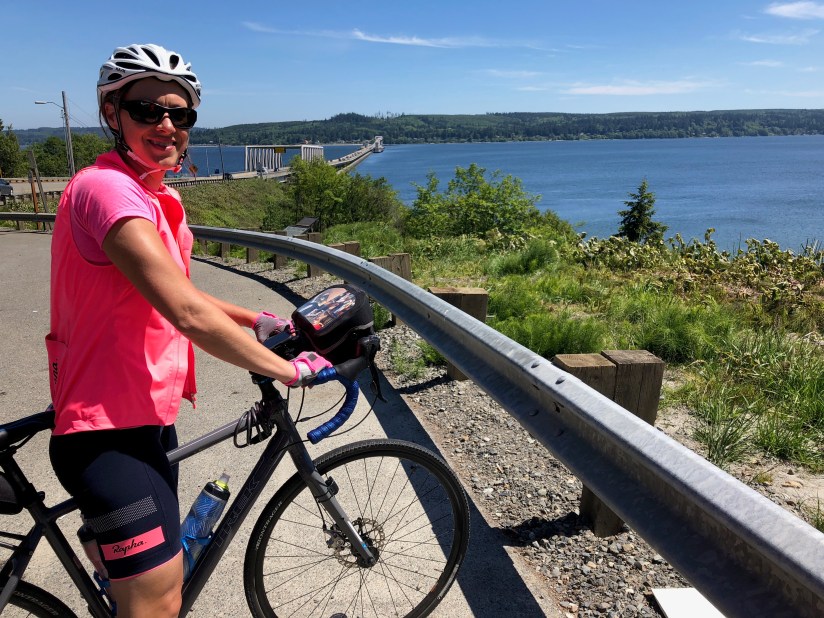
Ashley at the Hood Canal bridge, Nordland WA. It was that pissant little ridge over there, further south, that the next morning presented us with a post-breakfast 12% grade (at least).

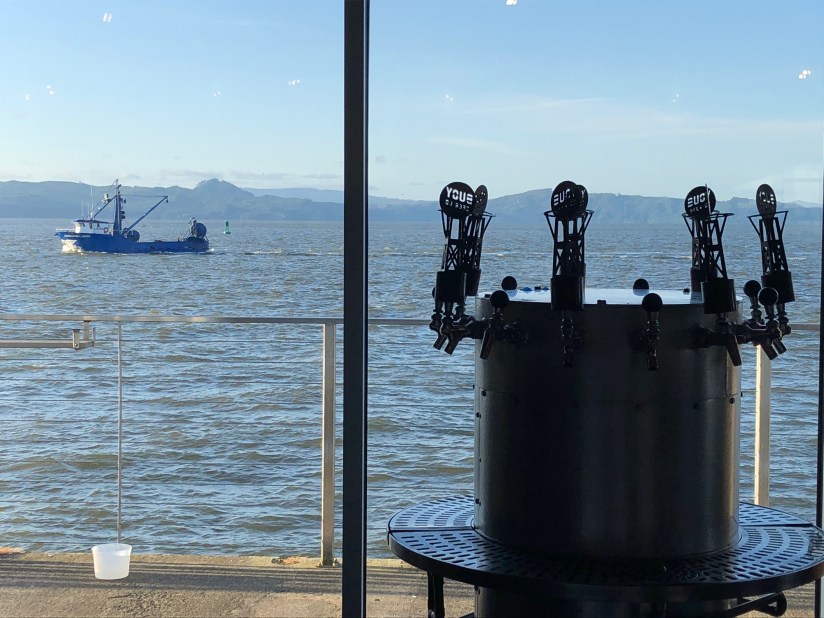
  • the rolling ride along the broad and majestic Columbia River to our first day off where it meets the sea in Astoria OR:
IMG_0231

The mighty Columbia conveniently rolls right by the Buoy Beer Company

  • the silent, shady, and towering Humboldt County redwood groves, like riding through a Gothic cathedral:

img_0629

Along the Avenue of the Giants, an uncrowded and peaceful alternative to Highway 101. Ashley is following two other tourists we had met earlier that day, Mike and his daughter Christina. We heard later that they’d reached San Diego, but we didn’t run into them there.

  • coming in sight of the craggy northern California coast after the much-dreaded but do-able Leggett Hill (which is actually two hills) and then flying with a tailwind along Highway 1 into Fort Bragg

IMG_0692 (1).jpg

Ashley shares the tailwind towards Fort Bragg with Kristof, a German tourist we’d met the day before. He was riding from Seattle to San Francisco in athletic shorts and tennis shoes. “I am killed,” he said after the Leggett hill.

  • riding through the brilliant Big Sur morning fog, seeing blue sky above and hearing seals barking and surf breaking far below:

IMG_1069

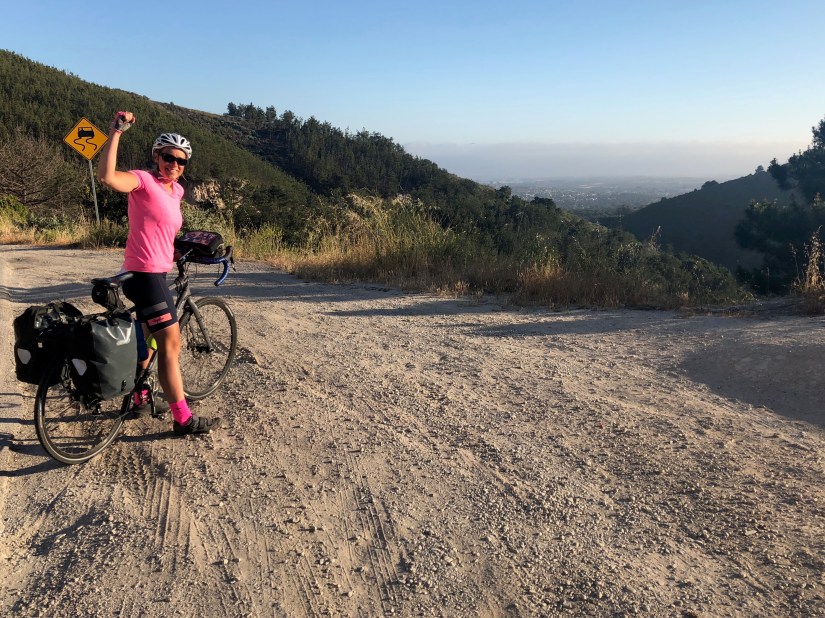
  • a long, early-evening descent out of the Purisima Hills into the Lompoc Valley (“LOM-poke”) after our first and only 100-mile day:
IMG_1177.jpg

Summit fever! The LOM-poke Valley below, with Pacific coastal fog beyond.

  • the paved trails wandering past volleyball nets and lifeguard stands through the many southern California beach towns:

img_2447

Entering Huntington Beach

IMG_1368

Manhattan Beach, where the volleyball teams were already gathering
img_2525

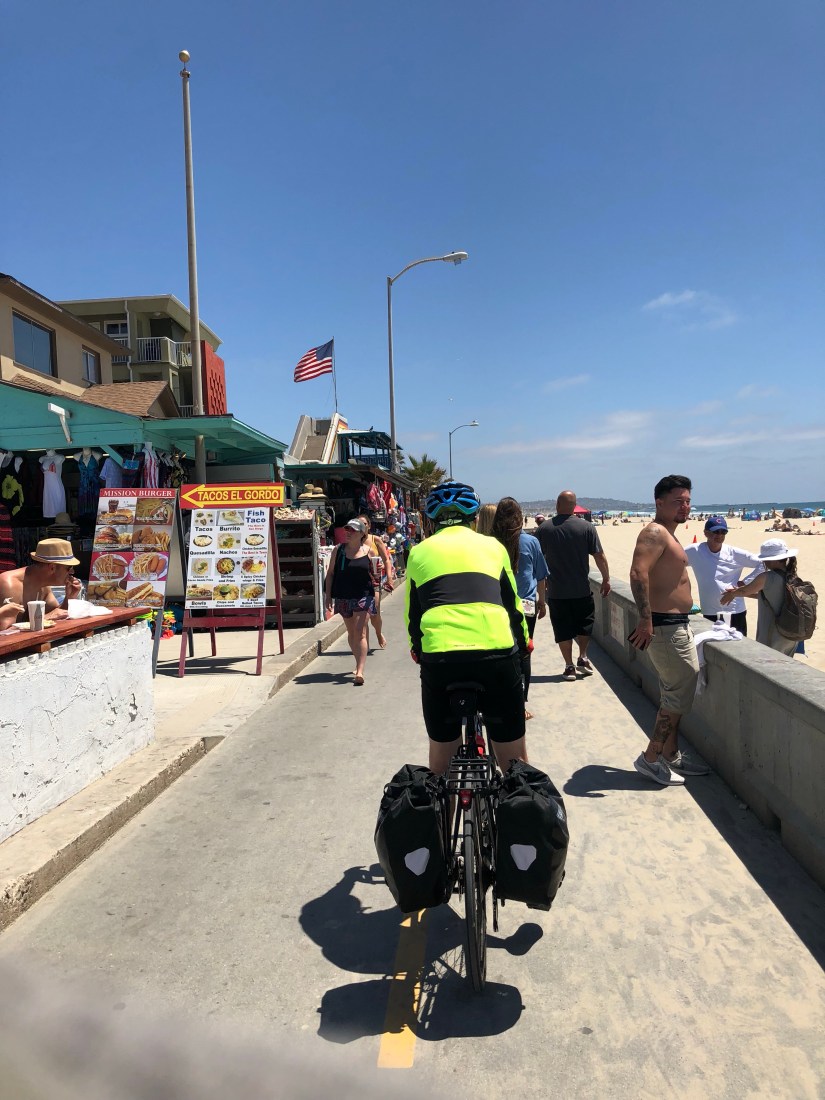
The somewhat more congested Mission Beach bike path

  • a sudden and surprise ascent from the traffic-choked boulevards of greater LA to a wide-open bike path along the Los Angeles River:


img_1375

From the busy industrial and shopping districts of Carson and Torrance to an almost empty bike path, all the way to Long Beach


Because of the slower pace, closer proximity to the road and intensified attention to one’s surroundings, a bicyclist travels through a much more granular landscape than a motorist, and seemingly minor details gain greater significance.
IMG_0670

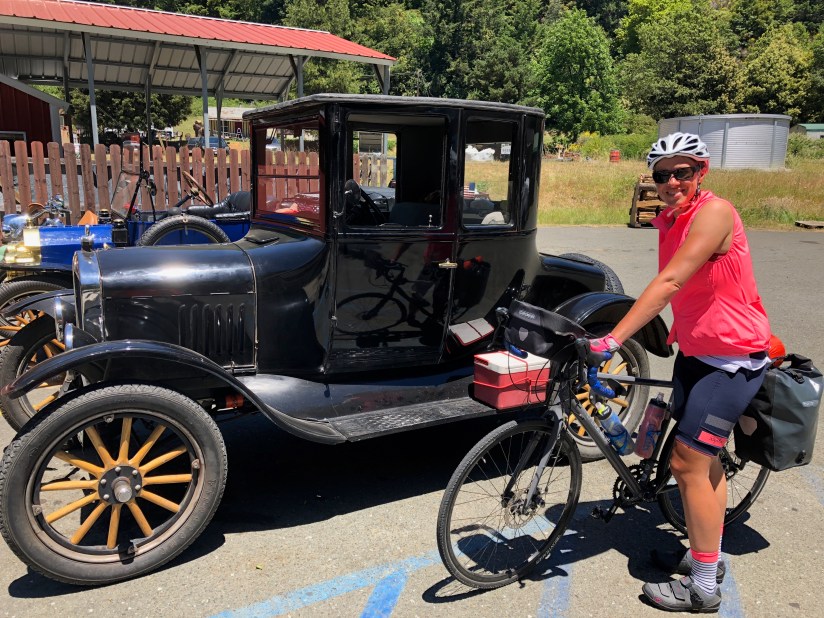
You probably notice more from a Model A at 35 mph than you do from behind the tinted windows of a modern sedan doing 65. Ashley’s had her double-chocolate espresso brownie and is ready to race this guy up the Leggett hill.

I tried to scribble the best of these into my notebook, but most went unrecorded and have already been forgotten. What I remember:

  • attaining the summit of some nasty little rural hill to see a street sign reading “Random Place”
  • noticing a camouflaged fawn bounding along the other side of the guardrail as if racing me
  • among a growing catalogue of roadside litter, riding past what appeared to be a samurai sword, scabbard and all, lost or discarded on the highway shoulder
  • a roadside shop in Toledo WA advertising “Insurance, Taxes, Espresso”
  • the northbound bicyclist wearing a fedora and carrying what appeared to be a pile of luggage on his rear rack

IMG_1641 (1).jpg

Michael, from Singapore, was also riding from Canada to Mexico. He ran into us at breakfast in Valley Ford CA, and two weeks later, as we were sightseeing on the day after we returned from the Mexican border, Ashley recognized his unmistakeable plaid bike jersey riding along the San Diego harbor, headed south to finish his trip.

  • the shaved-head Central California guy in a battered Ford pickup, passing rather closely and rudely, with a window sticker “No Lives Matter”
  • the dually pickup roaring past, license plate “BIGBTM”
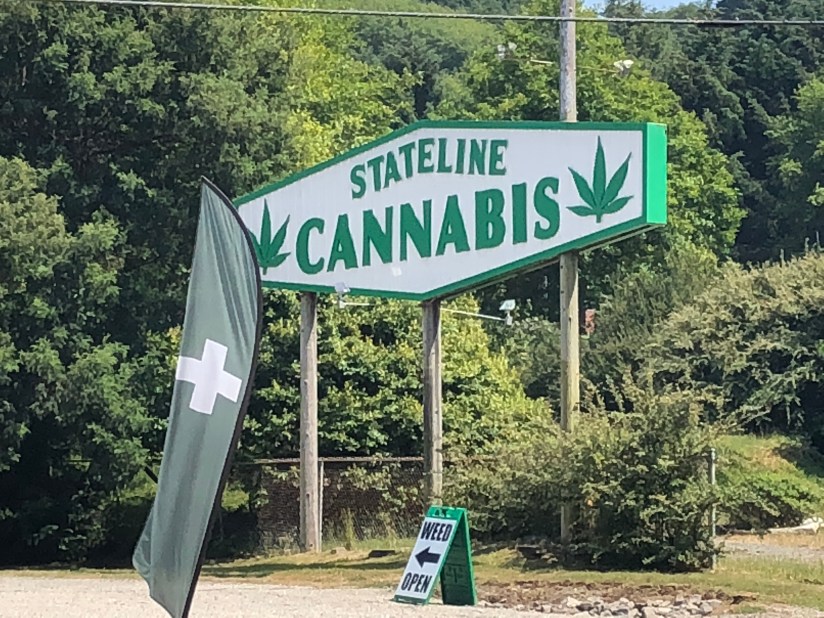
  • looking up to notice the juxtaposition of two signs along the Columbia River, one on an elementary school – “LEARNING, GROWING” – and just beyond it, on a recreational weed dispensary,  “CANNABIS”
img_0519

More dispensaries in Oregon that you can count, in towns of every size; this one beckons from a few yards north of the California border

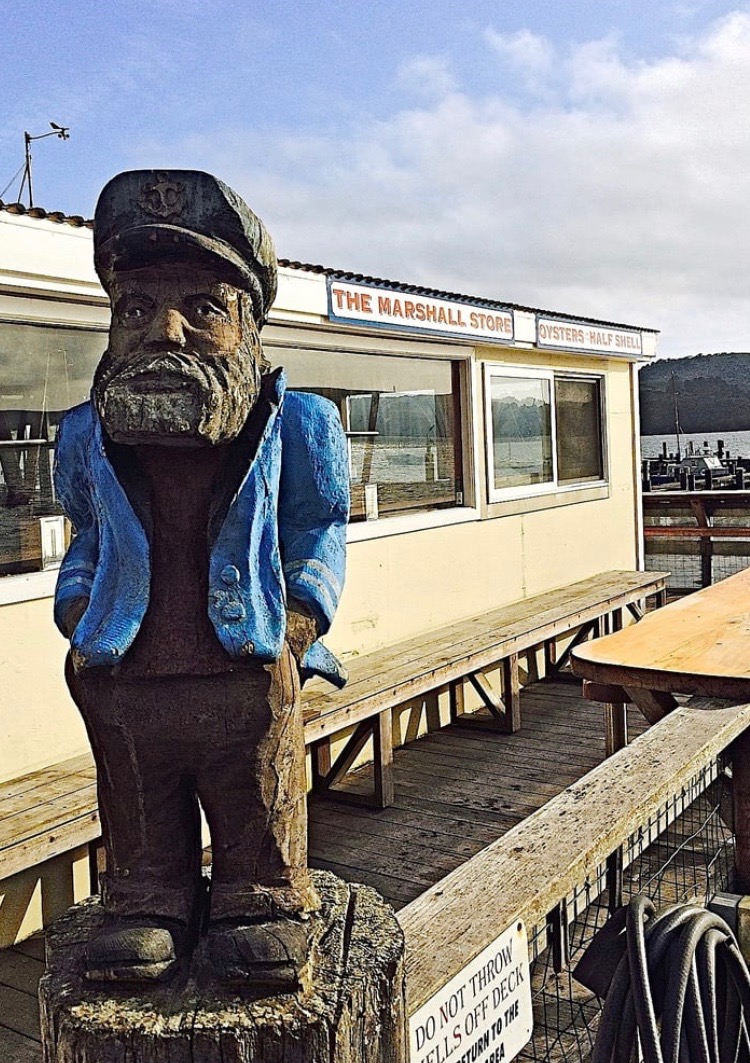
  • Along Tomales Bay, the Marshall Store, one of many shacks offering oysters & beer:
IMG_0827.jpg

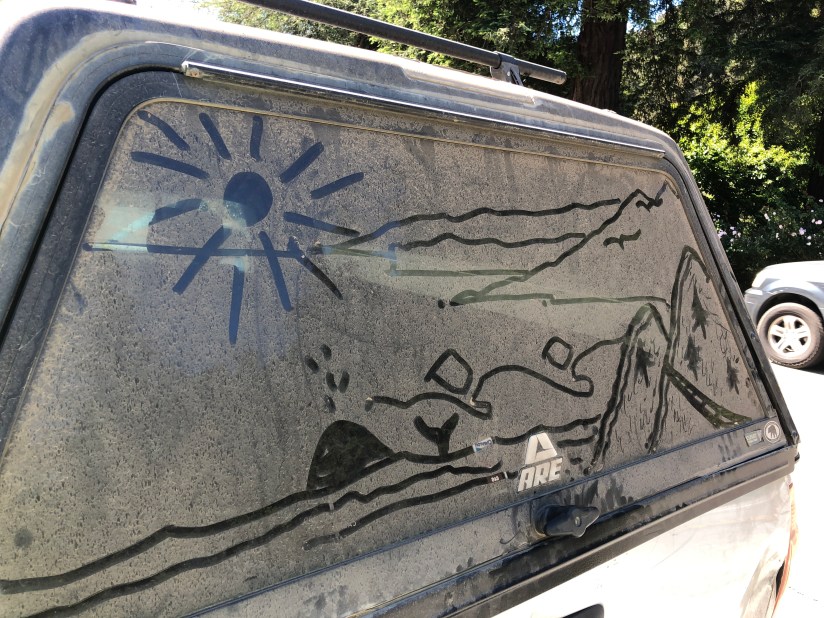
  • this drawing of the Big Sur coast on a dusty truck window in the Ripplewood Resort parking lot:
IMG_1067

Or this odd stump at Fort Ross in northern California:

IMG_0770

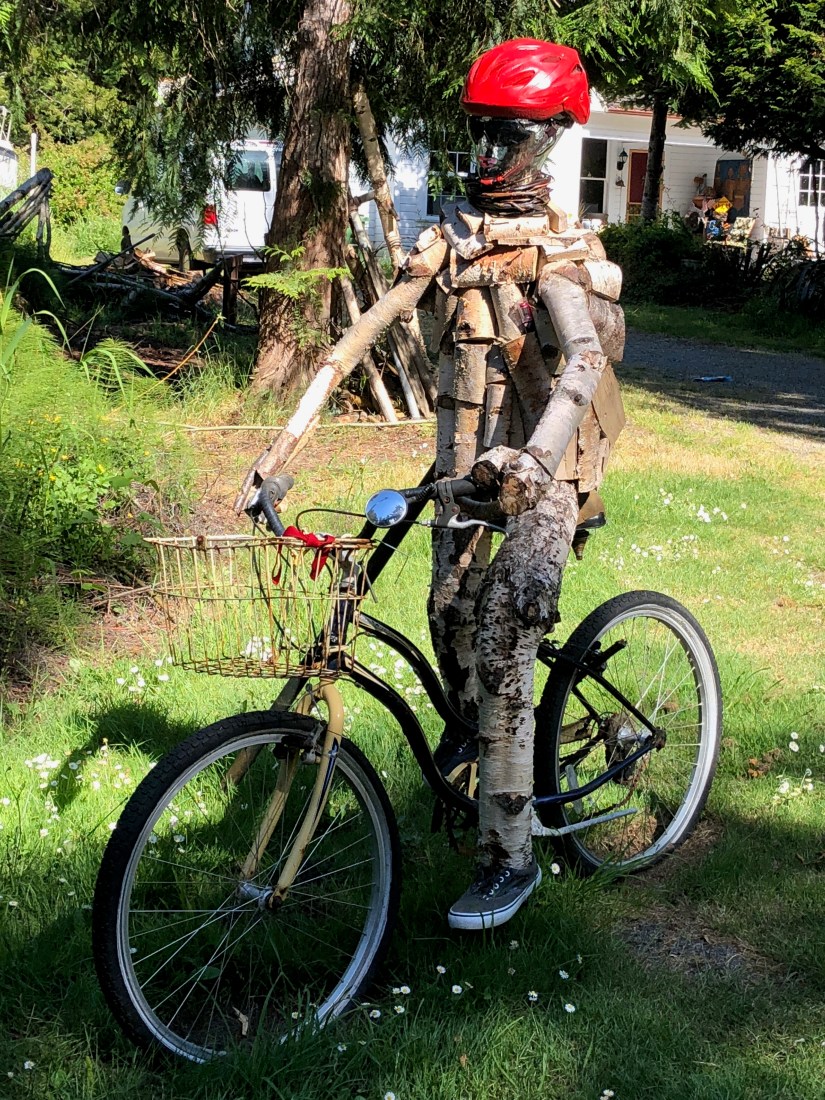
Or this yard sculpture outside Bandon OR:
IMG_0367

And does a rider ever smell the smells! Honeysuckle, jasmine, BBQ, woodsmoke, sea breeze, seaweed, truck exhaust, dead mammals, live cows, horses, portapotties, sewer plants, fried food, strawberries, wild fennel, sun-dried grasses, cigar smoke from passing cars, sesame and peanut oils from Chinese restaurants, French fries from fast food franchises, mud flats, fermenting pasturage, fresh-baked sea salt caramel cookies …
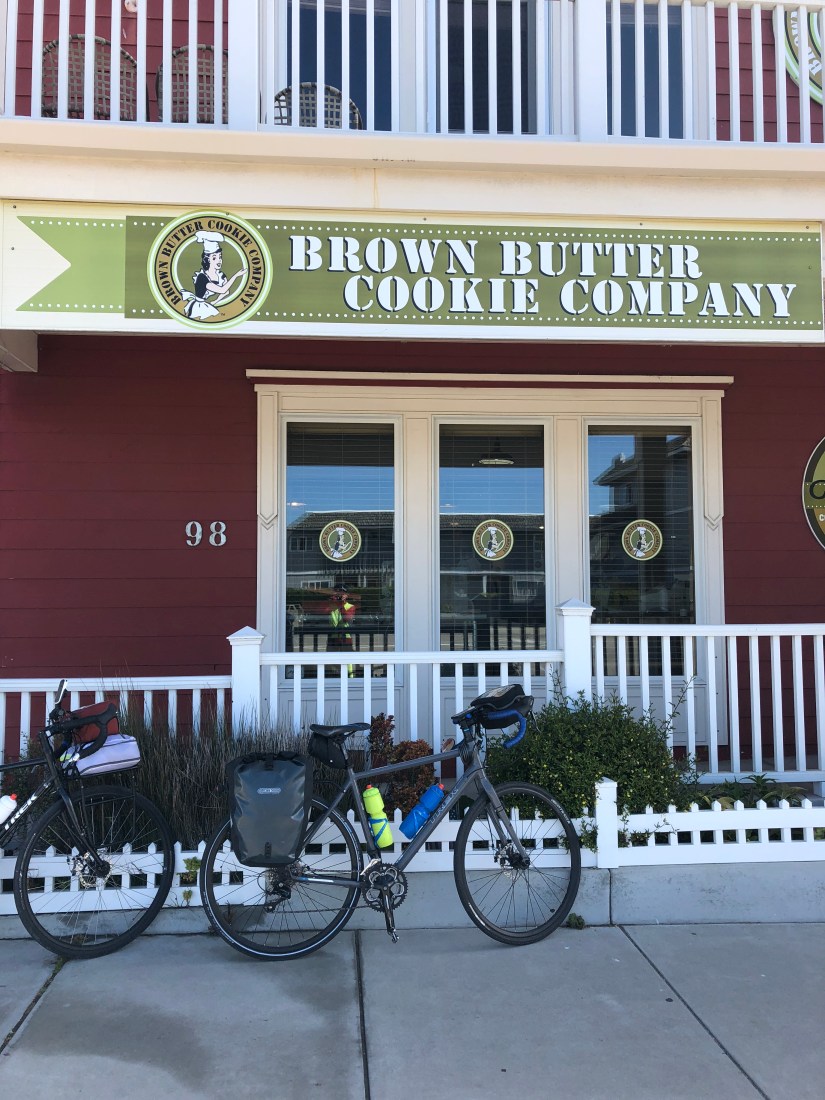
IMG_1158

Snagged by the smell of Cayucos CA

Mostly I think about how amazingly lucky we were. We had the time, and the health, to do this ride. We were able to buy good equipment. Aside from a few scattered drops in Florence OR and a nighttime shower in Arcata CA, it never rained or snowed or sleeted on us. It never felt too hot or too cold, except maybe briefly. The coastal fog cooperatively kept offshore, or burned off early in the day. It was so unaccountably clear in the Pacific Northwest that for three straight days we saw Mt. Rainier’s glacier dome, usually wreathed in clouds, on the distant horizon:
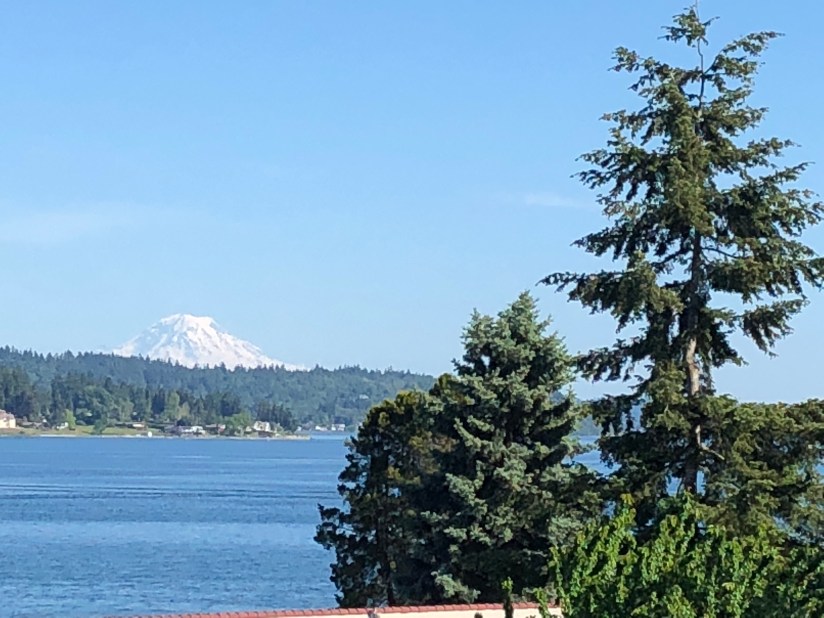
img_0122

We experienced no accidents, bad falls, major breakages or mechanical (or emotional) breakdowns. At times we took a wrong turn or paused in uncertainty, but we never got lost, thanks to our maps and our devices (shout-outs to Ethel, and Adventure Cycling) and one bearded old man north of Langlois, Oregon who stepped out of the woods like an Old Testament prophet to point the way.

IMG_0607.jpg

What I saw when I looked down: Ethel (a Garmin 1030, named after the Parks and Recreation character Ethel Beavers) and one of the Adventure Cycling Pacific Coast route maps

We spent no unplanned nights out, never went without a meal, were never short of water (though we did worry a couple of times). We always found well-reviewed and well-priced lodgings close to our route, thanks to hotels.com, and though several came up short in one department or another, they were all at least acceptable. Well, maybe not this place:
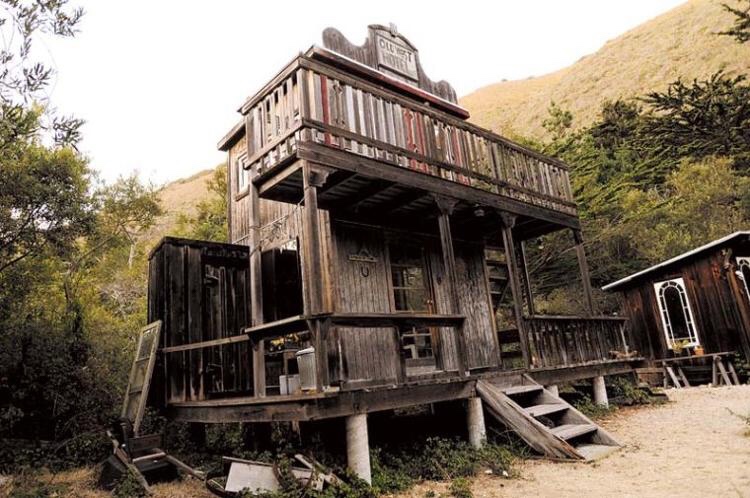
img_1201

But this place, for damn sure:

IMG_0788

The beautiful (and reasonably priced) Bodega Bay Inn

We never met a genuinely nasty person, and although very rarely a vehicle might have come uncomfortably close, once or twice perhaps by design, we never felt threatened. And we were cursed with only two flat tires – and each of those in convenient locations. It’s what we call “our bubble.”
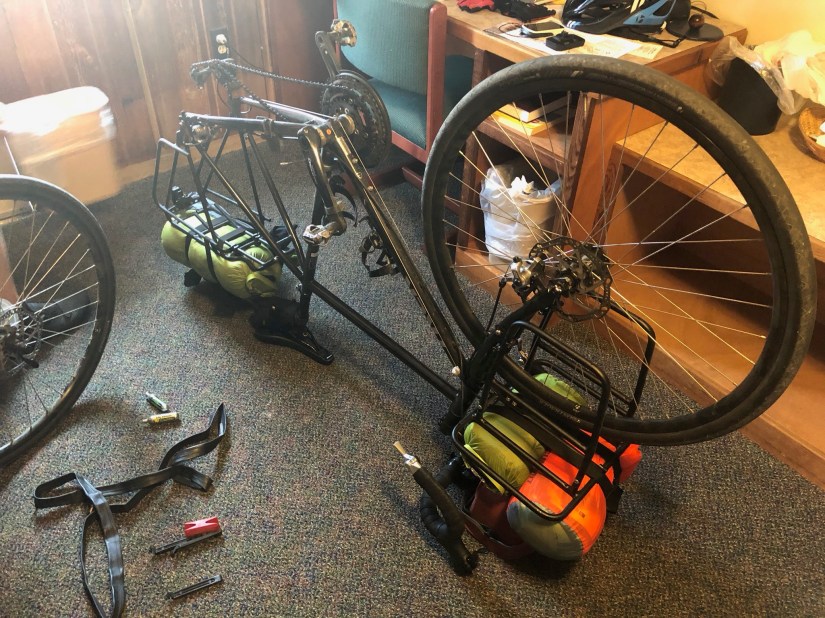
IMG_1641

Flat tire #1 of 2, northern Oregon coast

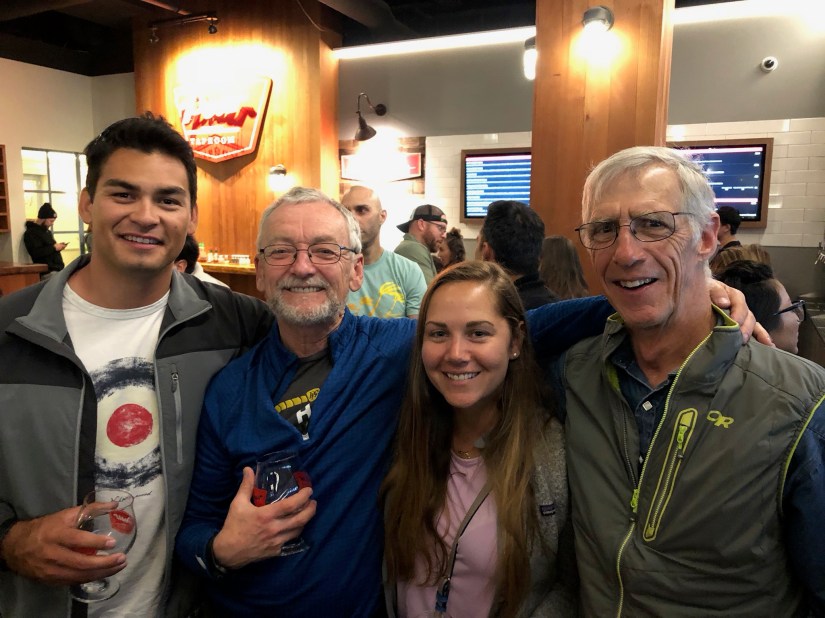
Bubble or not, we couldn’t have done it without the folks who showed up to help us along the way: our dear friends Todd & Cindy, Joseph, Katie & Travis, Jan, Tom, Eric & Vicky & Arden, and John; and our family, Winona & Sergio.
IMG_2082

Sergio & Winona, who resupplied us in Santa Cruz; and Tom, who shuttled us around the Big Sur road closure.

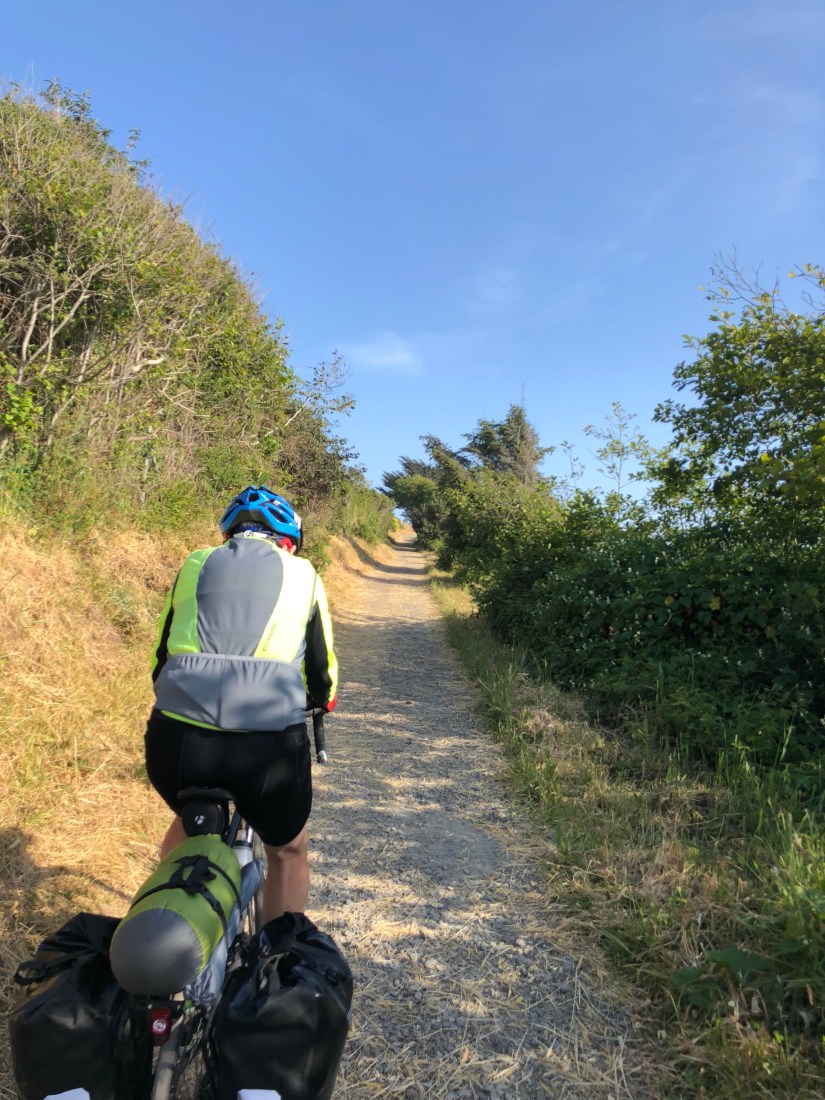
Also our family & friends who followed our progress via this blog and sent us their kind comments and encouragement; and by the anonymous passers-by, motorists, motel clerks, servers, pubtenders, Lyft drivers and others who gave us a smile and sometimes offered advice and assistance should we have needed it. Thanks to that cop in Rio Dell who assured us we’d have no problem with the Leggett climb, advising us to pre-load with a chocolate brownie from the Peg House, and thanks to the woman motorist just north of Arcata who shamed us — in a nice way —  into taking the bike path even though part of it — a steep part, as it turned out — was said to be steep & unpaved. And it was … but we did it.
img_1721

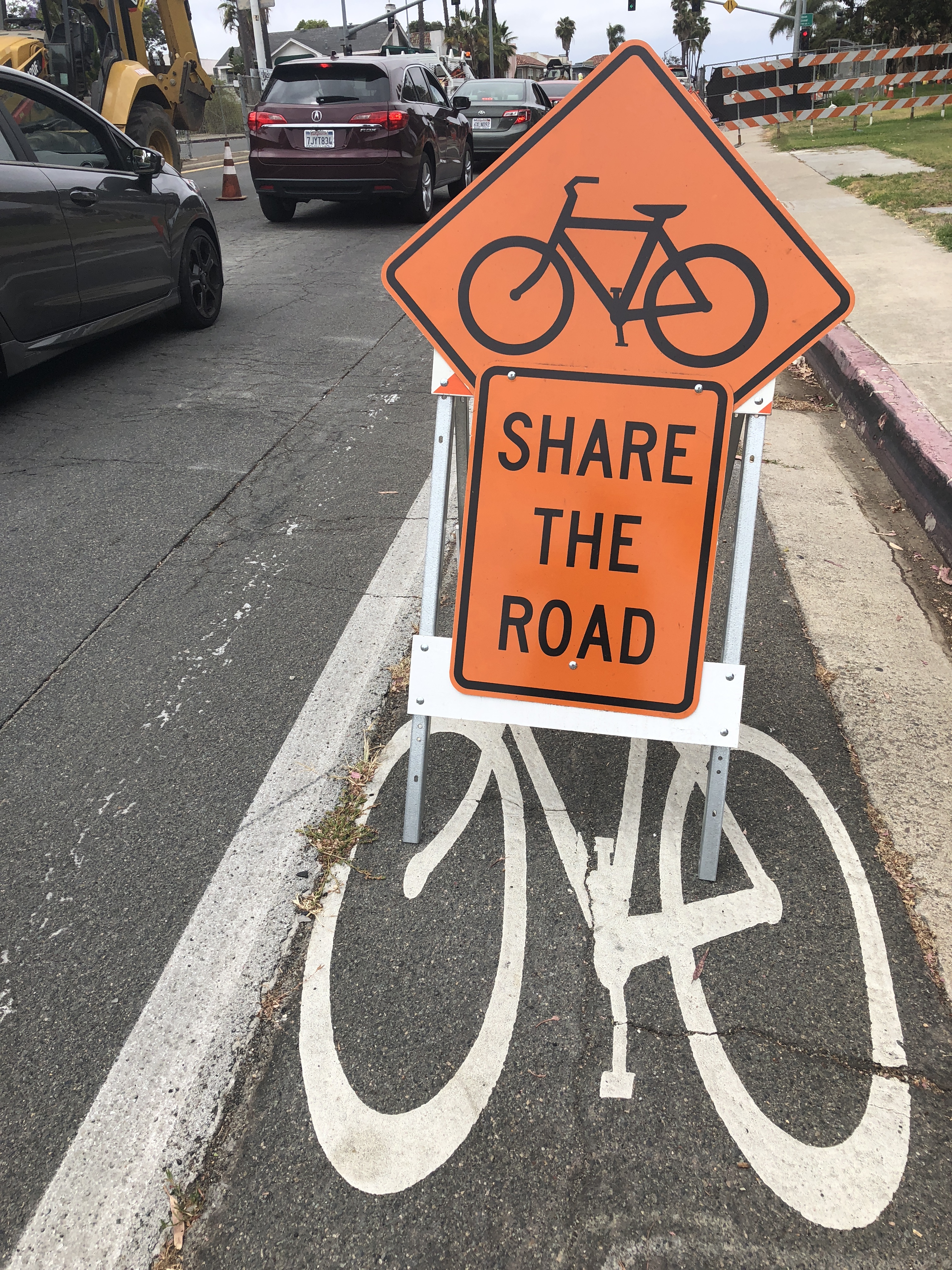
Thanks to all the motels and hotels who let us keep our bikes in the room – we swear we never left a grease spot or cleaned our chains with your washcloths. And to the many, many cars and trucks who hung back behind us on blind curves or narrow roadways until the coast was clear.
IMG_1596.JPG

And I’m saving the biggest and most heartfelt thanks for my riding partner, my life partner, my fiancée, my constant companion  — Ashley. Her passion for exploration, her energy, her sense of humor, and her amazing ability to crank a loaded musk ox of a touring bike up a steep grade with only two chainrings, along with her generosity, patience, and enthusiasm for new experiences have reaffirmed my admiration and deepened my already considerable love for this remarkable woman. Besides, on two occasions she stood in her pedals to chase a car that brushed too closely to me, once getting alongside and remonstratively rapping on its side window.
IMG_1570.JPG

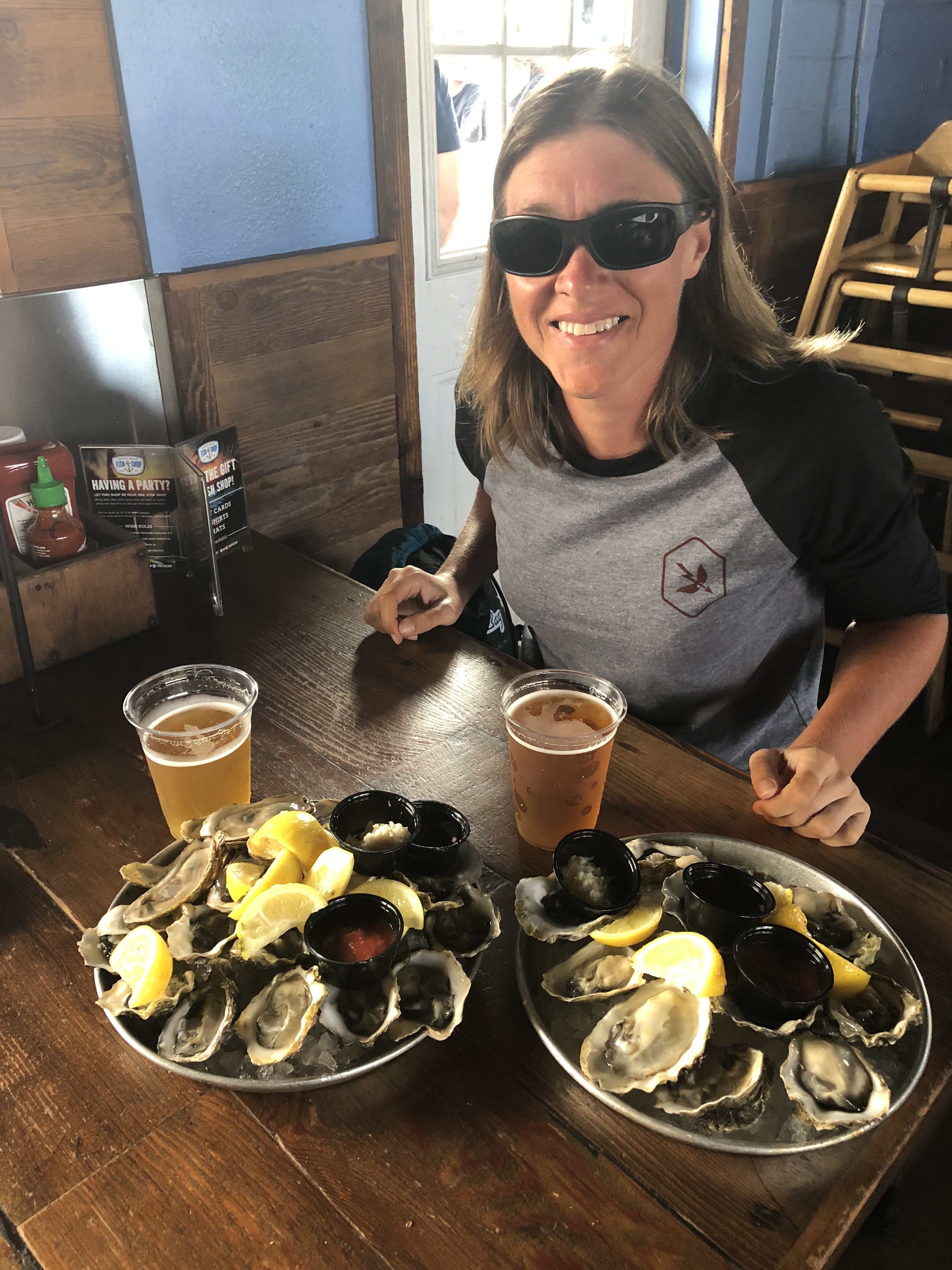
Ashley reaps the rewards of a tour well done at the Pacific Beach Fish Shop.

As for the end of the day, Clifin Francis, a math teacher from Kerala, India, sums it up in a few well-chosen words. Francis, who at about the same time that we were touring the Pacific Coast rode a $700 bike he bought in Dubai 2600 miles from Iran to Moscow to see his hero Lionel Messi play in the World Cup, wrote that “cycling takes you back to the primitive necessities of life. What you need at the end of the day is a shower, nice place to pitch your tent and good food and you are happy.” For us, a shower for sure, in a clean & preferably cheap motel, and a brewpub. That’s what made us happy. And we were happy, one way or the other, at the end of each and every day. As long as there was beer. And there always was.
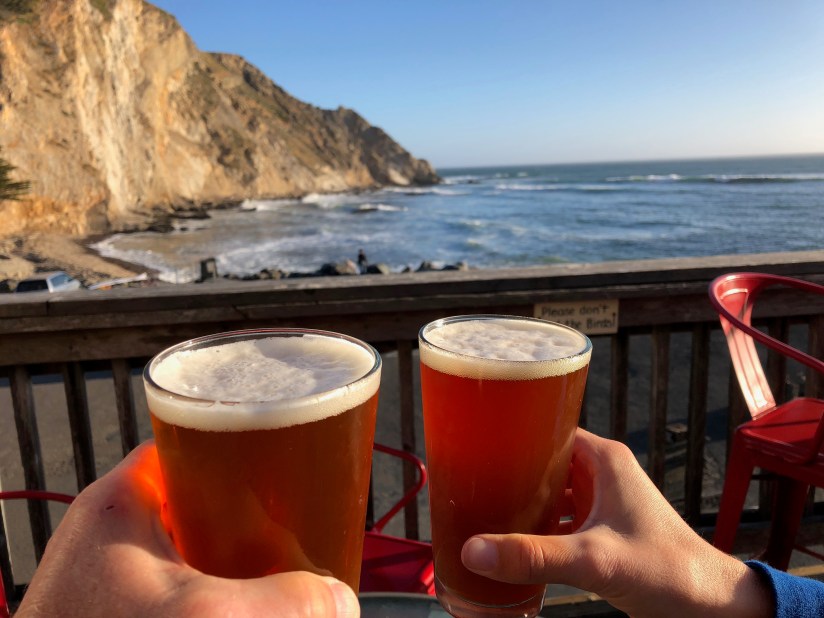
 

IMG_0758

The Pier Chowder House & Tap Room, Point Arena CA.

As someone once said, when you reach the top of the mountain, keep climbing. Our Pacific Coast tour has ended, but we will ride on, always seeking new journeys and destinations, while never losing sight of home sweet home.

 

The Finish Line

Day 35, the last day of our Pacific Coast bicycle tour, was different from most for more reasons than just its finality. Instead of a skanky no-tell motel, we stayed in a big-city downtown hotel (where we’ll also R&R for the next three nights); instead of riding point-to-point we rode an out-and-back route (19.2 miles to the border, and weirdly 18.9 back the exact same route, the difference due to Einsteinian relativity, perhaps); and in just a few of those miles we were catapulted from affluent and preppy San Diego to the barren and heavily fortified Mexican-American border.

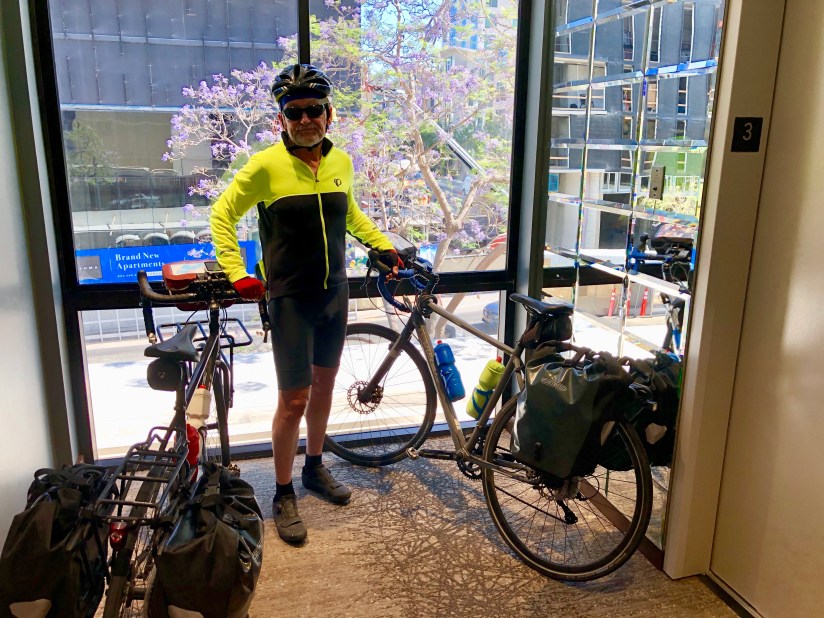
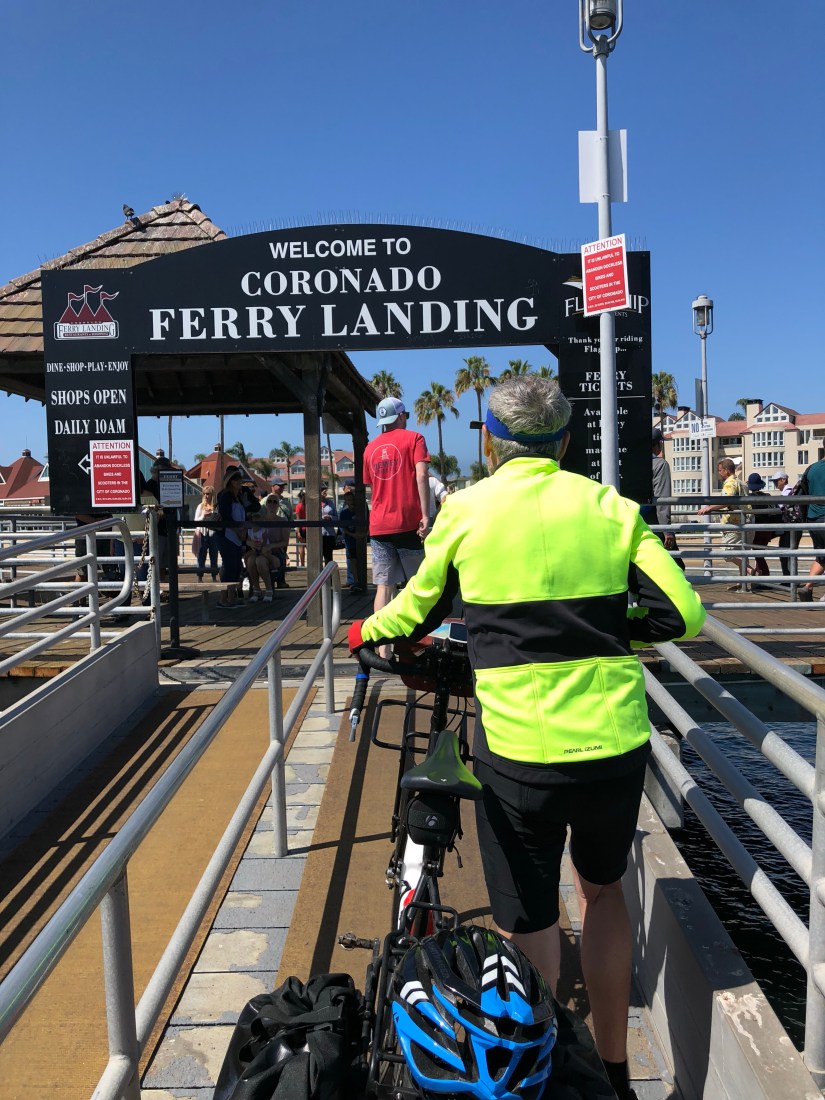
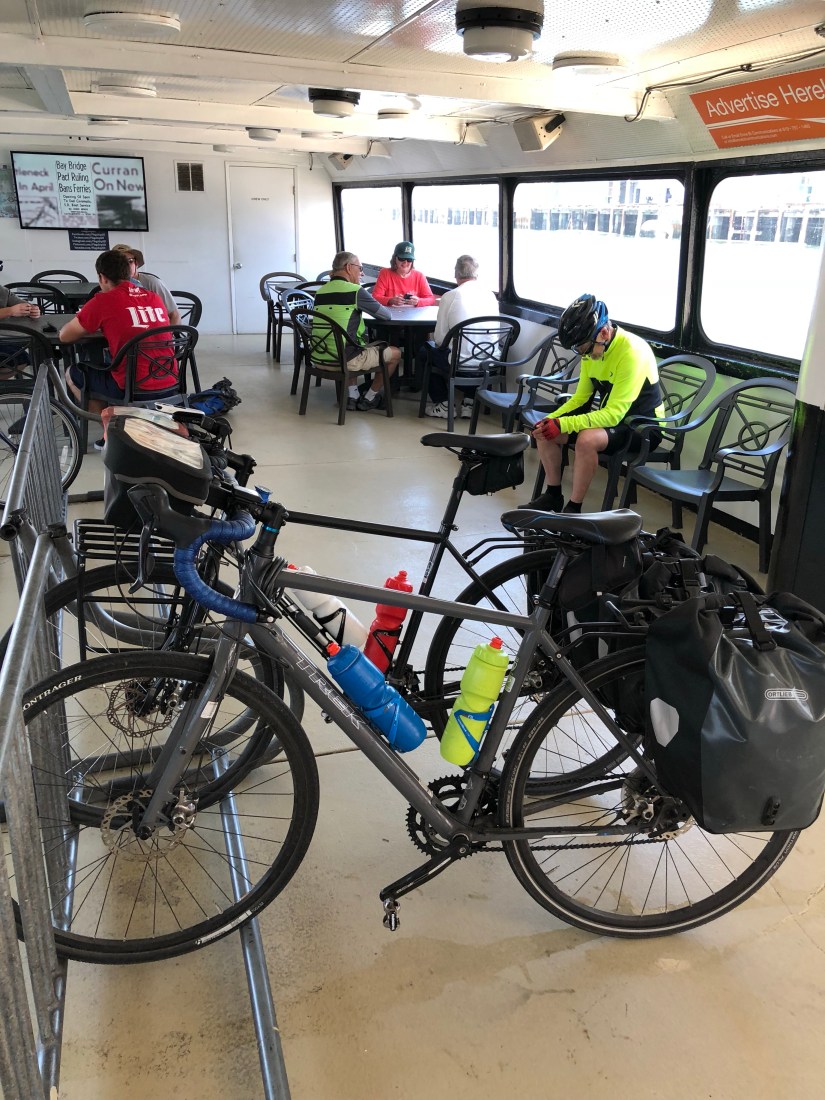
After being stuck on the third floor of a Best Western Plus for a few minutes due to a broken elevator, our last riding day started with a 15-minute trip to Coronado Island on the San Diego harbor ferry.

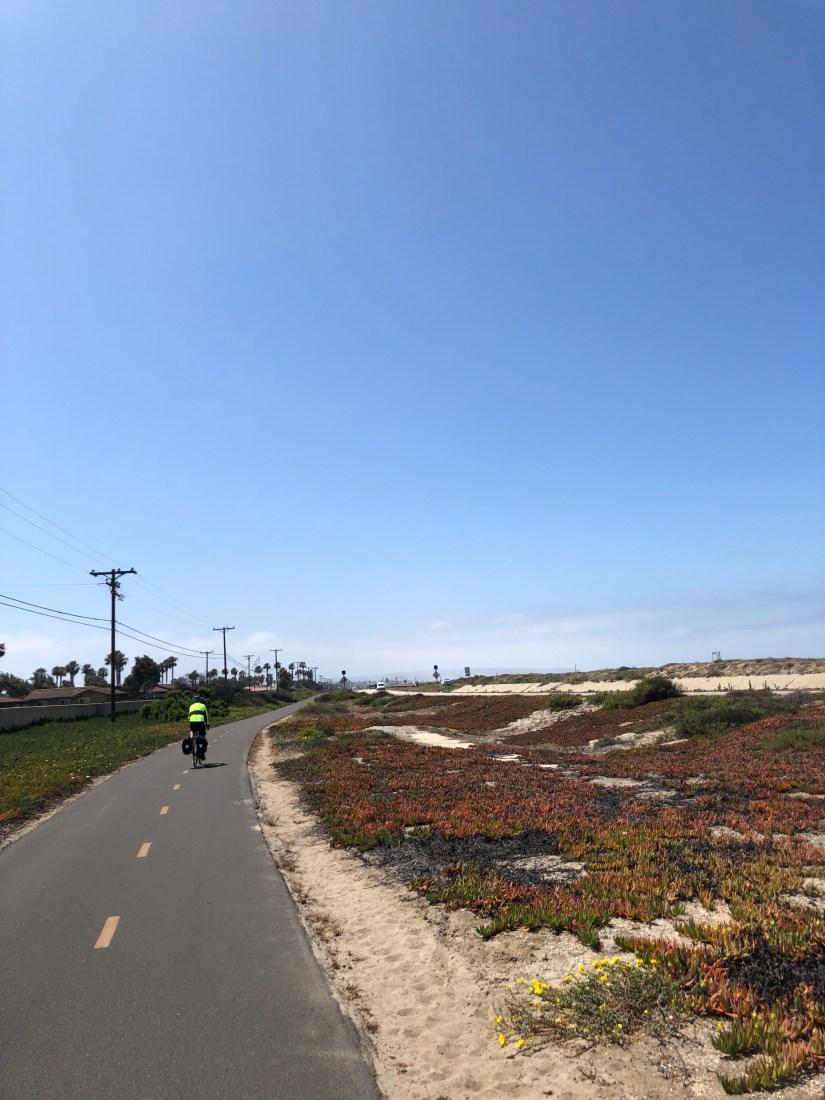
Once on the island, we caught a bike path that took us past downtown shops, yacht basins and golf courses, past the iconic Hotel Del Coronado, and then southward out along a narrow spit that stretches between ocean and bay for miles through dunes and marshy grasslands, past hotels, gated enclaves, and ecological reserves and wildlife viewing areas on the bay side, and fenced-off US Navy property on the other. There were quite a few fellow cyclists, mostly Lycra-clad and riding hard; none of them were going where we were going. The day was mostly sunny with a light northwest wind.

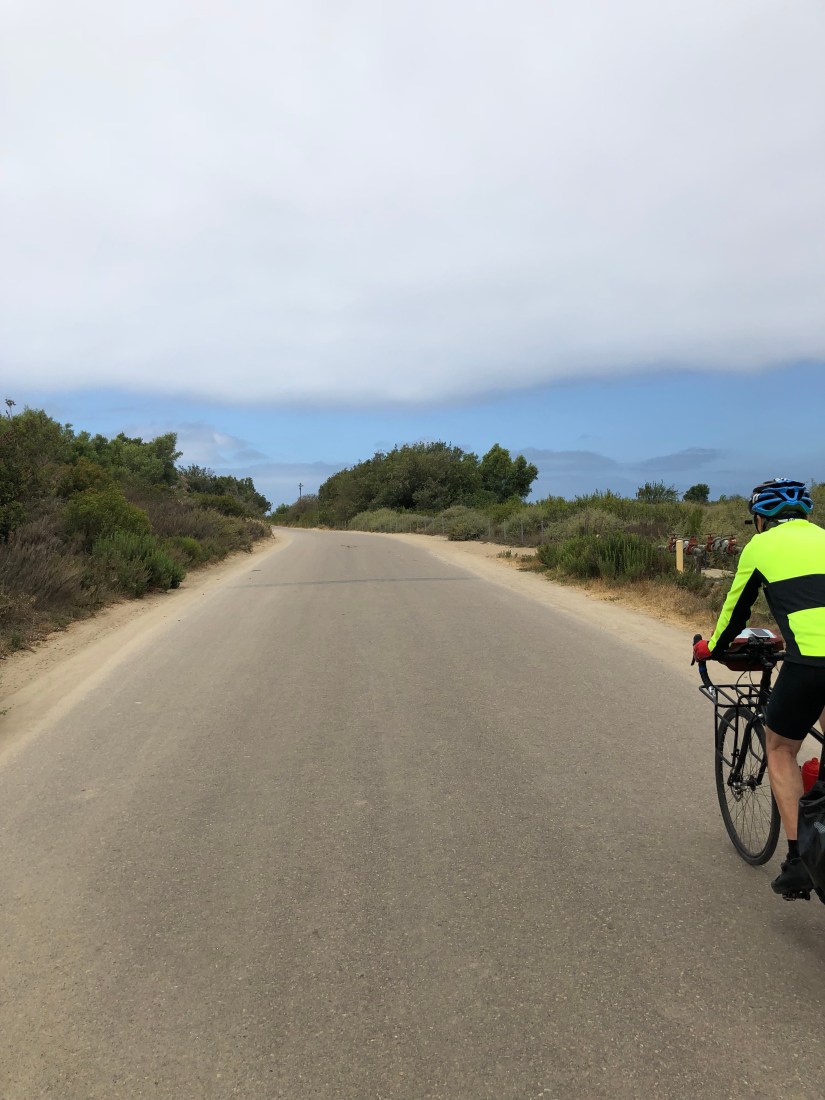
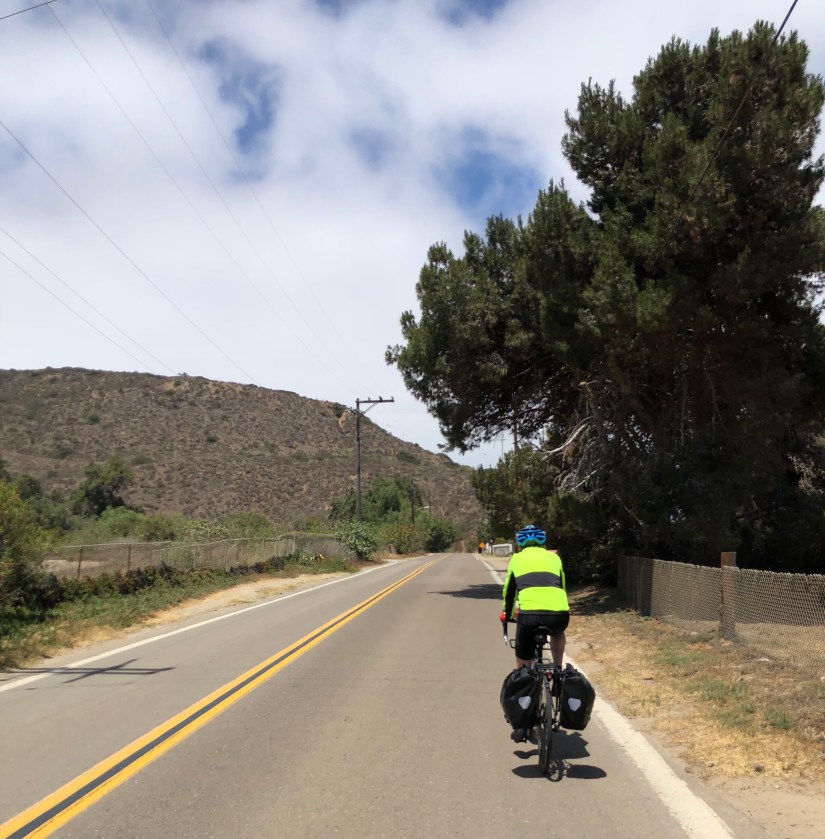
Once we turned off the bike path in Imperial Beach, it was a whole different scene. The homes and businesses were humbler, the streets still wide but badly in need of repair, and within a few miles we had left the service-station fast-food suburbs and were riding through rural scrubland, the vast but dry Tijuana River estuary, with a long steep deserty ridge in front of us that we soon realized, as the rough road made a sharp right turn to the west, was Mexico. Almost in a instant, it felt like, we were a hundred miles and maybe as many years from sprawling, touristy, glittering hi-tech California.
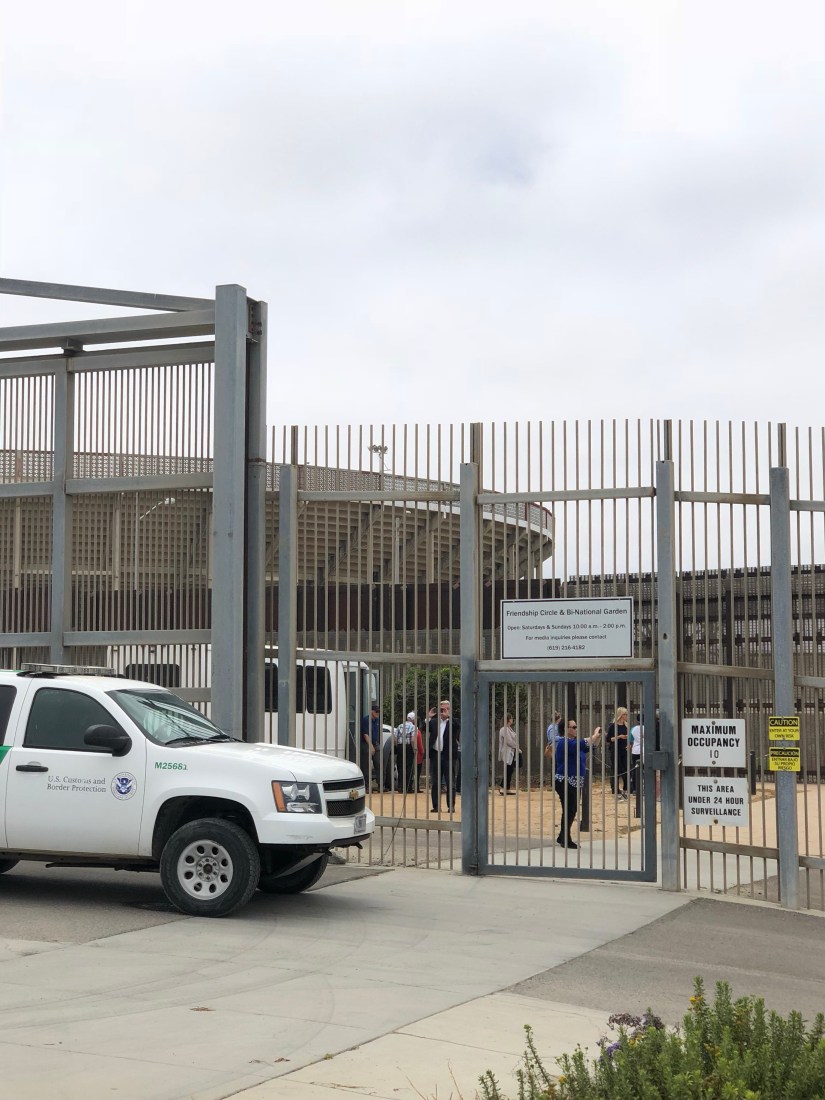
A few more miles and the road turned to sandy gravel– we’d reached the end of the line, the so-called “Mexican-American Friendship Park,” which didn’t feel very friendly at all.
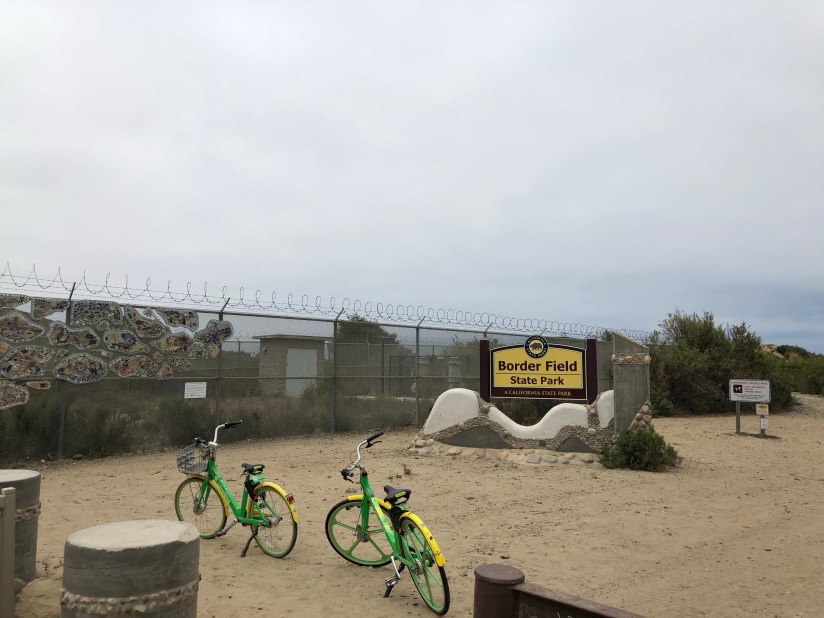
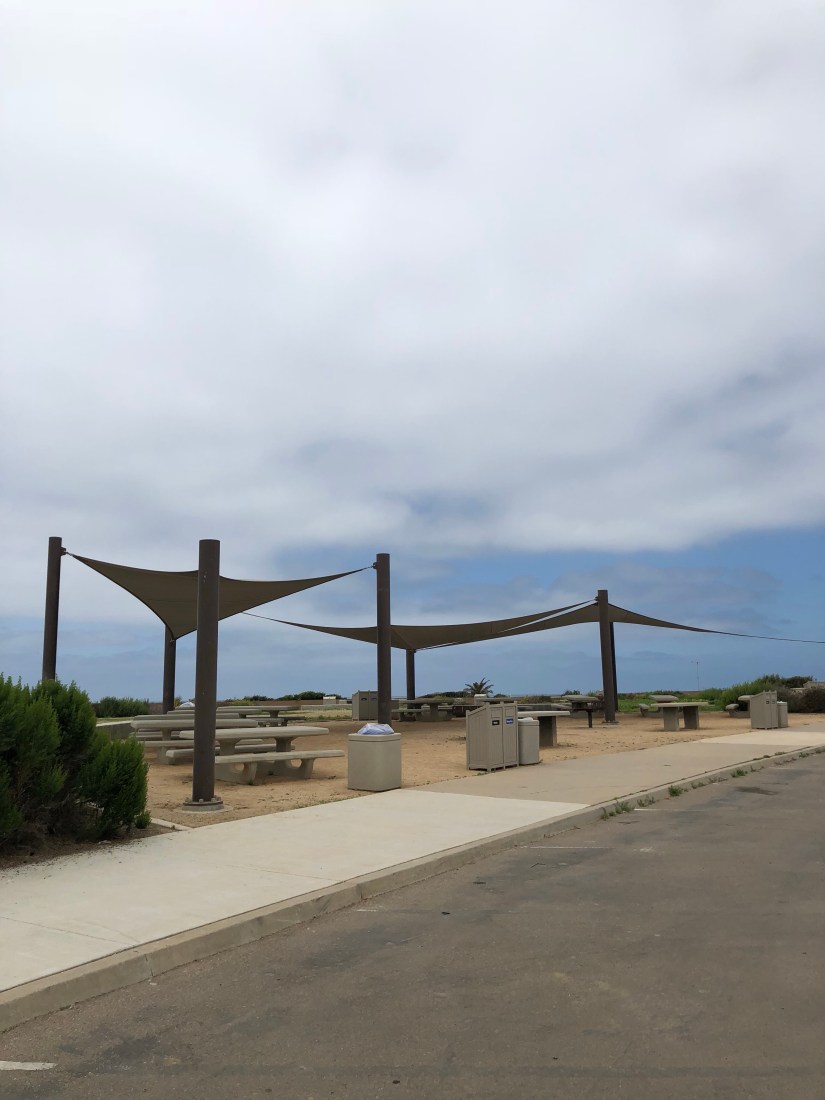
There was a small picnic area, and relatively well-maintained bathrooms, but it was anything but park-like. Soon we realized that it felt–and apparently functions–more as a prison visitation site. Just beyond the “park” there was a lane of pavement which was–several sternly-worded signs told us–off limits. No one allowed on the pavement except for border patrolmen. David tried to step closer for a look and a blank-faced BP agent in mirror shades stuck his head out of the official vehicle that had been idling near us: “you’re not supposed to be there.”

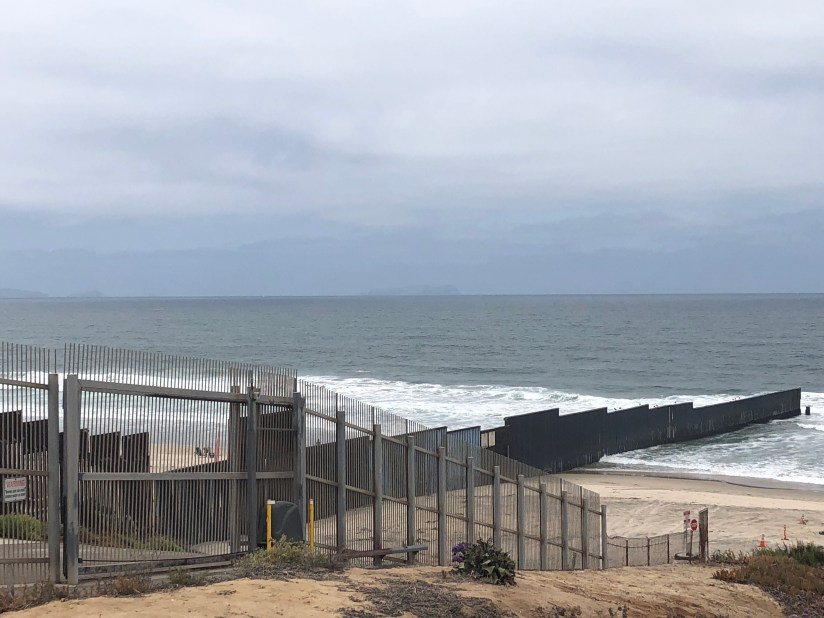
On the other side of the forbidden road was the “wall,” a high barrier of graphite-colored metal staves conforming to the slope of the ground and extending some distance into the ocean. Beyond that, a small DMZ between this barrier and another just like it twenty yards farther south. Signs warned of rattlesnakes, and bad water.

The space between the two barriers is called, again euphemistically, the Friendship Circle and Bi-National Garden. It was neither friendly nor a garden (and also not circular, actually). That space, heavily secured, is apparently open for four hours on Saturday and Sunday, during which periods family members separated by the border can visit under what is no doubt strict and ominous supervision. While we were there, a passenger van pulled up and disgorged an armed female BP agent and a group of Americans, on some kind of tour organized by the BP’s public information office. Before he was shooed away, David heard the agent reciting statistics of attempted crossings, apprehensions, other incidents. The tourists peered through the southern barrier the ways visitors at a zoo peer into cages.

On the other side of the walls, sliced and diced by the spaces between the fence posts, can be seen the stream of everyday life: cars and buses and walkers and joggers, homes and apartment buildings, a big outdoor amphitheater, a lighthouse, and a busy highway heading east. It might as well have been in another dimension. Over all loomed a tall tower festooned with lights and cameras. Just a few dozen yards down the embankment, the Pacific waves crashed into the end of the fence that extended 50 yards or so into the surf.

We had expected … what? Champagne and high-fives? A welcoming committee? Surfers? A brewpub? There had been something festive about the Canadian border 35 days ago: green grass, roving groups of tourists, a towering monument, cafés and gift shops, a distinct absence of fences, razor wire, and other obvious enforcement. Here, we suddenly felt like we’d ridden onto the set of a spaghetti western. Except that in this moment the sinister mood at the southern border is all too accurate an indication of a painful reality. Rarely have we felt so uncomfortable and vaguely threatened as Americans on American soil–or, indeed, as Americans almost anywhere in the world.

35 days ago at the northern border.

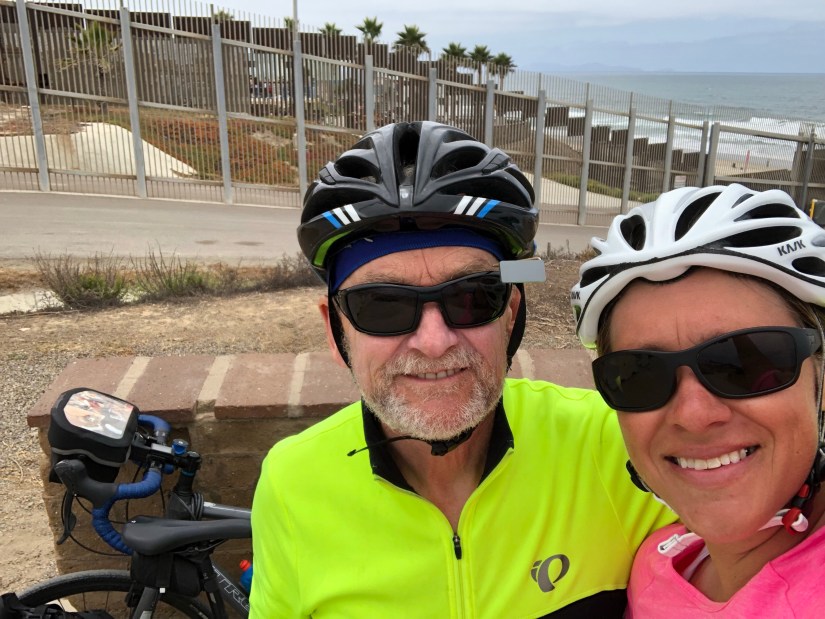
Now, almost as a second thought, we took a few selfies, acknowledged that we had reached our goal, hugged each other, looked around one more time at the eerie, otherworldly, depressing scene, and walked our bikes along the sandy road back to the pavement for one last ride, a steady 19 miles into the wind, back to San Diego.

Day 35: 38.1 miles (inexplicably), and 487 feet in 3:11.


Still to come: a few retrospective posts, lists, and final thoughts.


The Penultimate Pedal

Day 34, second-to-last (according to plan): Yet another lightly overcast coastal morning, quickly turning to full Southern California sunshine. We walked a few blocks from our hotel for breakfast at an 80s-themed diner, BC-DC (Breakfast Club Diner California) with pictures on the menu of various hair bands, of “the miracle on ice” pulled off by the 1980 US men’s hockey team, and of Michael Jackson, and really good, fluffy blueberry buttermilk pancakes.

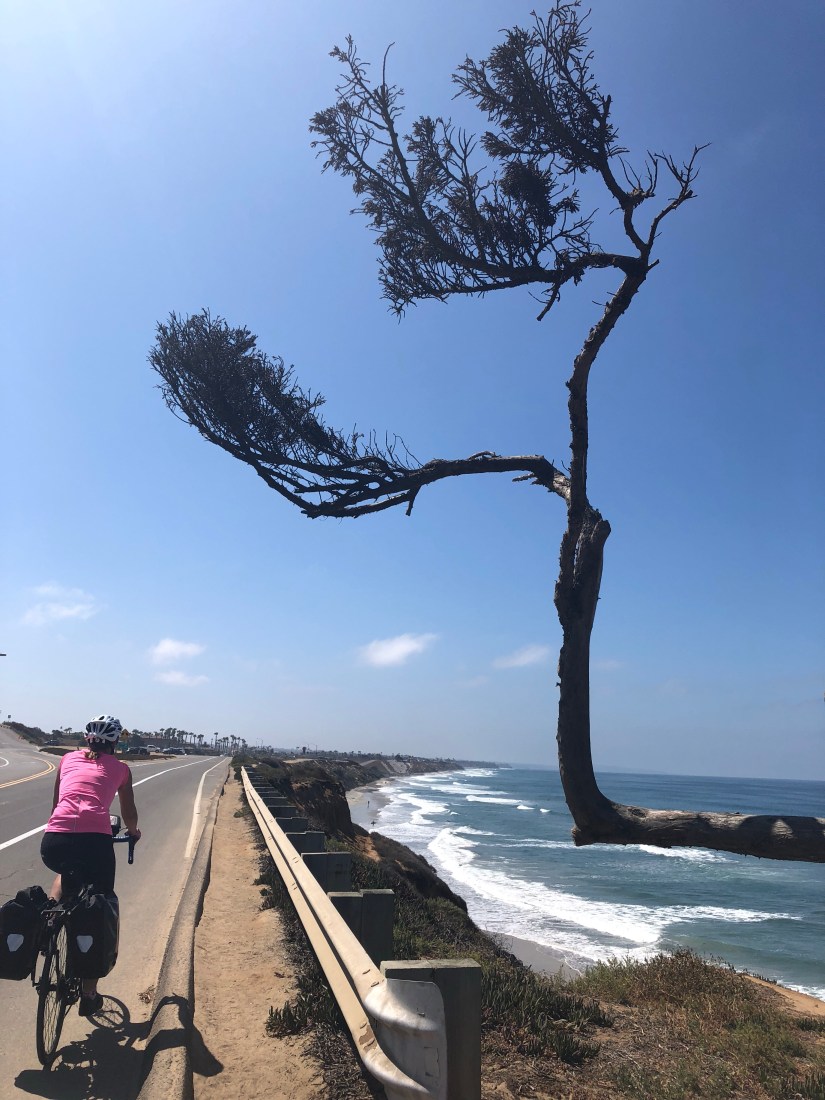
Soon we were a-rollin’ south again, through coastal communities like Carlsbad and Encinitas (the latter especially re-visitable), up and down little hills, over causeways, past harbors and surfing beaches, mostly on wide shoulders and the occasional stretch of bike path. Packs of recreational riders swarmed past us, and posted bike route signs proliferated. It was warm, maybe one of the warmest days of the whole tour, but whenever our generally south-by-southeast heading veered one way or the other, we welcomed the steady cool Pacific breeze.

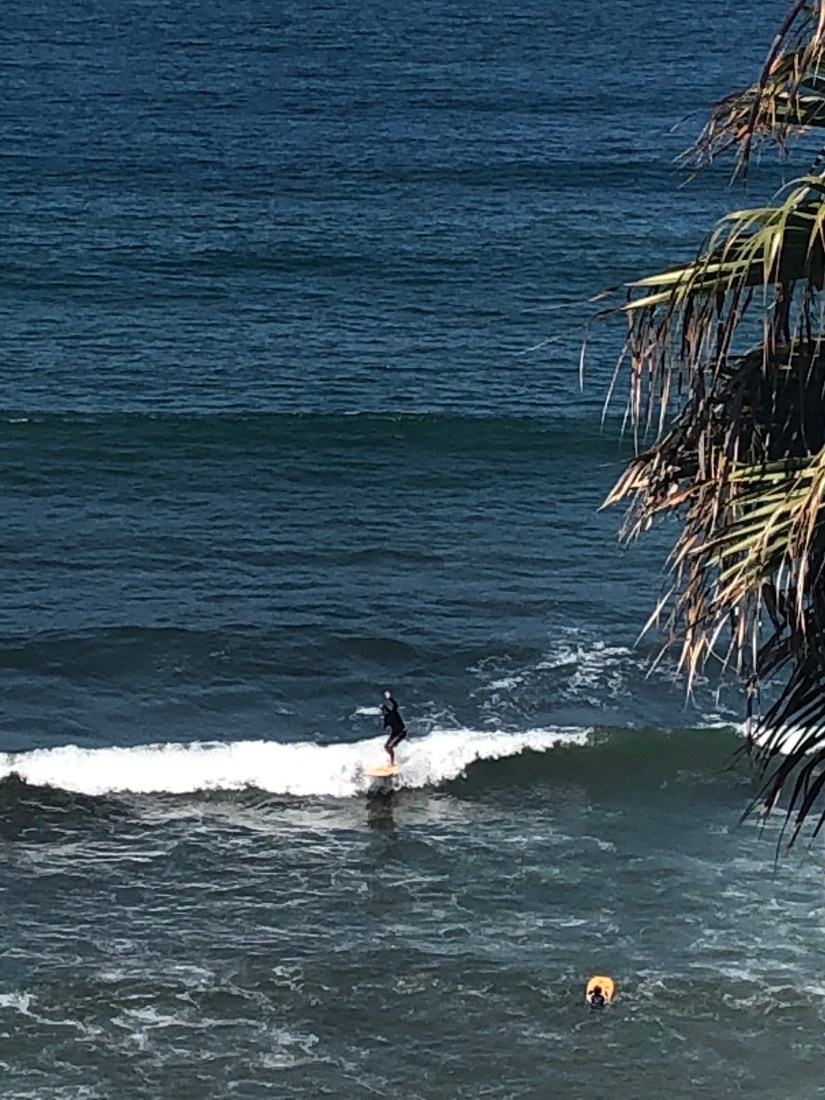
In Encinitas we paused at a bluff-top picnic table to snack and slather on more sunscreen (it’s David who slathers, Ashley content with a few strategic dabs). Down below, as we’ve seen almost continuously for days, frolicked packs of surfers in wetsuits, their vans and RVs parked along the highway, lines of them coming and going along the beach paths.

“If everybody had an ocean

Across the USA

Then everybody’d be surfin’

Like Cali-for-nye-a”

Also in Encinitas we passed the Self-Realization Fellowship Temple, founded by Swami Paramahansa Yogananda, the Bengali guru who relocated to Southern California in the 1930s. Fun facts: Mark Twain’s daughter Clara was one of his disciples, and it was here that he wrote Autobiography of a Yogi (1946).

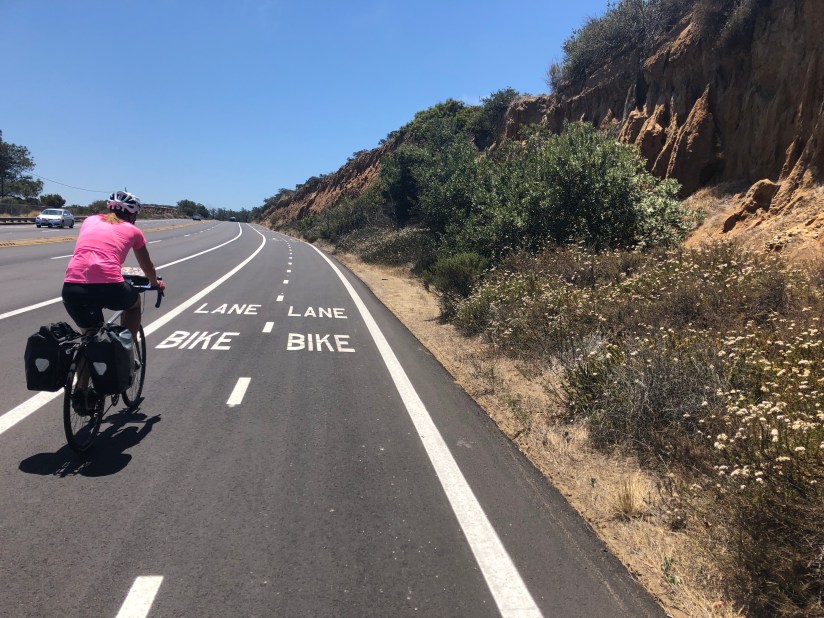
Climbing into Torrey Pines Preserve was the first and only time the shoulder was divided into two bike lanes, the polar opposite of Laguna Beach. It was also the only significant climb today, a few hundred feet. Far cry from the thousand-foot climbs of yore!

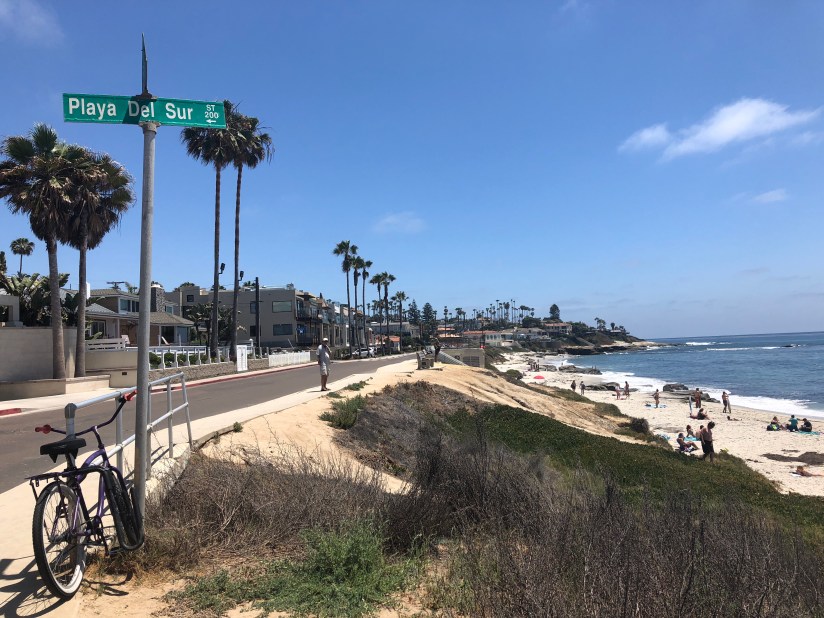
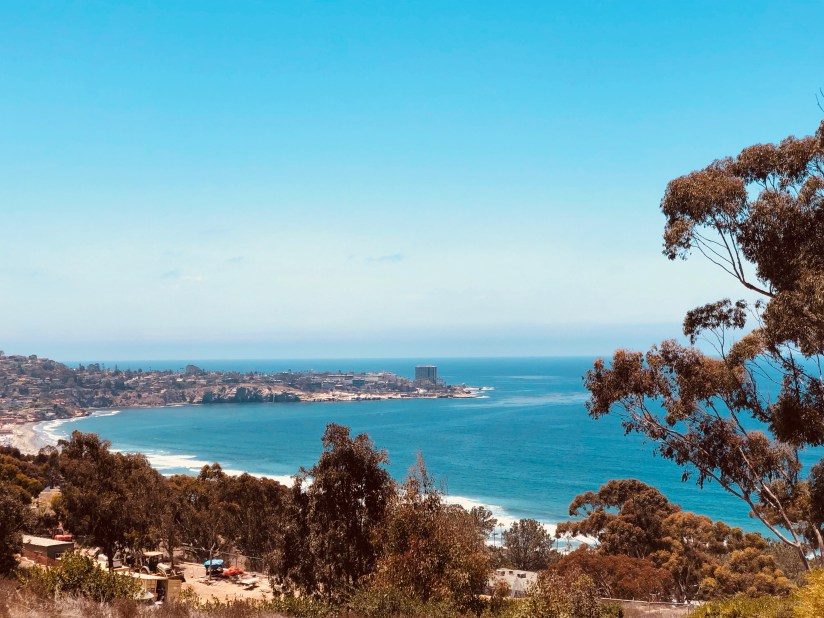
Atop the hill sits the UCSD main campus, and a long descent brought us into La Jolla with its elegantly landscaped homes, upscale shops, and, weirdly, some badly cracked and rutted pavement.

Here we paused for a quick lunch at a corner bistro — well, David’s chicken tortilla soup and croissant were instantaneously served, but Ashley had to wait 30 minutes for a milkshake (“the ice cream is hard, they’re working on it”). (That’s right, a milkshake for lunch. Ah, touring life!)

We followed a winding harbor road among lines of cars going 5mph, serenaded by barking seals, and the traffic steadily picked up as we got closer and closer to San Diego.

In Mission Beach we turned onto a crowded pedestrian/bike/skateboard/rollerblade oceanside path that had us half-riding, half-walking our bikes past shops, bars, dudes drinking beer on the verandas of rental apartments, and wetsuited surfers vaulting the low sea wall with their boards pivoting unpredictably. It could have been tedious, but the sheer human interest kept us fascinated.

The scene was wild, hugely entertaining even when one is in the middle of passing it by. We’d love to sit for a while and watch: the bearded hippies on old-school skates, gray-haired women learning to ride scooters, the kids hopping the dividing wall between their rentals and the beach, the women on cruisers wearing backpacks full of dog…. we want to come back and spend a few days living on this chaotic spit of oceanfront. But there’s a dark side to this kind of scene: it’s frequented by mid-life-crisis-aged men with too much gel in their thinning hair, driving Chevy convertibles with license plates that read, “SLICK EH.” The question is perhaps rhetorical; the answer is undeniably no.

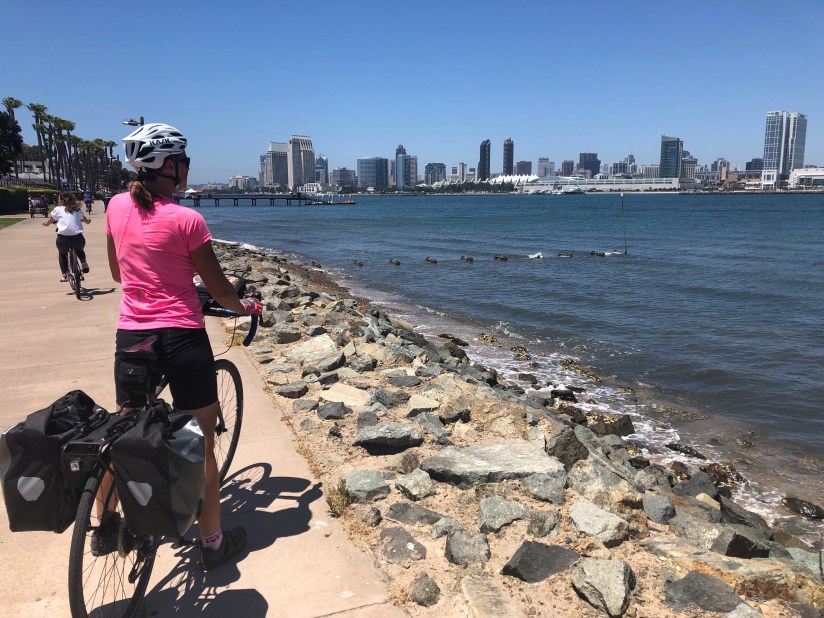
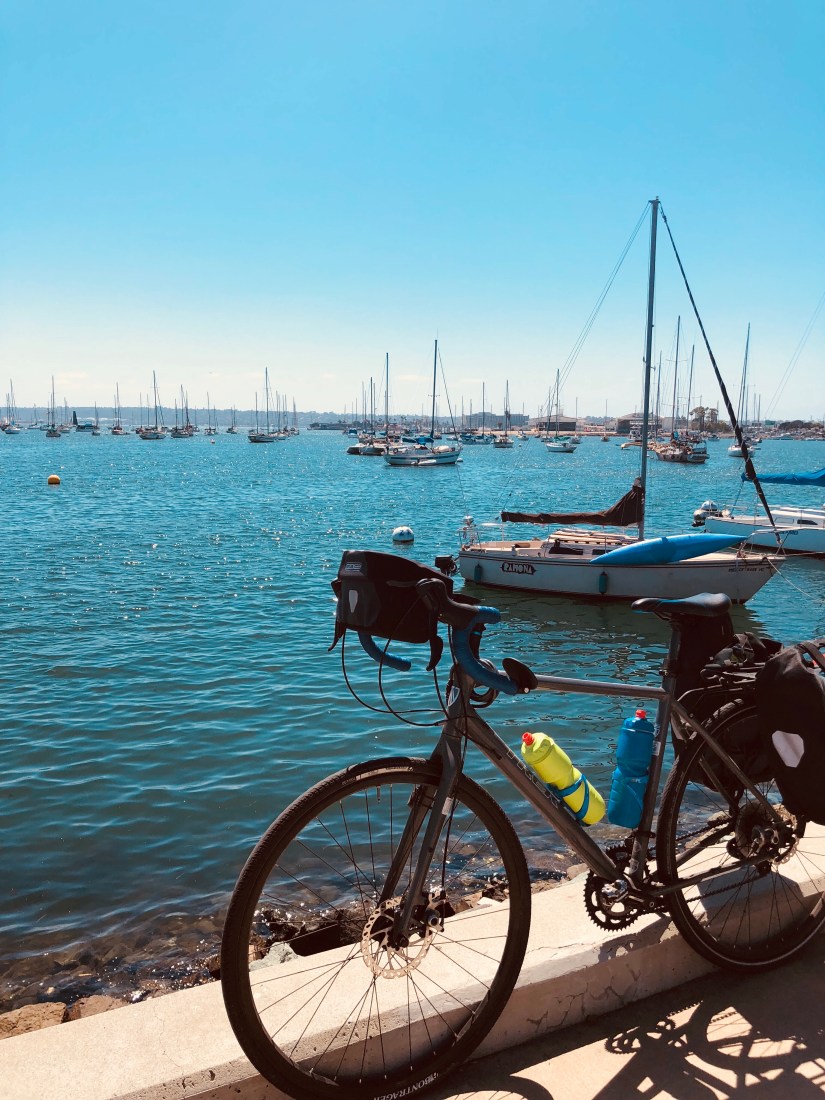
Some busy but well-shouldered urban riding brought us to San Diego harbor, past the airport and along a park-like shoreline to downtown, past the HMS Surprise, a precise replica of an 18th-century 24-gun British warship used to film Patrick O’Brien’s Master and Commander, and a few short blocks up to our hotel.

Although we still have 20 more miles to the Mexican border, we decided on a premature celebration, what we decided to call a “blur” of breweries. San Diego is lousy with breweries, not only the titans like Ballast Point, Stone, and Coronado, but more small and new ones than we can count. Ballast Point is a favorite, the mango even keel (David) and all varieties of sculpin (Ashley), so we started there, with a 20-mile Lyft ride with Josh, a Fort Worth emigrant who was probably the flat-out craziest rideshare driver we’ve ever experienced. He was going through some kind of personal crisis, and was too inarticulate to explain it very well.

So I was smoking weed with some people I met at Walmart, and it was, like, the universe, man. It sucks, man. I have this calling, you know, but all my life I’ve been lost. Good and evil, man. I have all these thoughts, and, like, I need a tape recorder so I don’t keep forgetting them.

Josh kept talking as we got out of his car at Ballast Point, even as we thanked him and walked away, happy to have survived what we thought at times was a potentially scary situation.

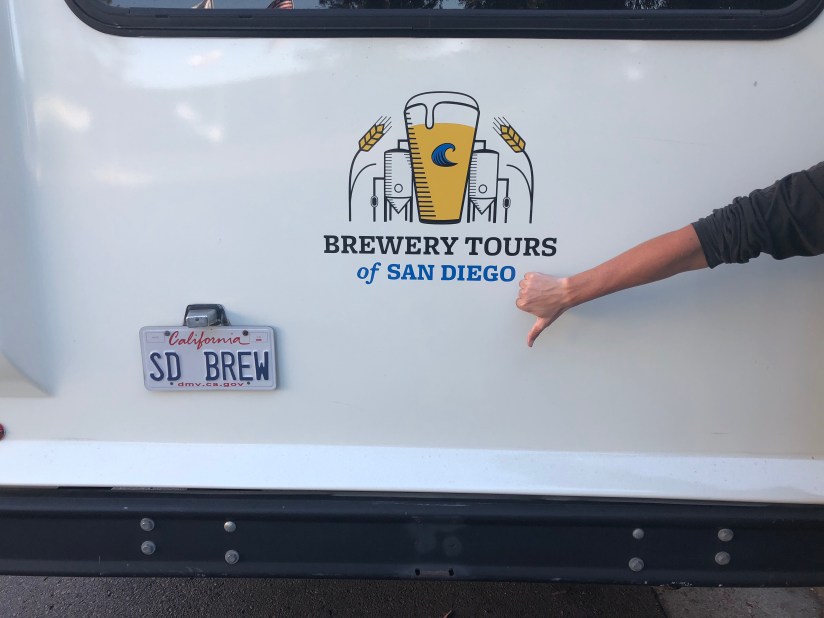
At Ballast Point we had dinner, a little early but we’d had no real lunch, so: calamari, fish tacos, and a lamb burger. All excellent, and we admired the rows upon rows of house brew but sampled only two. From there, a half-mile walk to two smaller spots, side by side: Pure Project (tiny, trendy, packed, with a first-rate saison and a proclivity for triple IPAs, which we always skip); and Amplified, decent but not spectacular, with less range and way fewer patrons. At this point we were shadowing the San Diego beer tour bus, which charges a piratical $75 a pop for a measly three brewhouses. Lyft was cheaper.

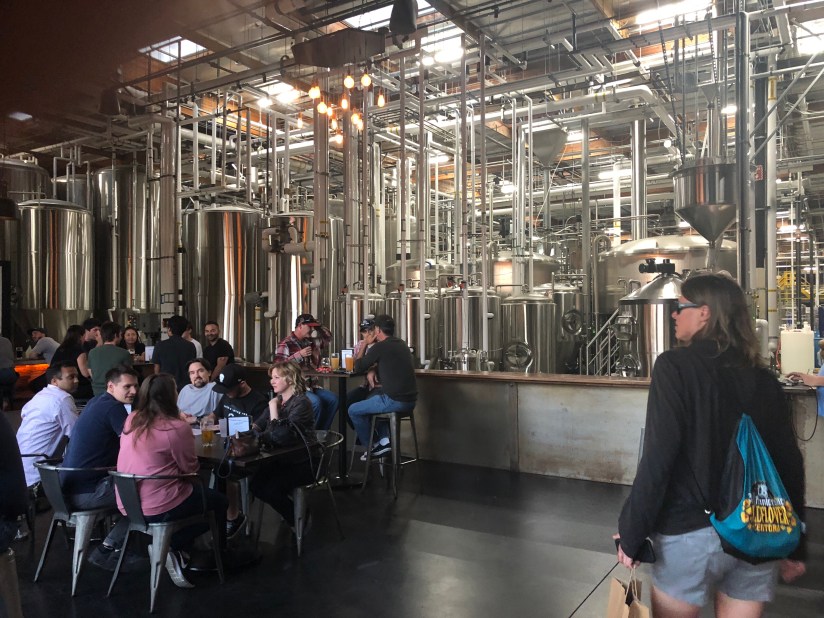
The fourth stop, also within walking distance, was the charming Duck Foot.

The best we sampled here (and it was only tasters at each spot) was the coconut IPA, summery and nearly perfect, if less complex than the offerings at either Ballast Point or Pure Project. Duck Foot was having its trivia night, and the emcee was a little grating, so we moved on. Decided to try Saint Archer, a brewery big enough to distribute to Reno.

The Saint Archer tasting room.

It was a longer walk, but it helped work off the lamb burger. Another warehouse-style space, another trivia night, but good IPAs and a comfortable atmosphere. Any other night we would have lingered, but we greedily wanted to collect one or two more, and since we were limiting ourselves to tastes at each one, that seemed doable. We Lyfted the mile or so to Rough Draft: the writing-teachers in us were taken with the name, but it was a depressing spot and we didn’t linger. Unexceptional in every way. Another short Lyft ride brought us to 32 North, a vast industrial space which was by 9 pm basically empty: us, a distracted barkeep, and one other quiet dude. Another good saison, less memorable than that at Pure Project. With a group, on a bustling weekend, this would be a destination; tonight it felt sleepy, like us.

And so to bed, confident that we’d made all the right decisions.


Today’s ride: 43 miles, 1616 feet, 3:45.