
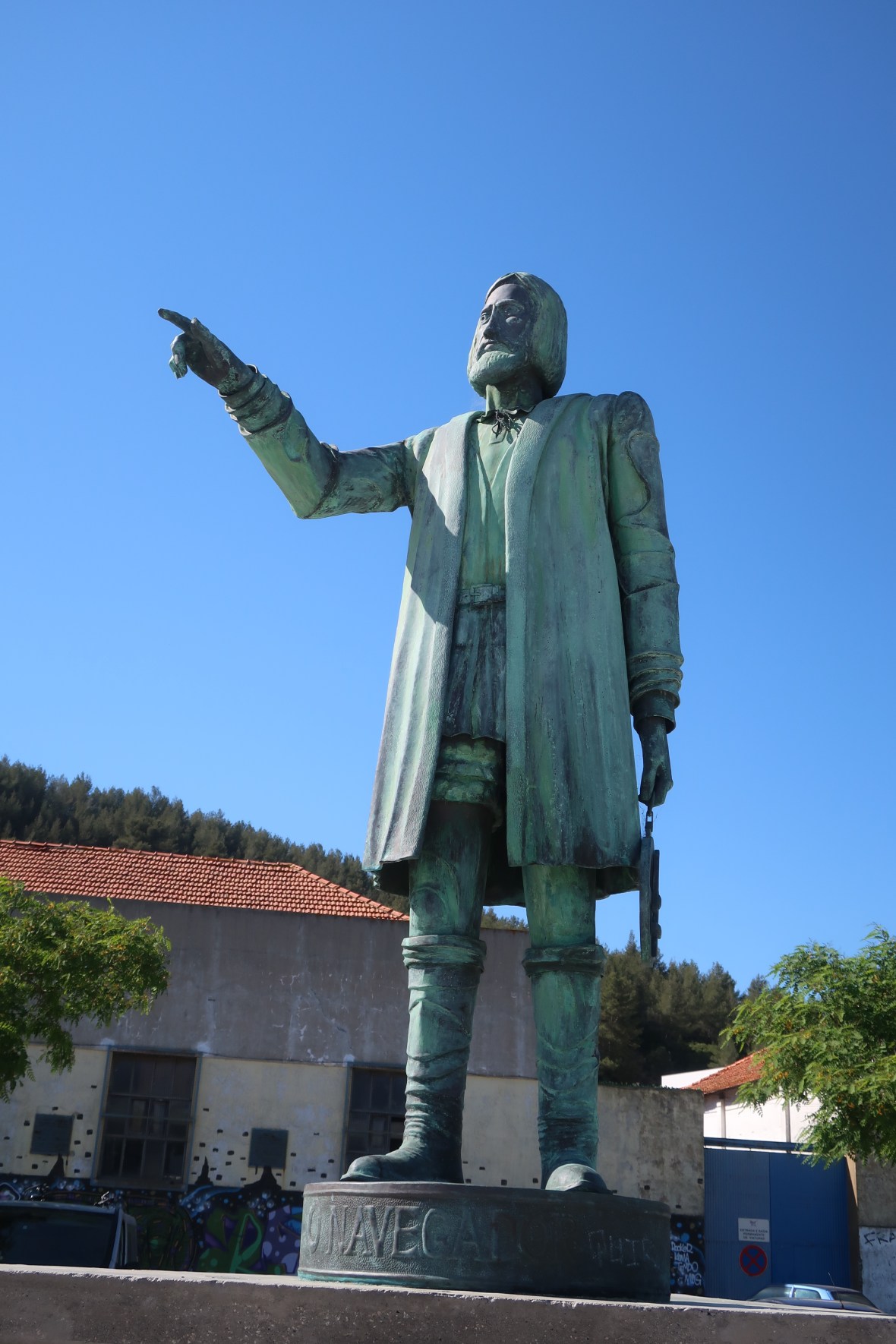
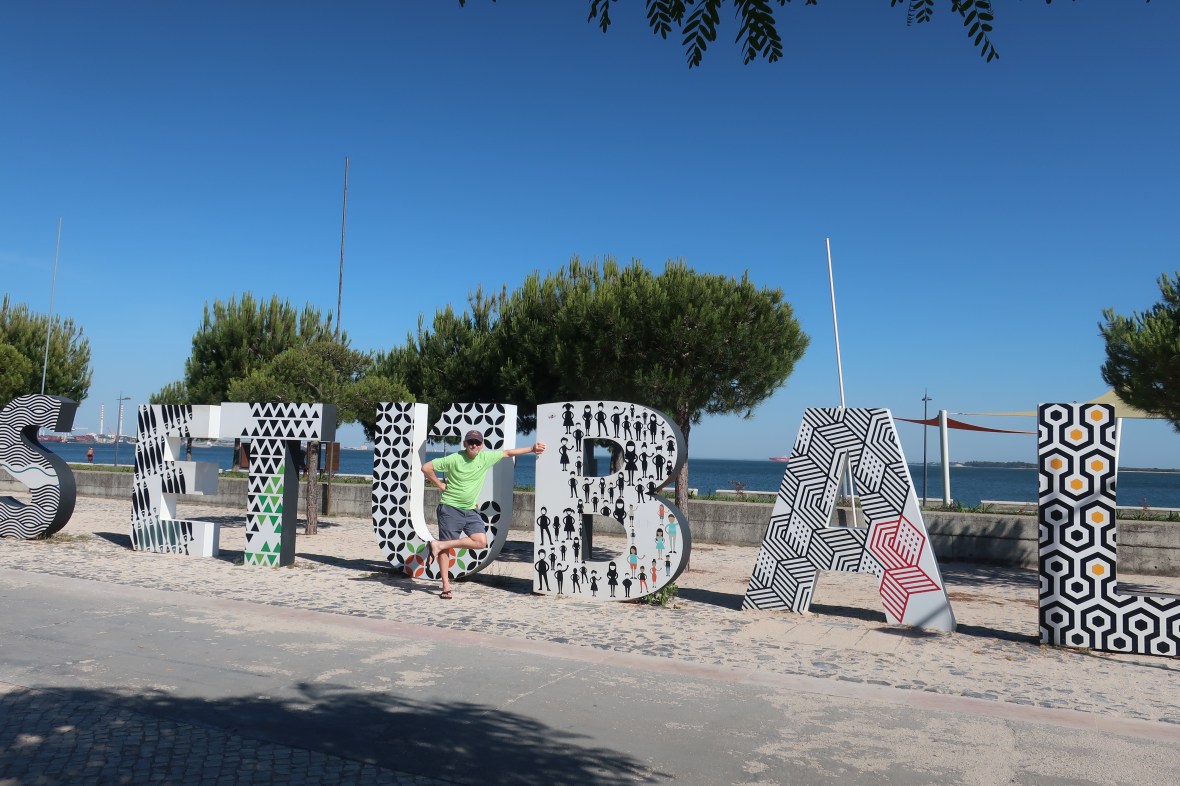
The final stage of our seven-day tour began with some noodling around the waterfront boulevards of Setúbal, seeking a way out of town.
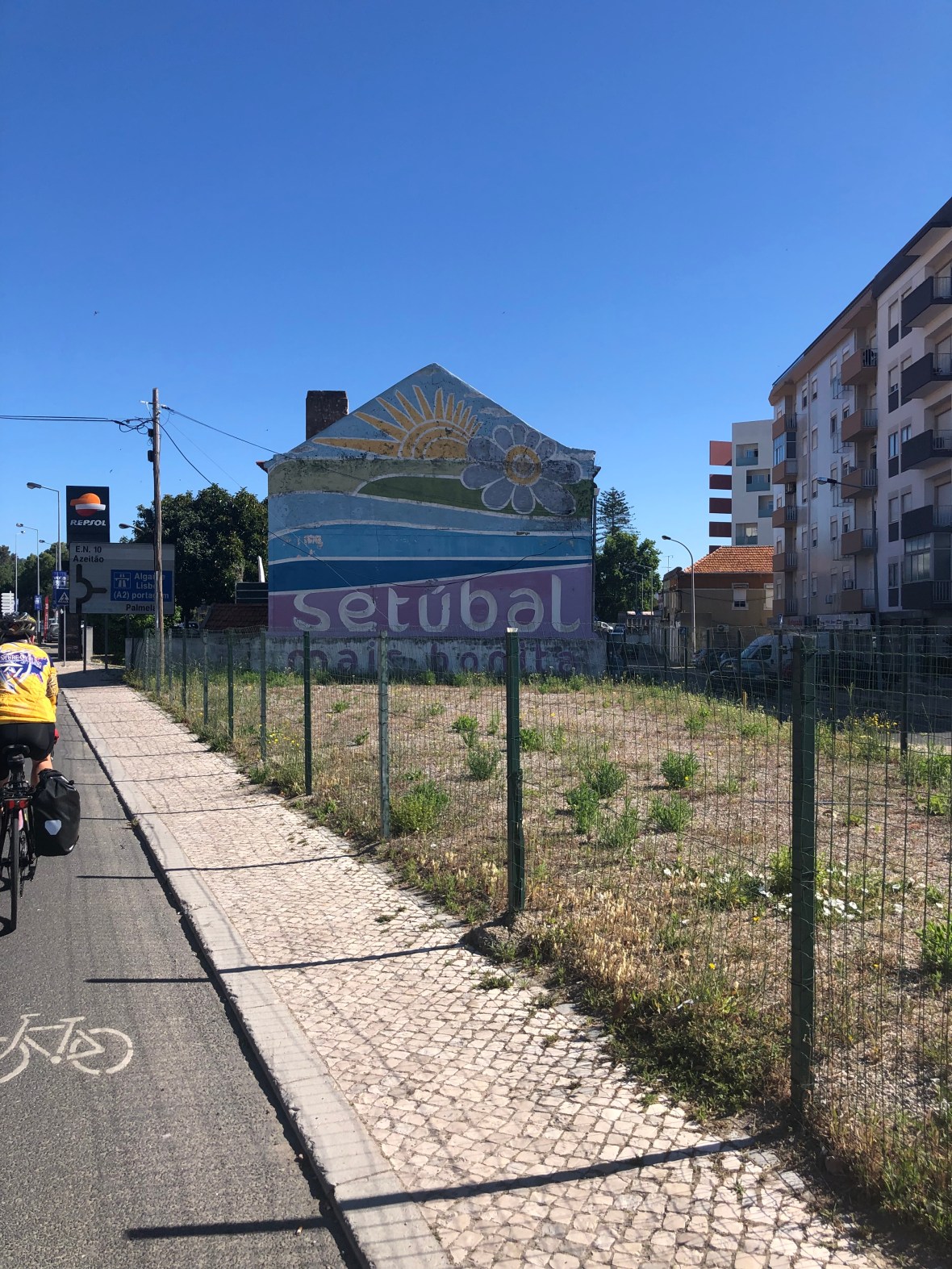
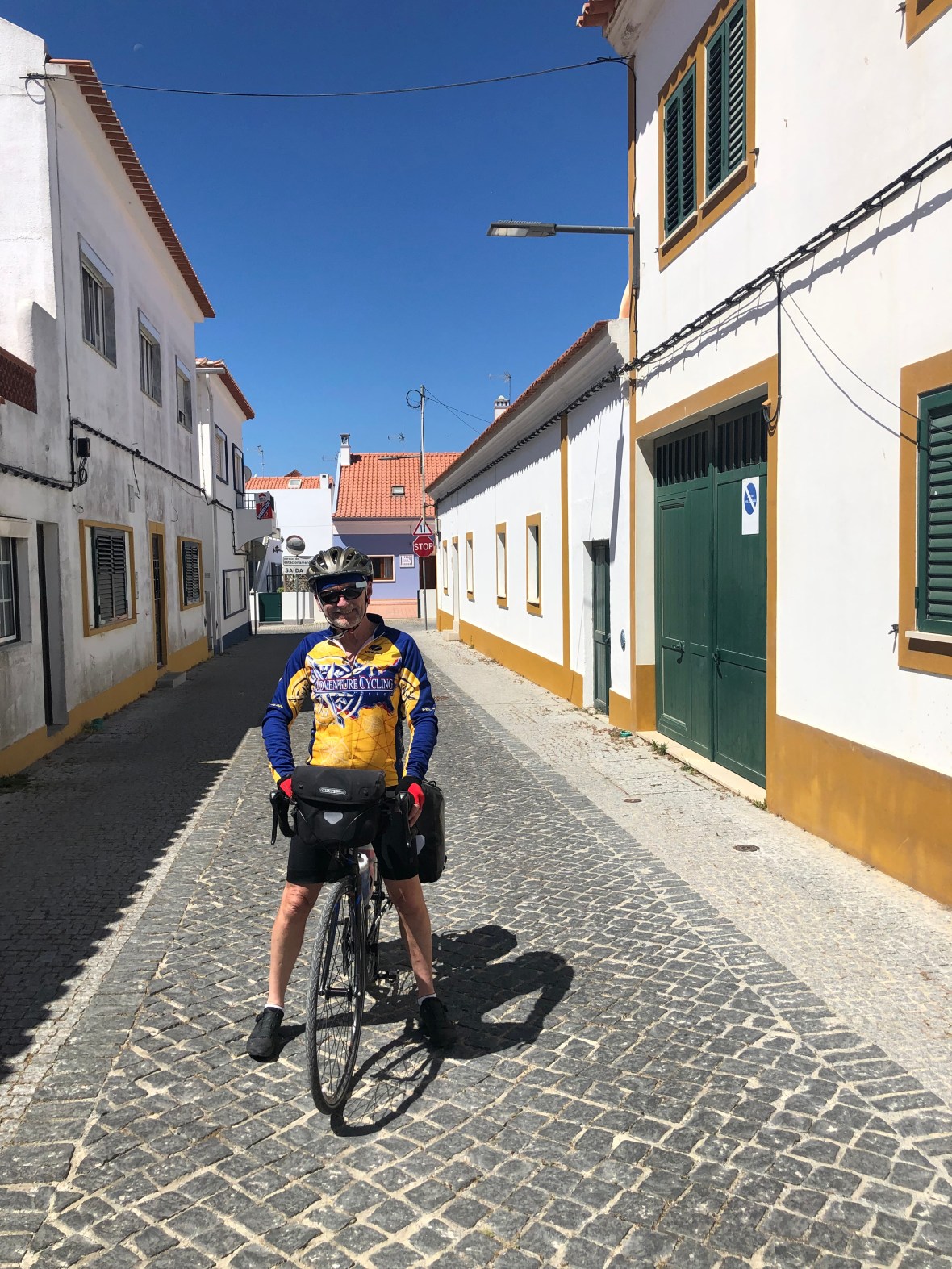
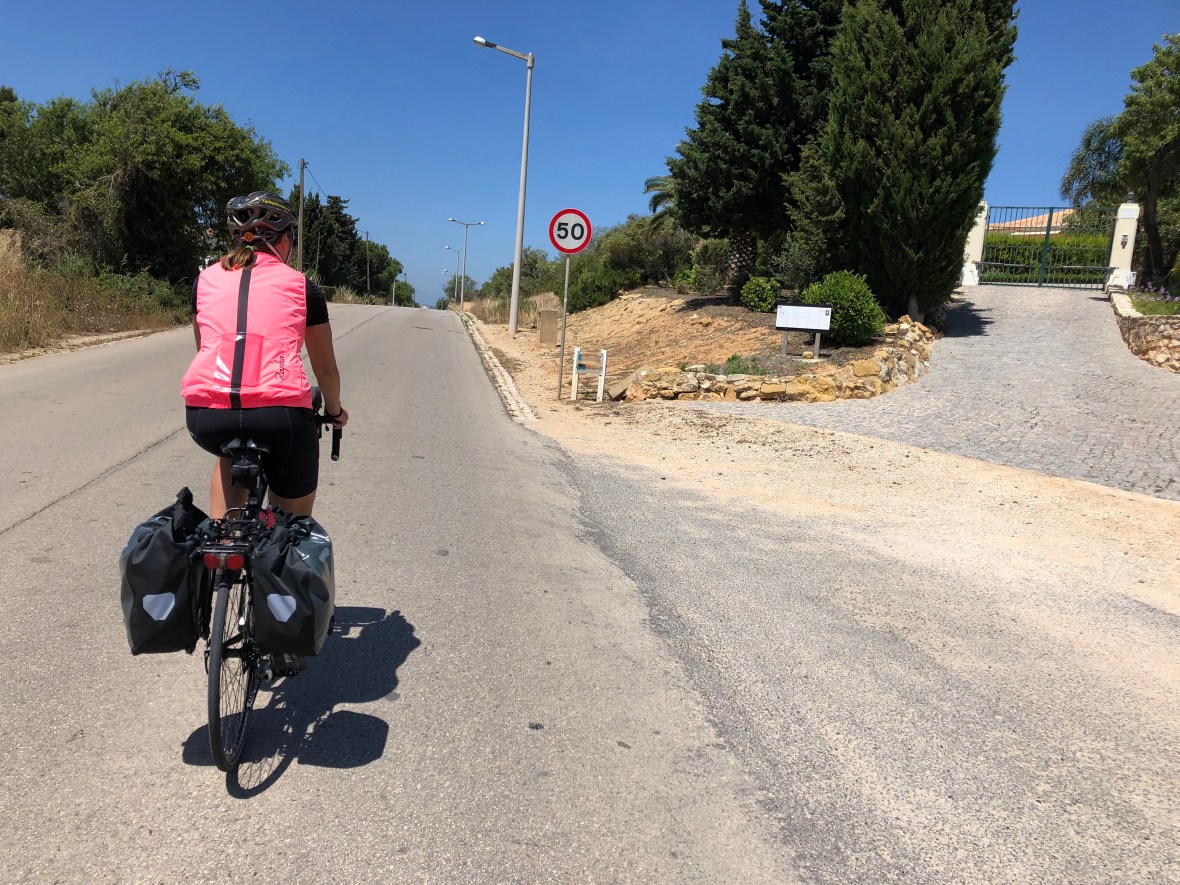
A few false leads, a few 180’s, some confused staring at Google’s blue dot, and after a little bit of whining on David’s part we found N-10, a busy thoroughfare with no shoulders at first, as it crossed the city and climbed out of it, but then better shoulders and widening views across low hills and wooded countryside. The many cars and trucks were, as usual, careful and polite. No one squeezed us out of our lane. And soon the faint stencils indicating a bike lane appeared.
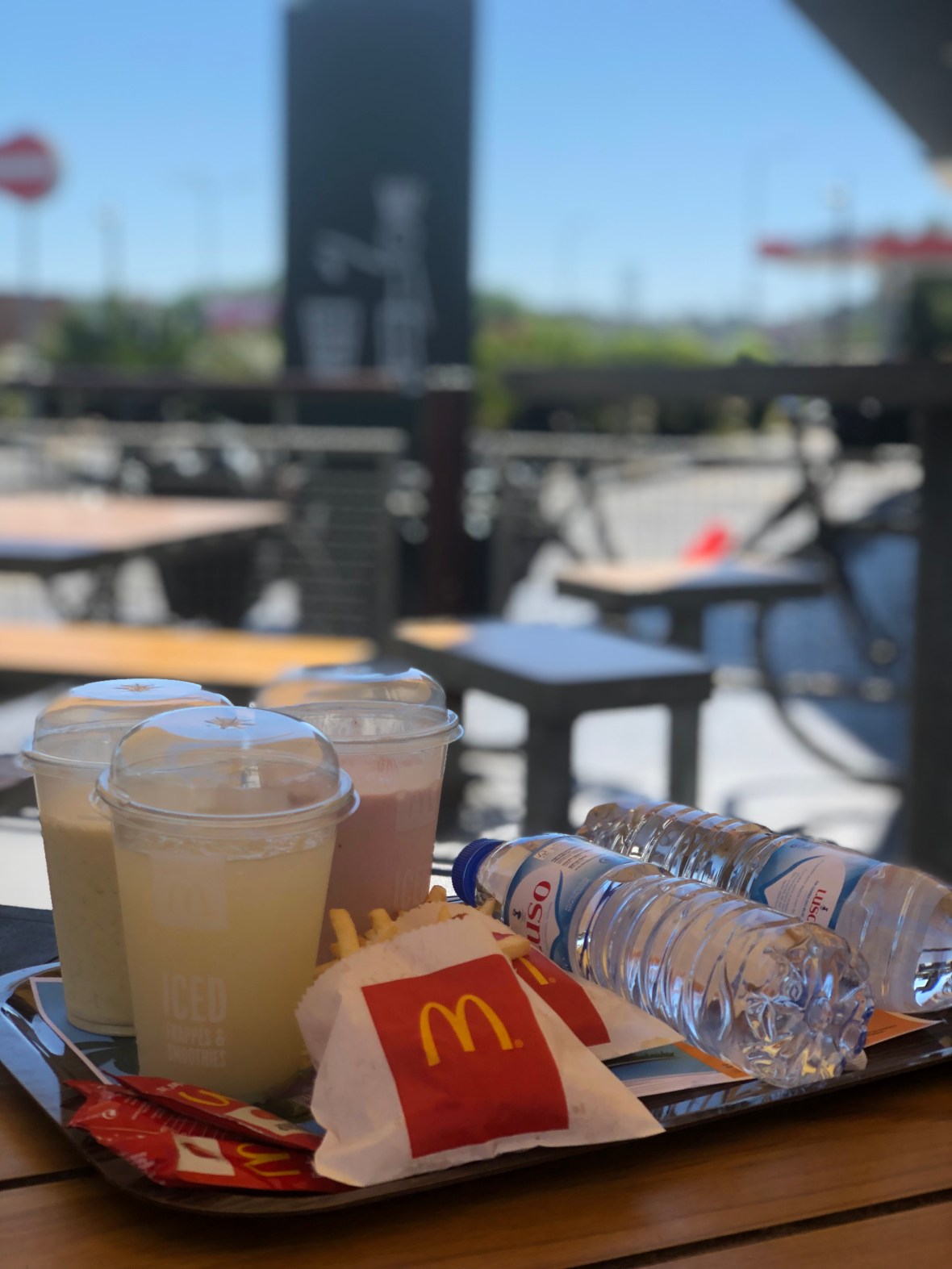
The days have gotten gradually hotter, and this last day was definitely the hottest, on the wrong side of 90 more or less start to finish. The winds, at least, were much less bothersome than the previous couple of days. It wasn’t long before we paused at a McDonald’s (that’s right) for a water resupply, and what the heck, milkshakes and French fries. We were aiming for a gas station, but it turned out to be petrol and only petrol, and the McDonald’s next door was so inviting…. though it proved to be a “no English” environment where David resorted to charades to describe a milkshake to the person behind the counter.
We had to work our way across a peninsula to the mouth of the Tagus river, where several different ferries make the crossing to Lisbon.
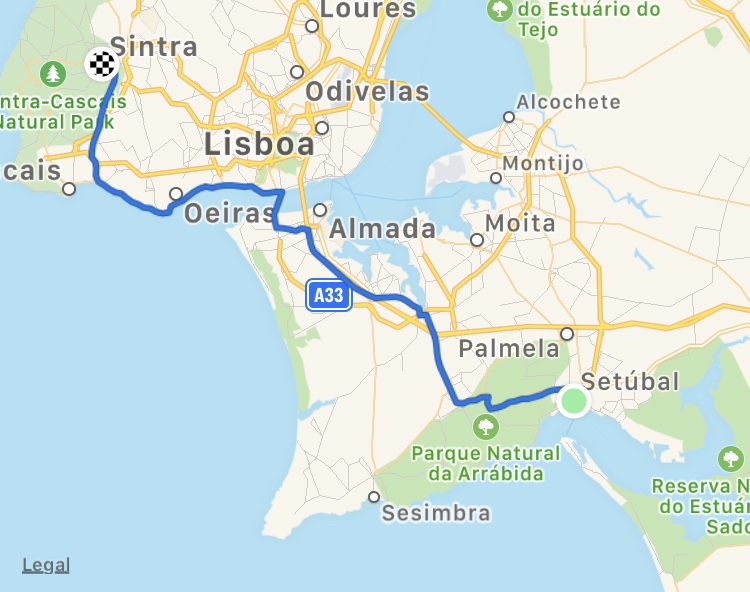
We were aiming for the westernmost ferry, which would shorten our route through that very big and busy city. It looked like there were a number of possible secondary roads, but Google accepted only a request for walking directions, which often tried to send us up staircases or along unpaved roads; the only alternative being an auto route, which — in this case, bless her heart — instructed us to enter a four-lane toll road, the A-3. Emboldened by our previous success at violating the “No Bikes” sign, we gamely rolled along the shoulder of the access ramp, only to be honked and shouted at by numerous drivers (“you can’t go there,” yelled one maternal-sounding older woman, “it’s a highway”).
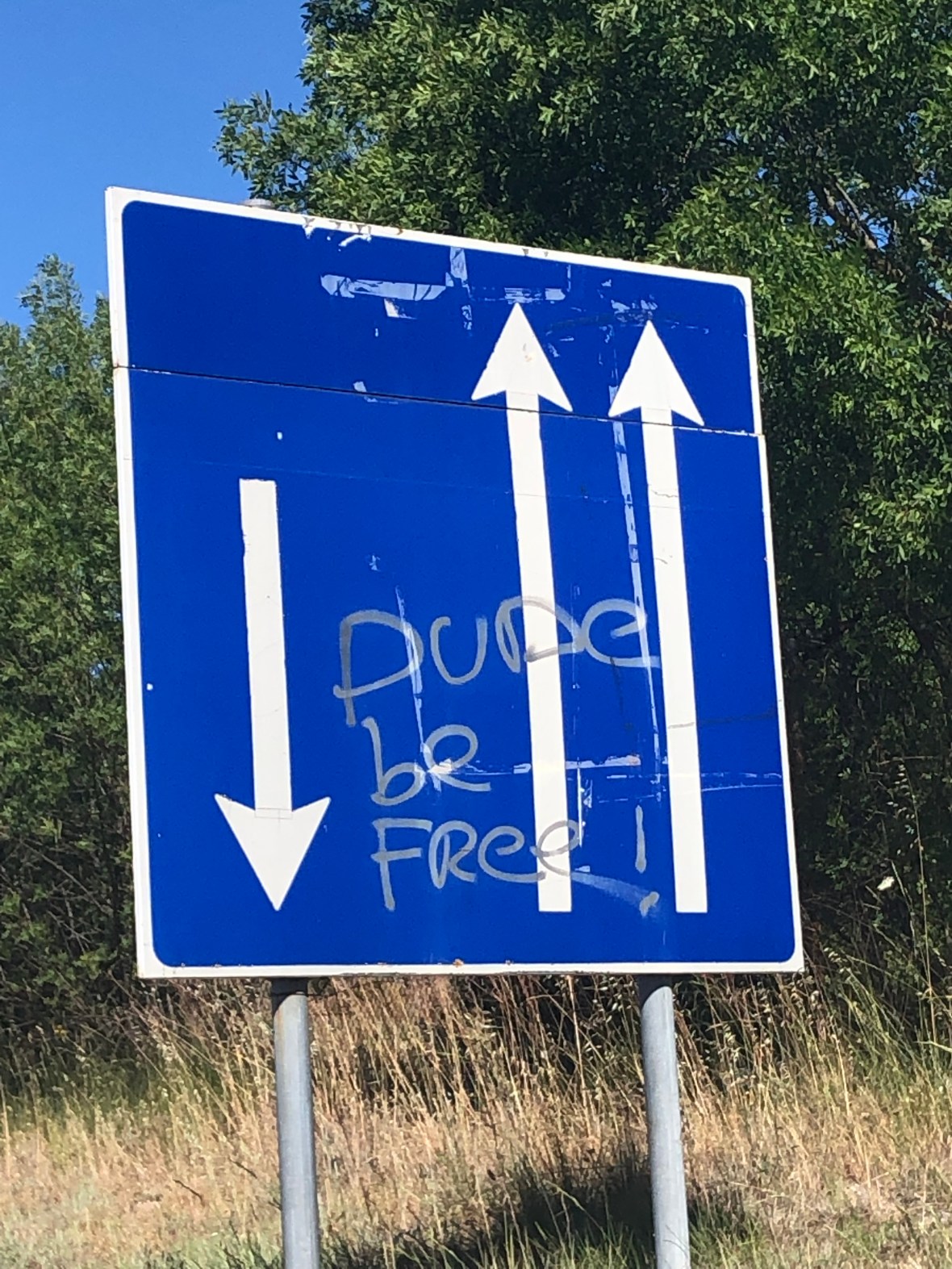
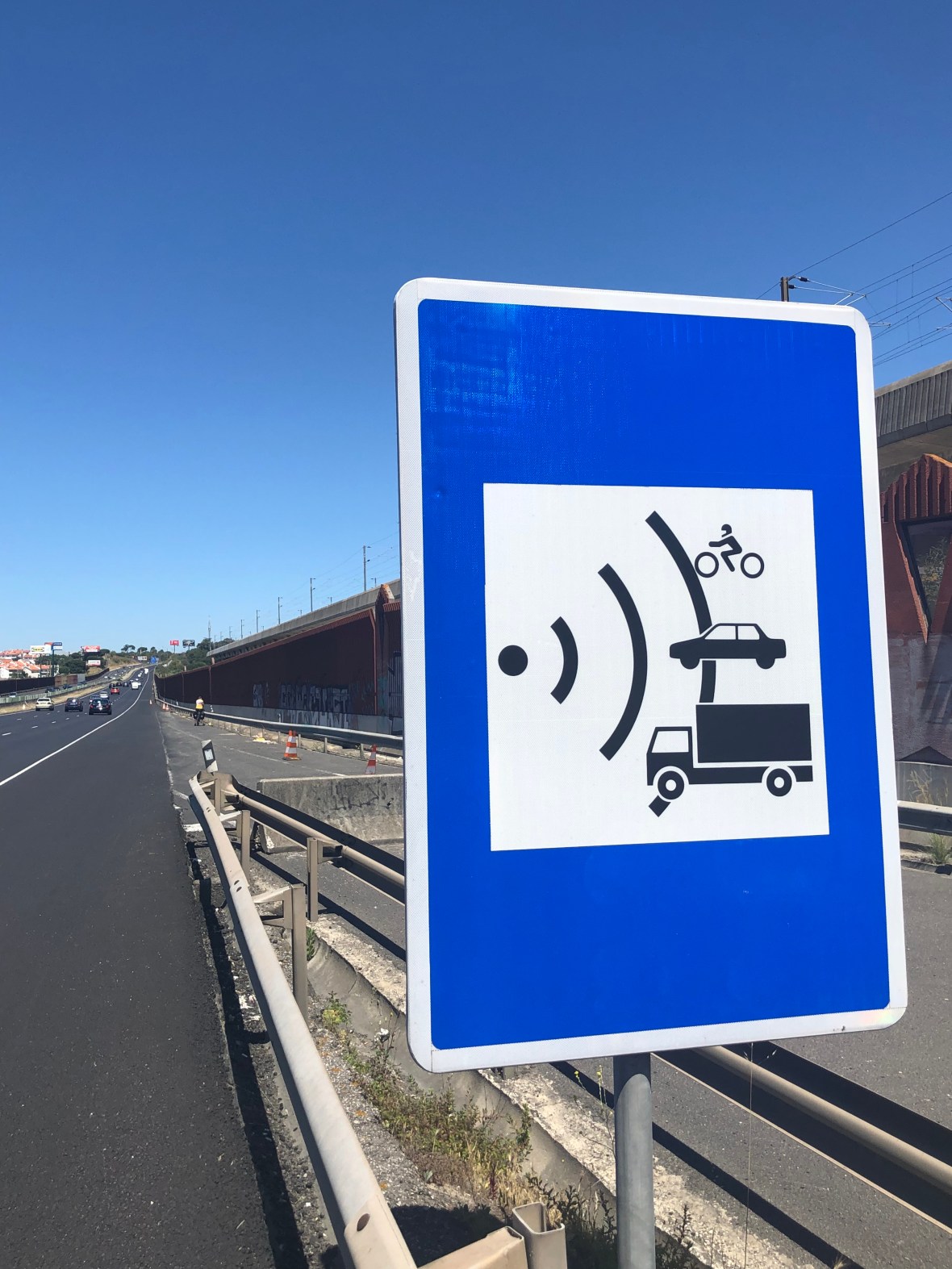
So we retreated, noodled around some more, and finally found a parallel highway with no such restrictions, along which we rode for some time, stopping for more water as necessary. Still, this smaller road turned into a much bigger road all of a sudden, a four-lane divided highway like the A-3 but with no apparent ban on bicycles. In fact, it seemed as if we could be pulled over for speeding. Suddenly we saw looming ahead the golden towers of the Ponte 25 de Abril, the big suspension bridge that crosses the Tagus to Lisbon.
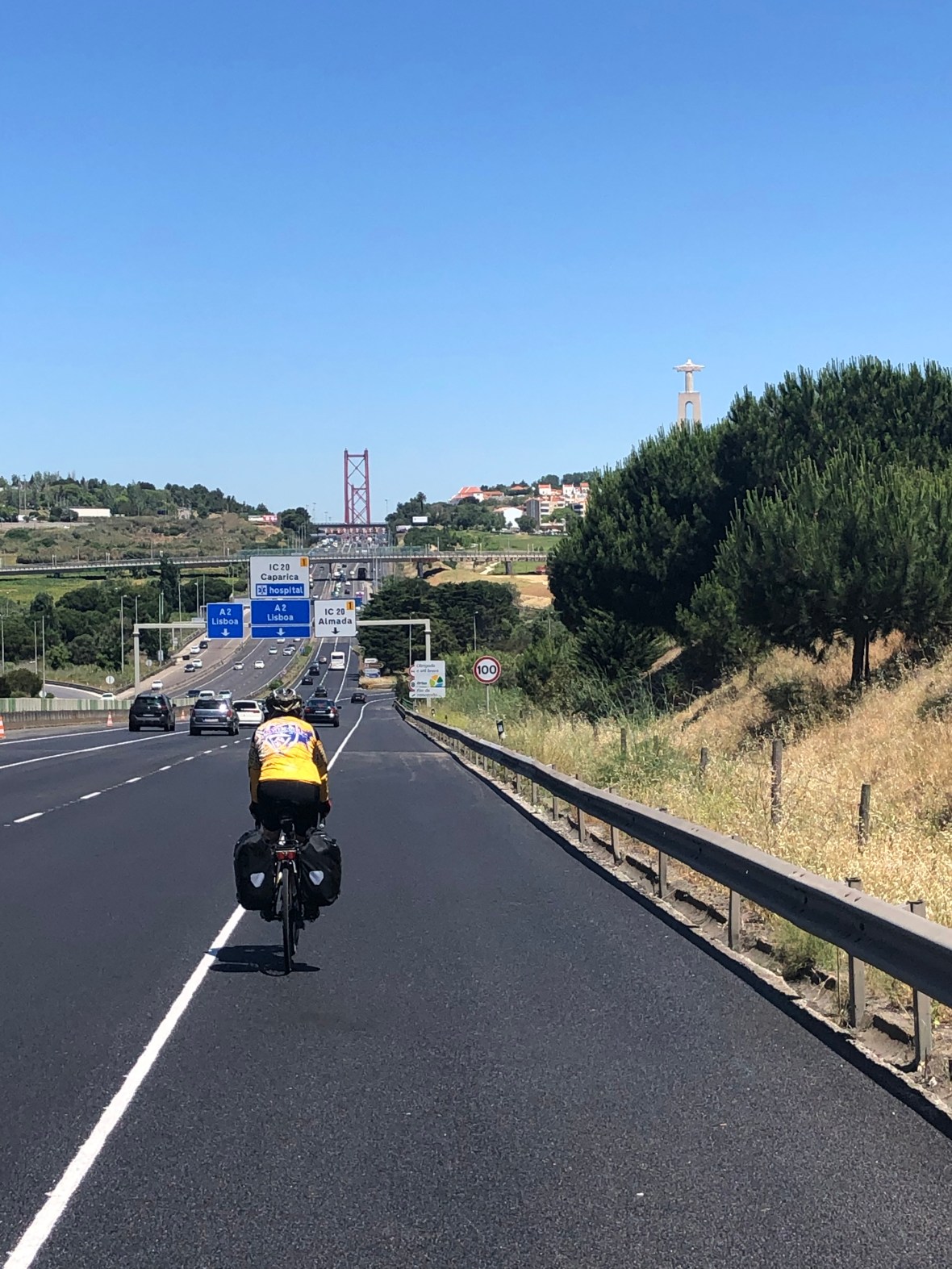
Now the drivers once again began to honk at us, some perhaps warning about some problem for bicycles ahead, others definitely cheering us on. At the last possible minute before the bridge Google directed us to an exit ramp joining a slightly smaller divided road, and to an exit off that just a few kilometers further. A long hard hot climb up that exit ramp, and we were back on the secondary roads, headed northwest.
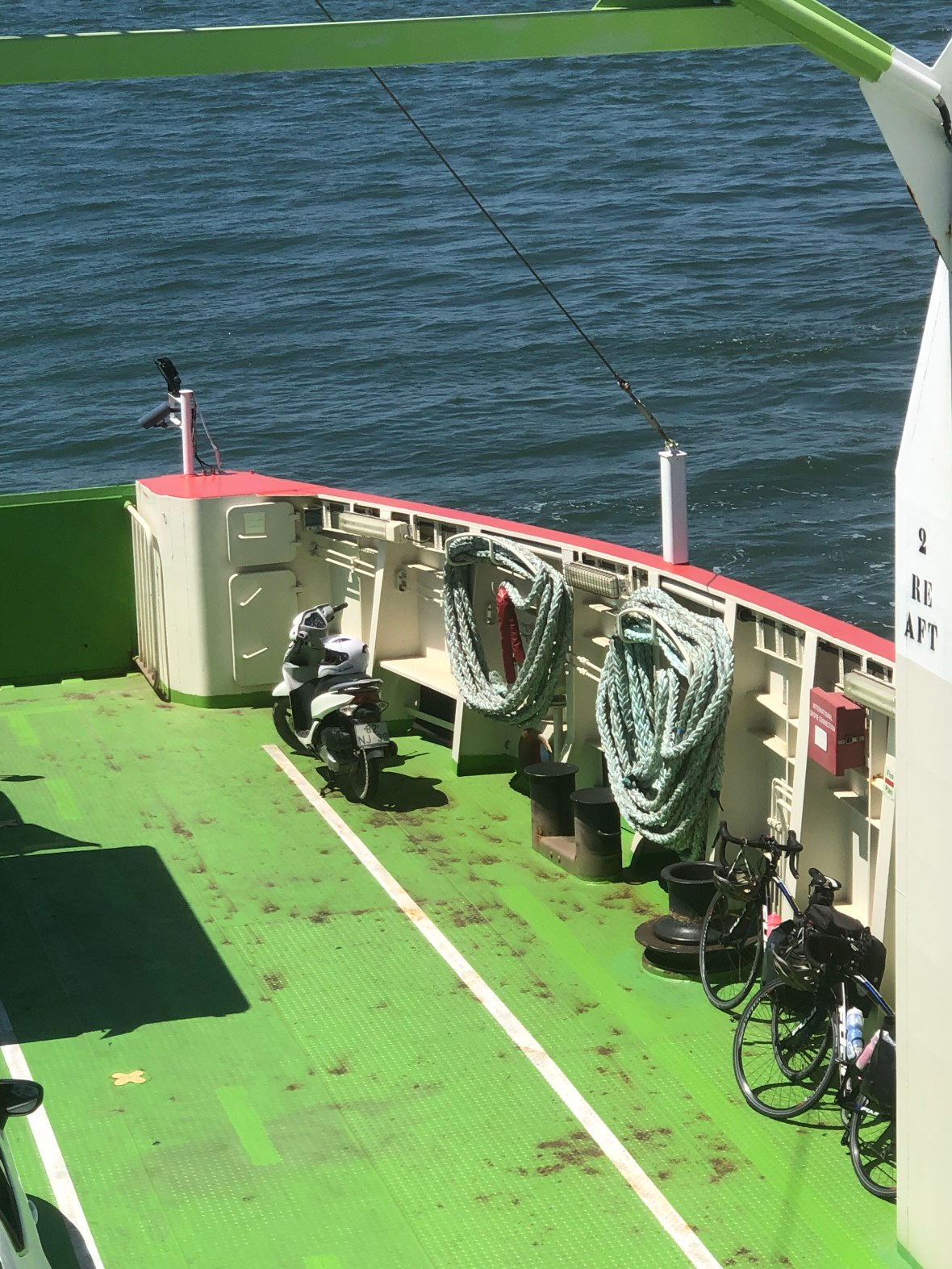
About 5 miles before the ferry, Ashley started asking–at the edge of hangry–what the lunch plan was. We decided to make it to Lisbon, so we climbed and climbed through Almada, the urban sprawl on the south side of the Tagus, opposite Lisbon. We were scorched, thirsty, hungry, and climbing slowly, but at a magical moment, the map directed us to take a hard right, and then it was a long, glorious downhill through the tiny working-class town of Porto Brandão, a downhill that bottomed out at the ferry terminal. We bought ferry tickets and fizzy water from the cafe next door, and waited half an hour on our ride across the river.
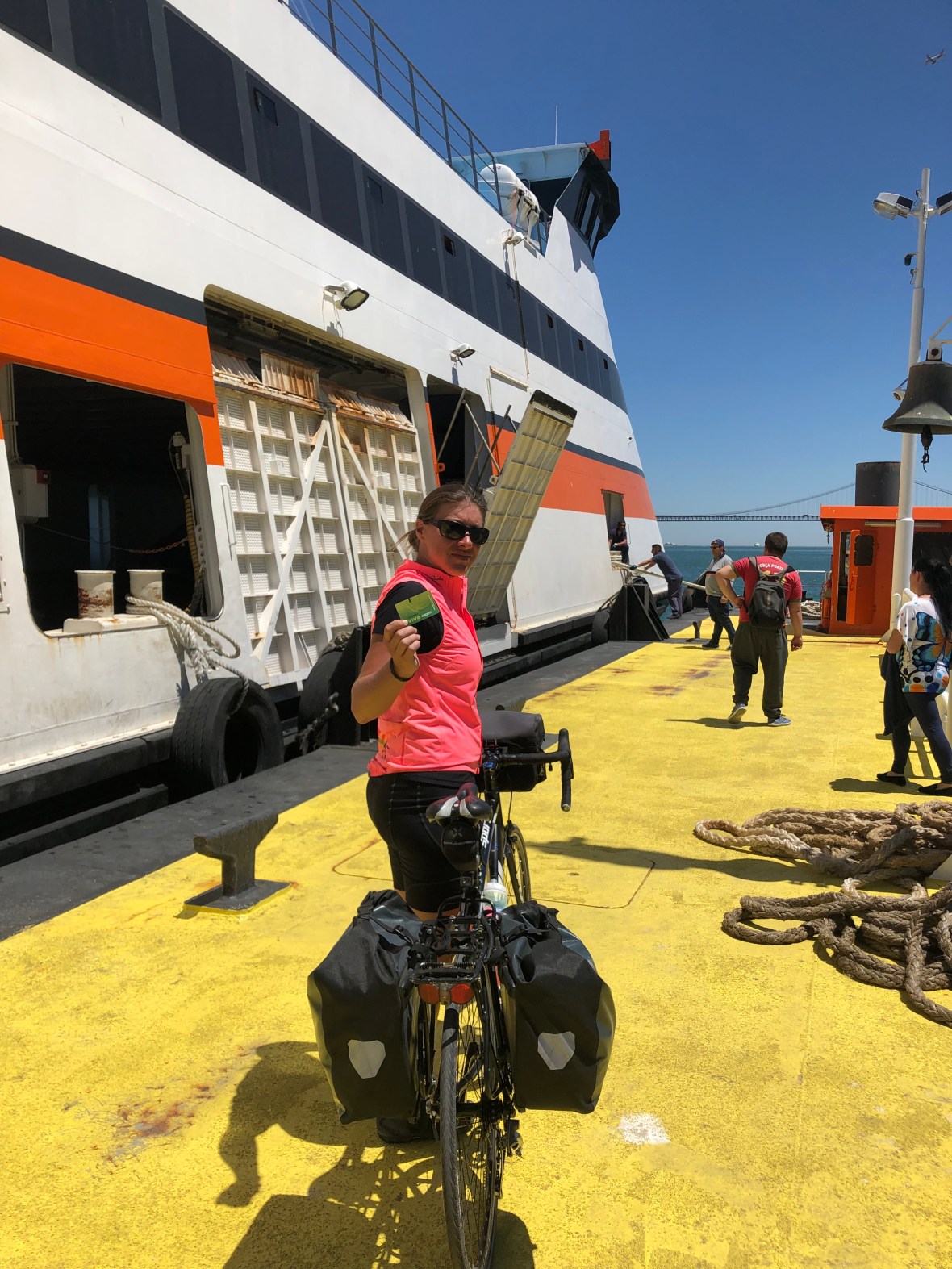
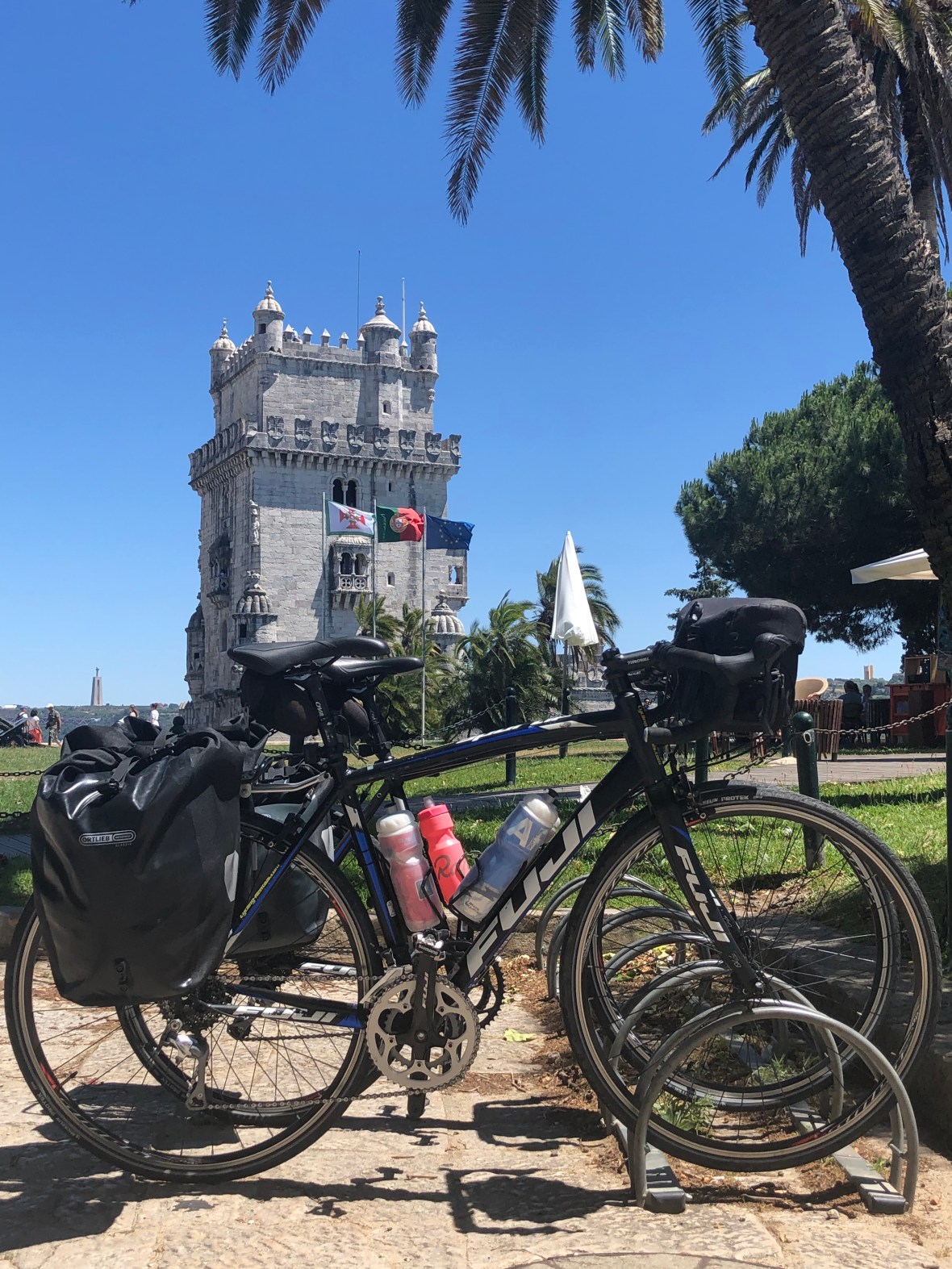
It was a 20-minute crossing to Belém, one of Lisbon’s western neighborhoods, and we settled on a lovely little cafe right on the banks of the Tagus.
We ordered lots of fizzy water, some fresh orange juice to flavor it–just for something different–and octopus salad, gazpacho, and a local-cheese-and-jamon platter, all of which perfectly hit the spot.

We didn’t rush lunch, and when we finally pedaled off we were refreshed and relaxed, ready for the last push to Sintra–not so many miles ahead, but, we feared, mostly uphill.
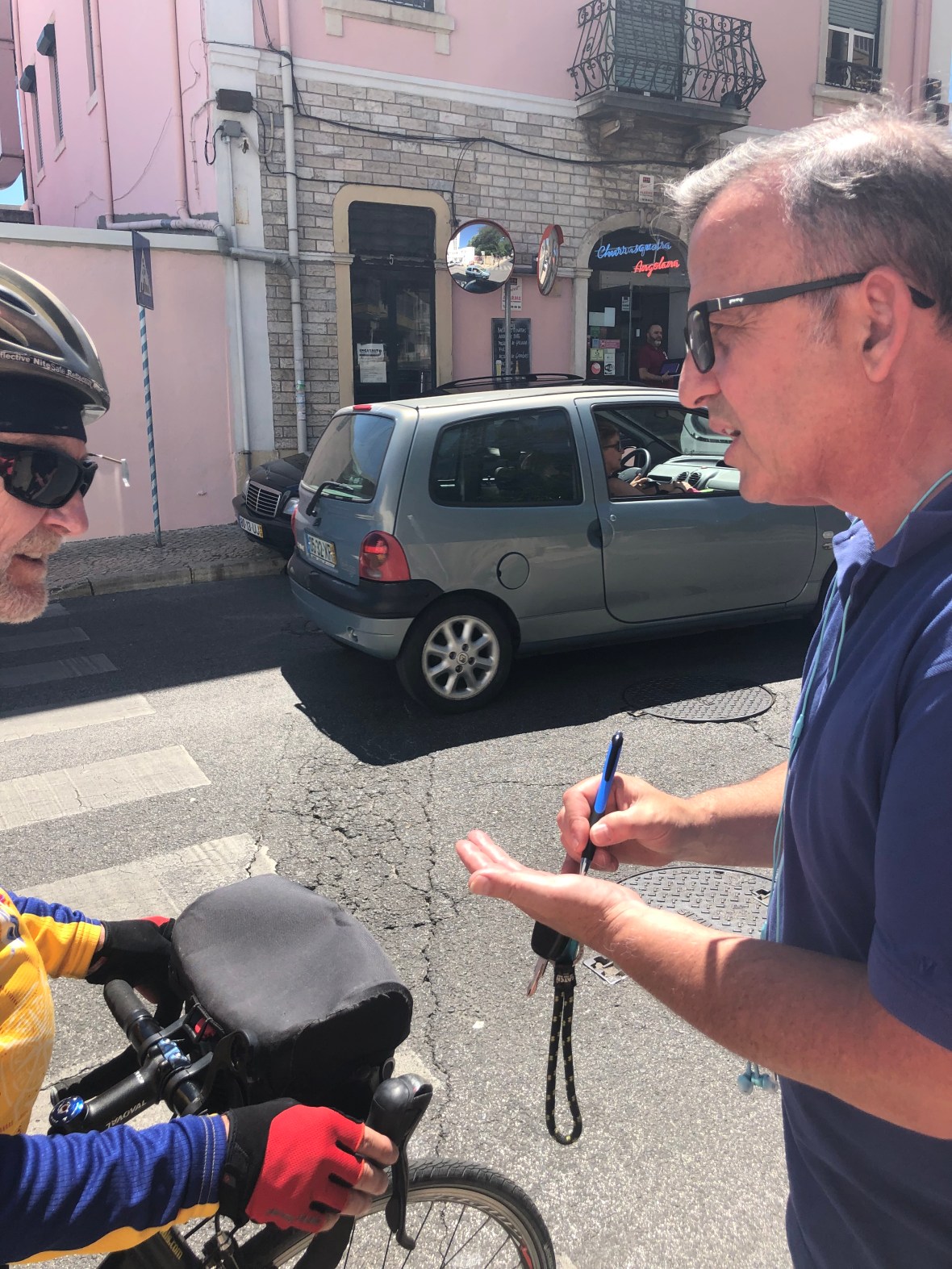
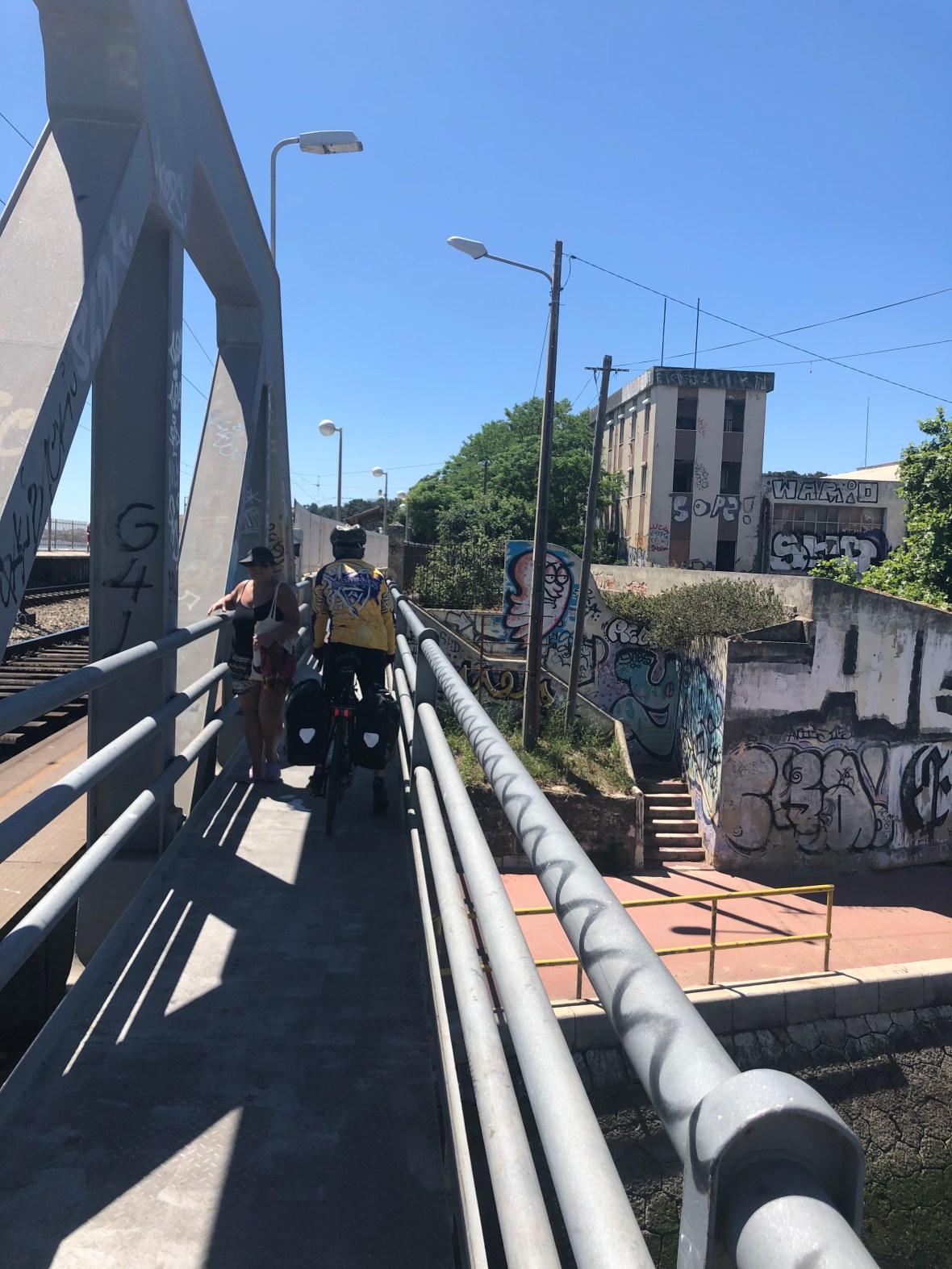
After a bathroom break near the Belém tower, we wiggled our way toward the route to Sintra. Google had us climbing out of western Lisbon, and we were gearing down for grinding up steepening city streets. We were stopped, checking the map, when we were hailed by a middle-aged man in a polo shirt, earbuds hanging across his shoulders. “Do you speak English?” he asked. In passable, Portuguese-accented English, he asked whither we were bound. Sintra? This is not the best way to Sintra! “I save you,” he said. The route we were taking, he warned us, would lead us up and down numerous and useless times. It would be easier on the legs, he explained, to continue westward along the coast as far as Estoril, a virtually flat and most beautiful way, and only then start what would then be a much shorter and more direct climb to Sintra. It would require logging a few more kilometers, but we would have an altogether prettier and gentler and nicer ride. He gave us careful details of the various bike paths and highway options, at one point pulling out a ballpoint pen to draw a diagram on his hand. What a splendid, altruistic, and hospitable Lisboeta! He even got into his car, in busy urban side-street traffic, to follow us and point us back towards the route we would take past a train station and through a pedestrian underpass to the coastal path.
He called out one last set of directions at a stoplight, apologized for his English, and was gone. We spent the rest of the ride thankful–like Tennessee Williams’s Blanche–for the kindness of strangers.
We followed the bike path as far as we could, occasionally losing it only to find it again, past beaches, bars, and parking lots, finally having to take a lane in a crowded four-lane coastal road.
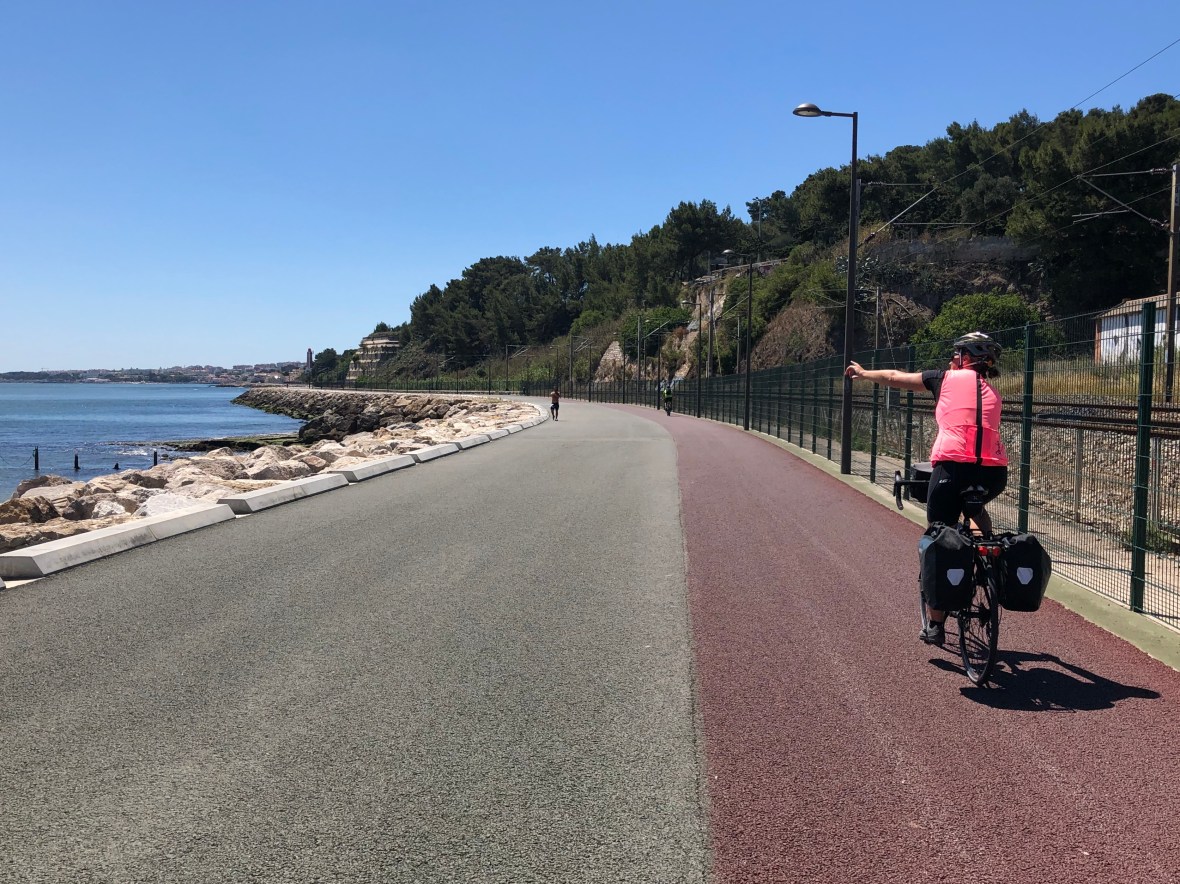
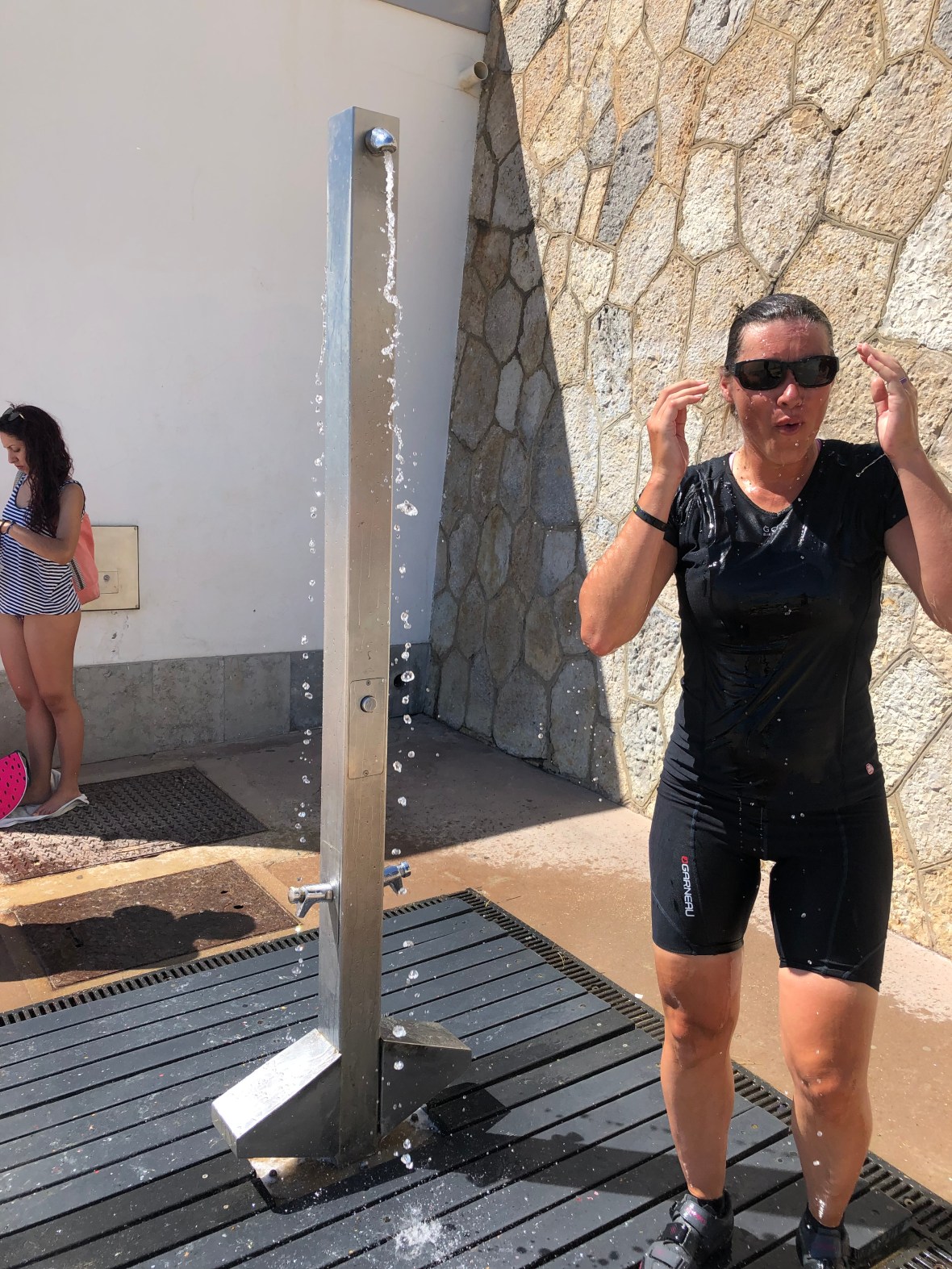
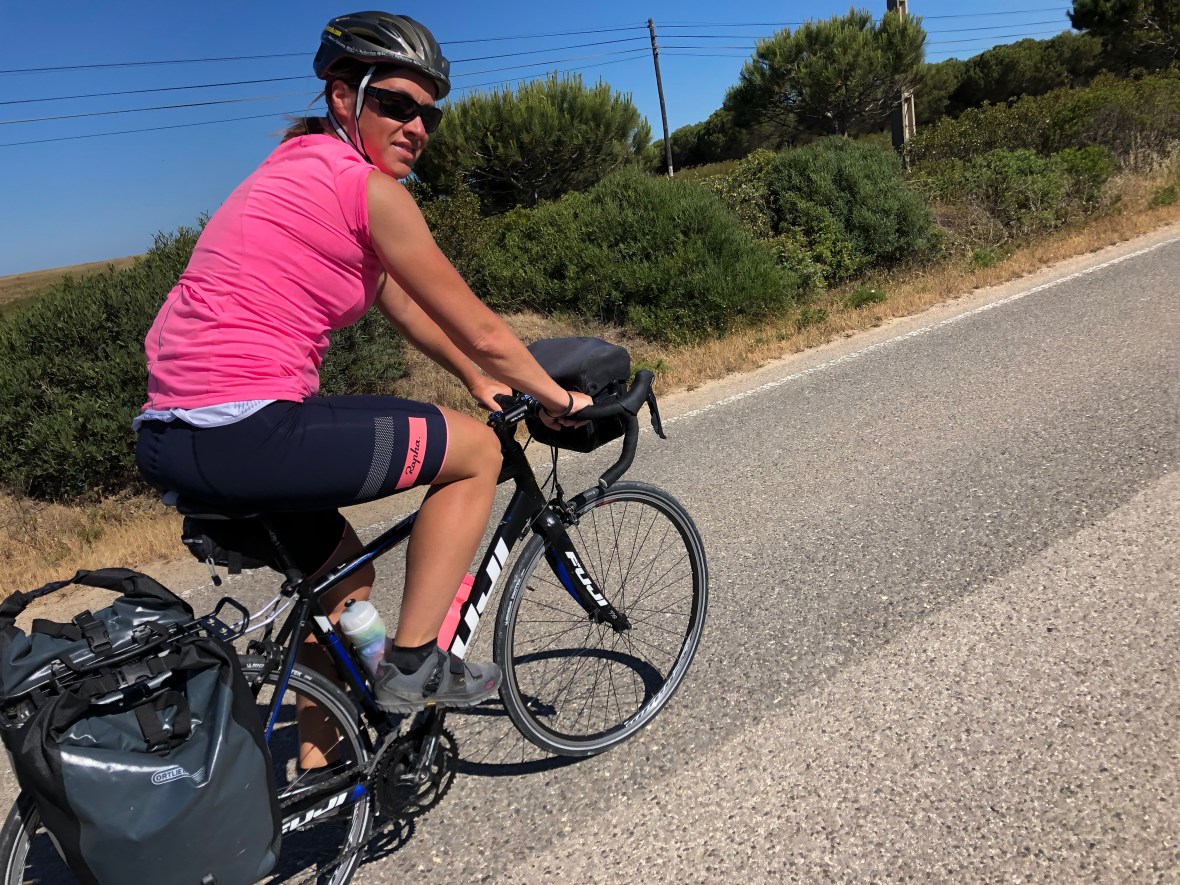
But those Portuguese drivers! We almost always felt safe, as we hurtled along with what was, at long last, a tailwind. At some point, half a dozen miles from where we’d leave the coastal road and ride inward toward Sintra, we found ourselves stopped on a beach path wondering whether to continue threading our way among clusters of pedestrians or return to the main road. Ashley spotted some open-air showers where swimmers were rinsing off the sand and saltwater, and said, without hesitation, we should soak ourselves right now. It was so hot, and we had far enough to go still. David hesitated for a moment, calculating the danger of rinsing off sunblock versus the chances of dying of heatstroke, but when he saw Ashley dancing gleefully–in bike clothes and shoes–under the cold waterfall, he agreed that a cool-down would be wise. And, fun.
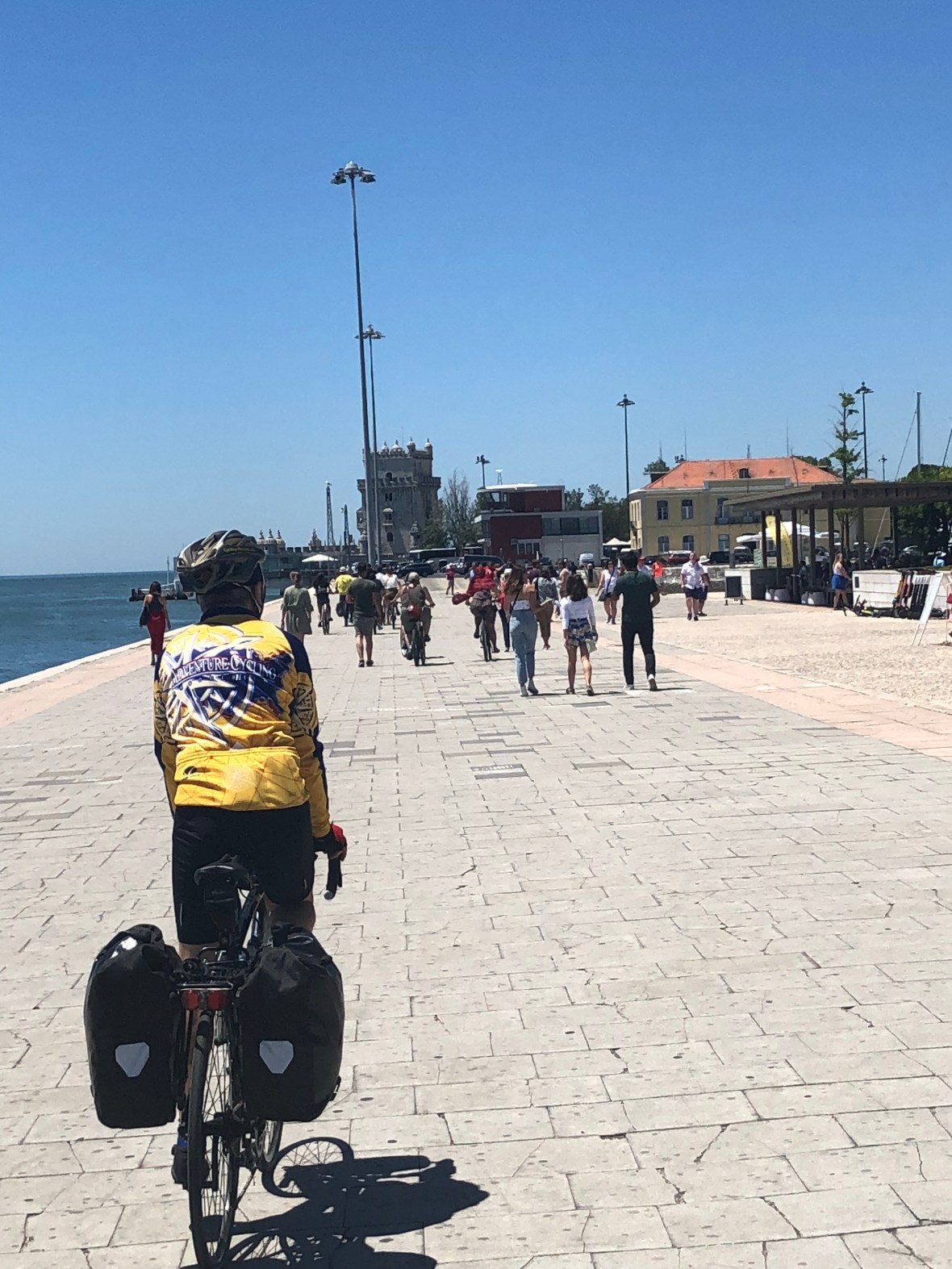
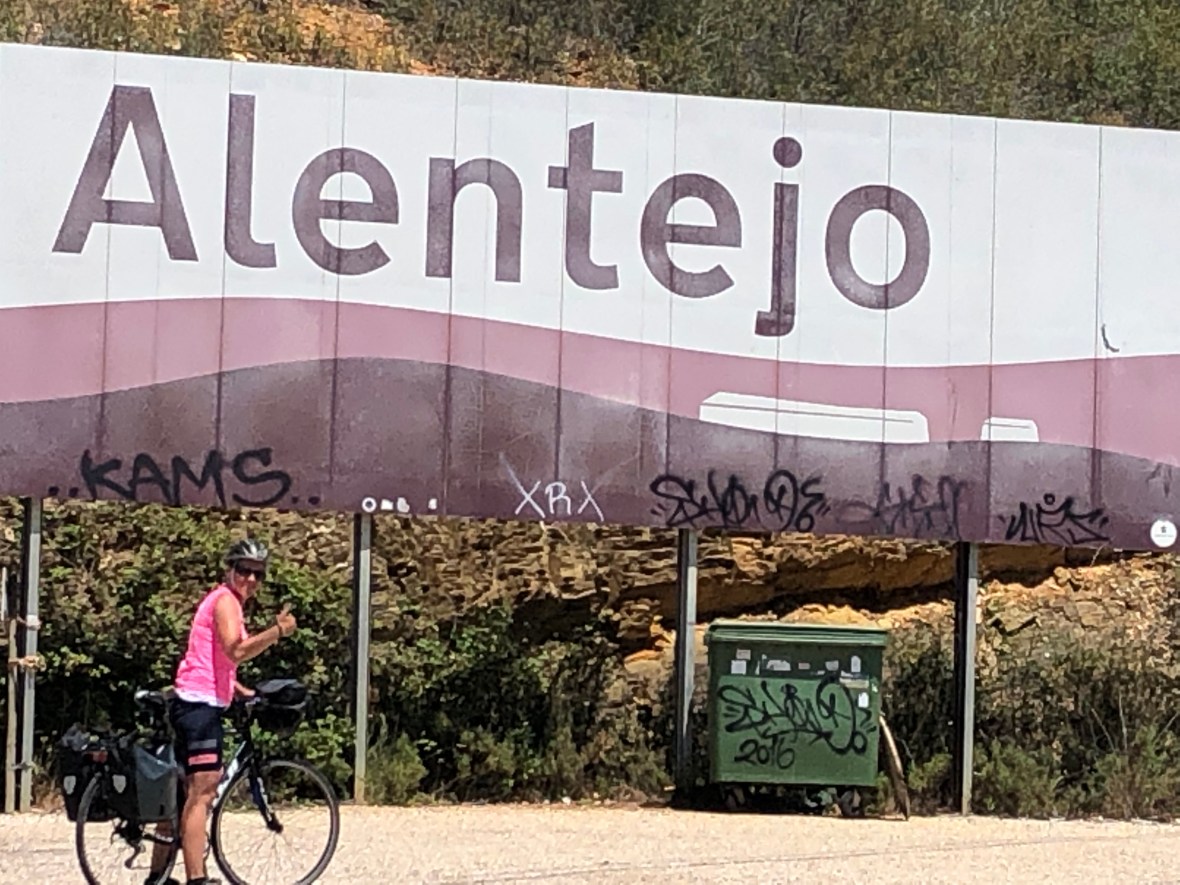
Much refreshed, we rejoined the automobile traffic — less dicey, as is almost always the case, than dodging foot traffic — and rolled on toward Estoril. Just shy of that town, we stopped at a gas station for one last water bottle refill–though we also treated ourselves to tiny cups of chocolate Haagen-Daz, enjoyed on a shady sidewalk. After that, we had just a couple of miles before Estoril, where, all of a sudden, we were climbing up and up through traffic-lined (rush hour?) residential streets. We were about 9 miles from Sintra. Those last nine miles were essentially uphill, mostly a pretty gentle grade, but blazing hot with no shade and not even enough headwind to cool us down. As we approached the city limits, tour bus traffic picked up, and after we snapped an obligatory “Sintra” sign upon our official arrival, it was one more big grind of a climb. (Ashley expletive deleted.)

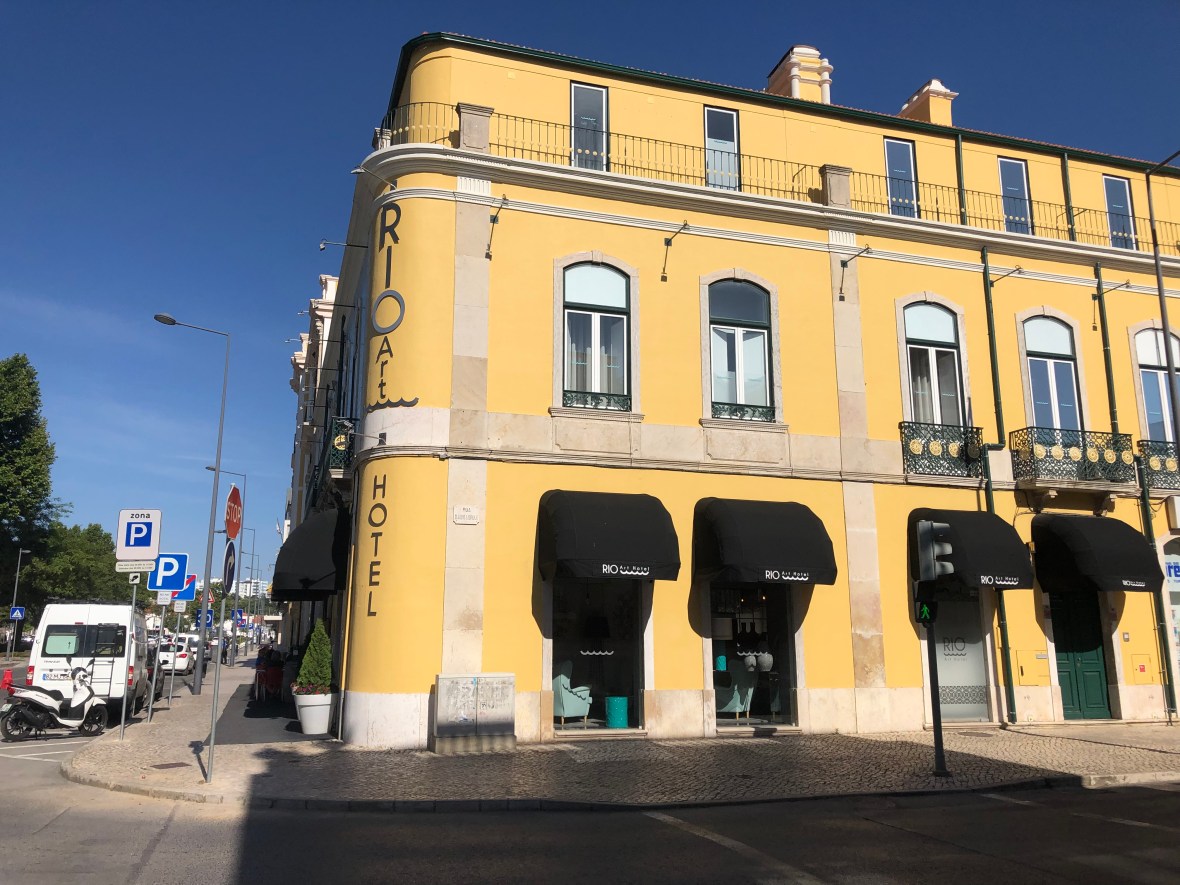
We were only 52 miles in or some such, but it felt like much farther on our seventh consecutive day of hot cycling, and our second biggest climb (almost 3400′) and even when we stopped to study the map together we were silent — baked. Around 6pm, after a couple of pleasant, if trafficky, down-hills on narrow centuries-old roads into city center, and a little bit more noodling with the blue dot, we finally arrived at our hotel.
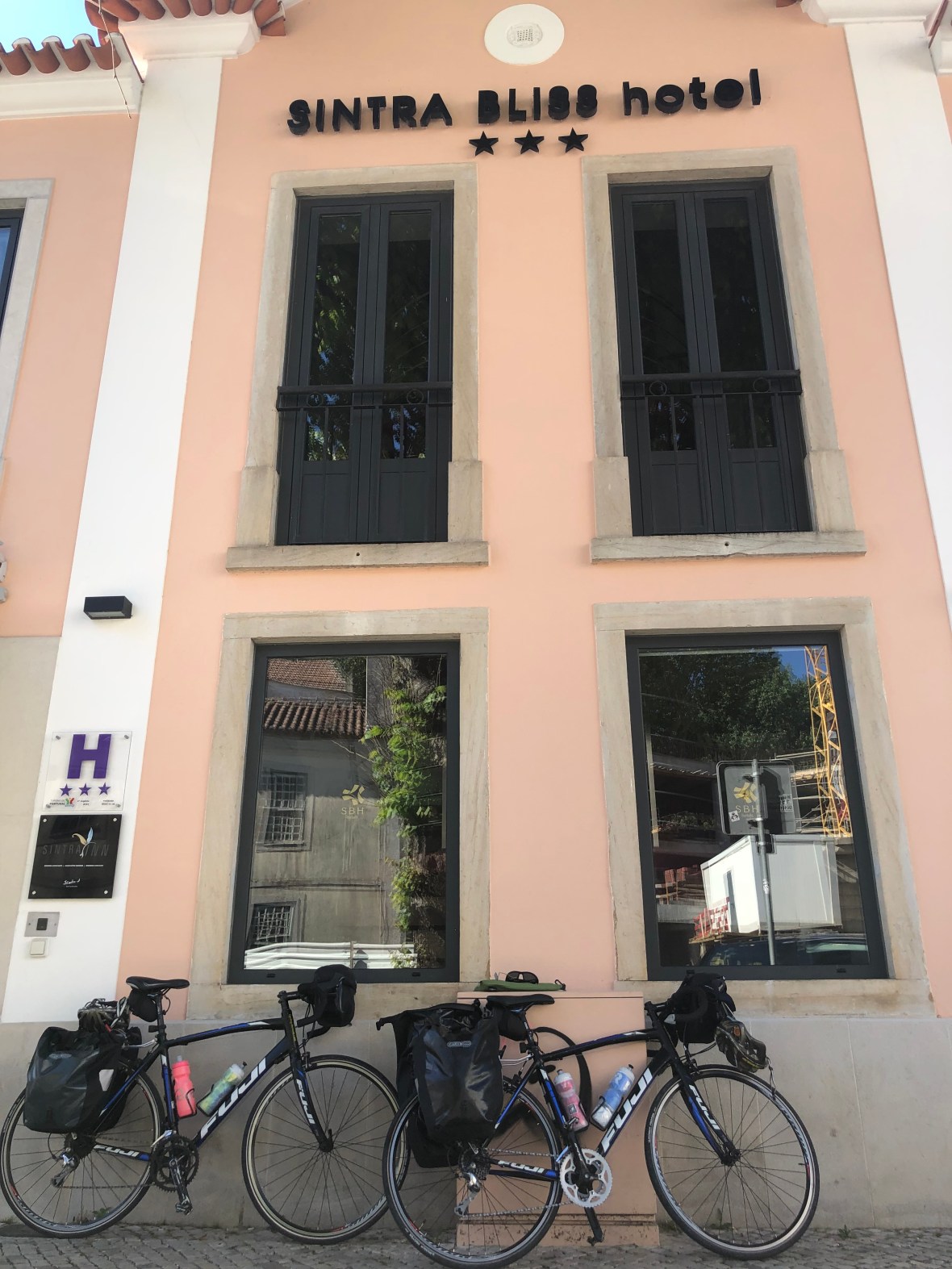
We were greeted by Marta, who briskly checked us in, inquired incredulously about our ride from Tavira (“How long have you been doing this thing, I mean, in your life?”), and walked us the ten feet to where we dropped off the bikes at one end of the lobby, to be picked up tomorrow by the rental company, and another five feet more or less to the door of our room.
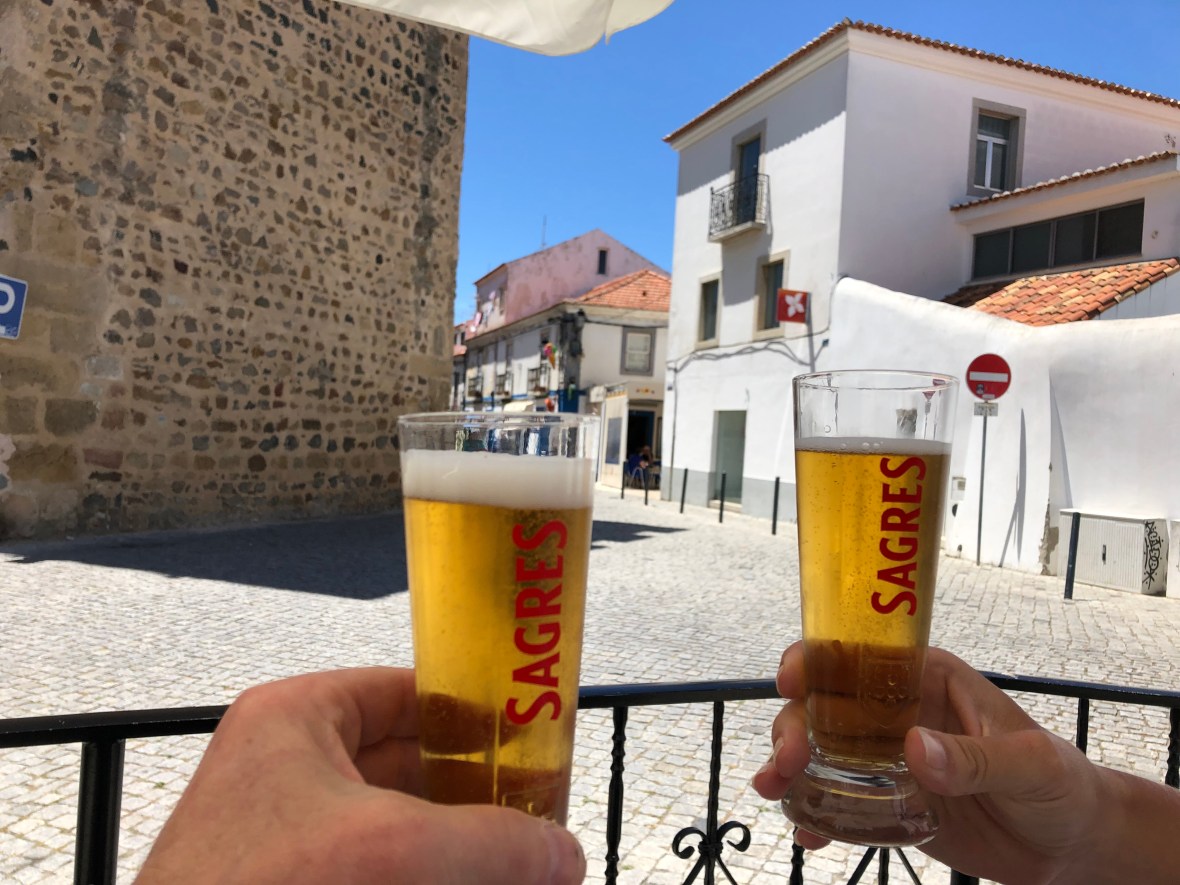
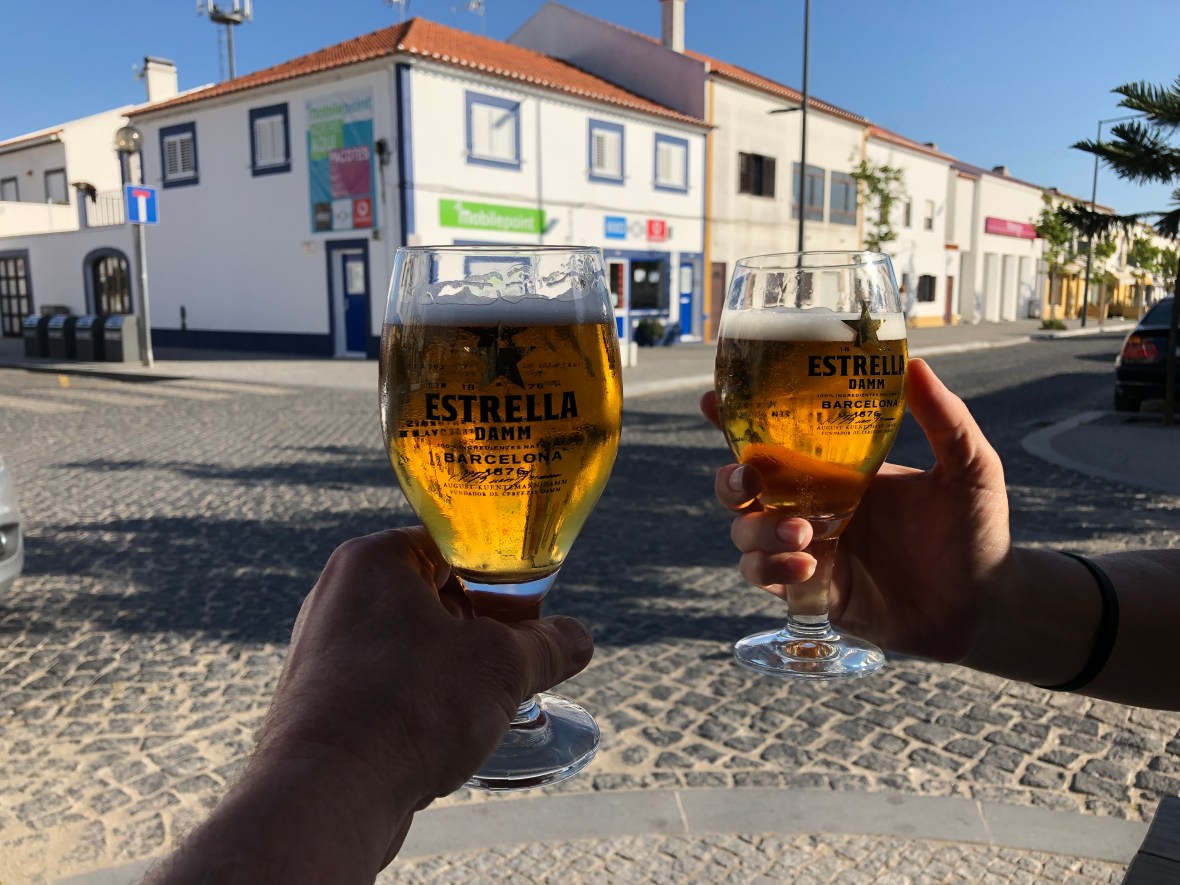
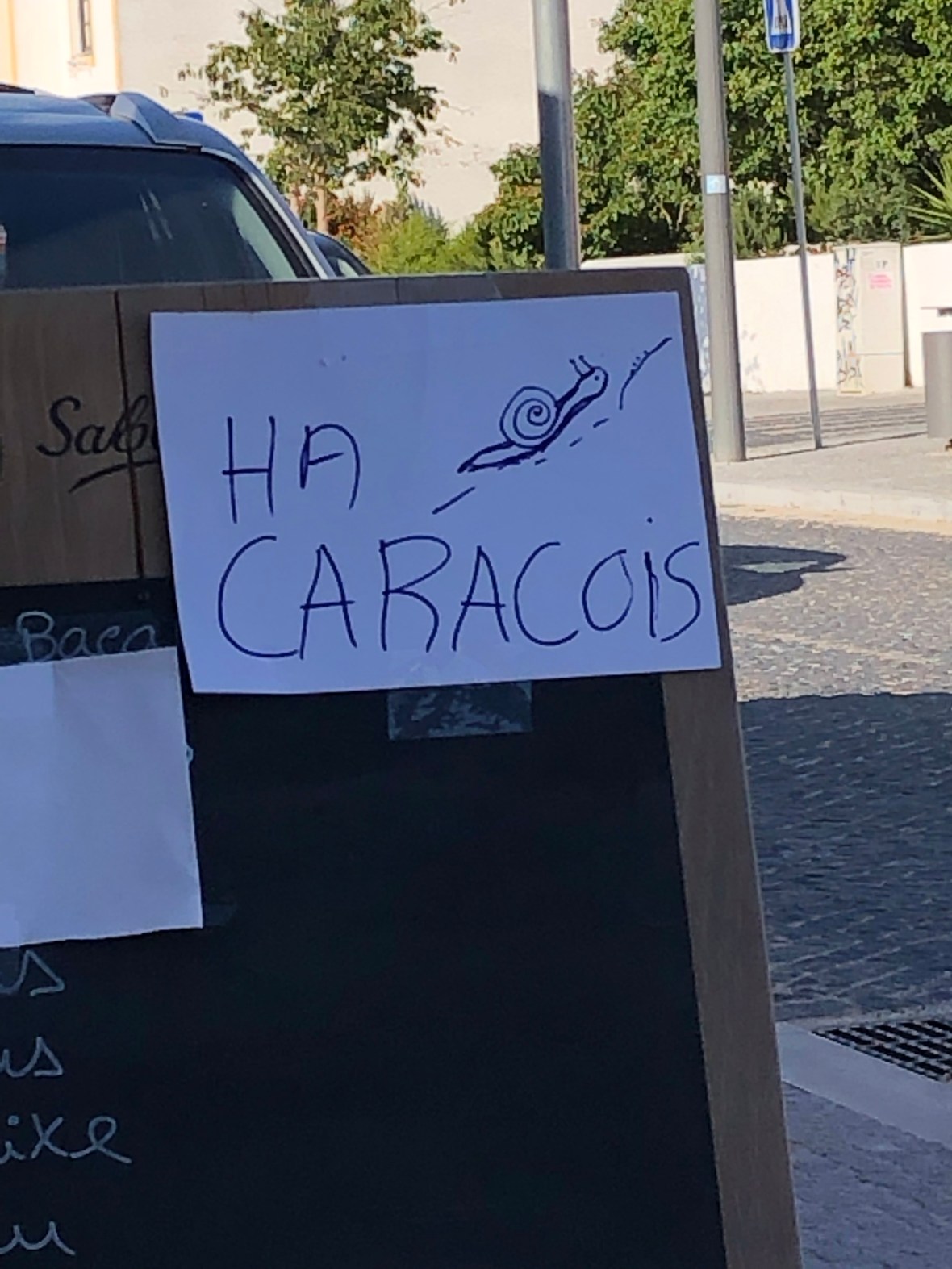
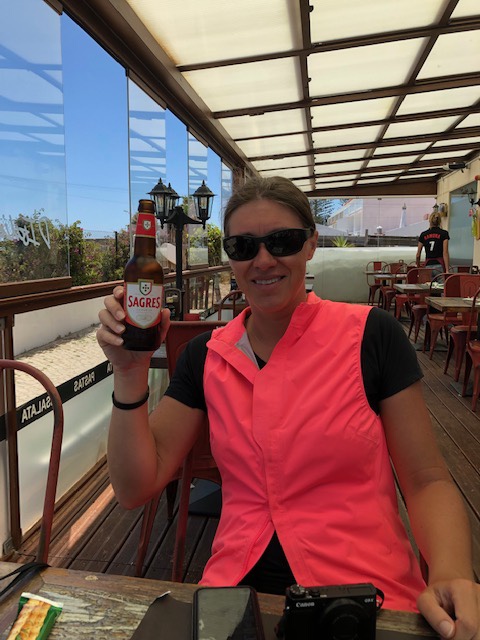
If you’ve been reading this blog, you know the drill from here on — a couple of giant beers at the nearest sidewalk cafe, and then dinner at a tiny TripAdvisor- recommended restaurant, Sabores do Mercado (according to some lists, the best of Sintra eateries, despite the relatively cheap ticket). Really, really good! A sardine starter (first time Ashley has liked them), then the two most popular mains: a codfish cake with a cornmeal base, topped with shredded codfish …
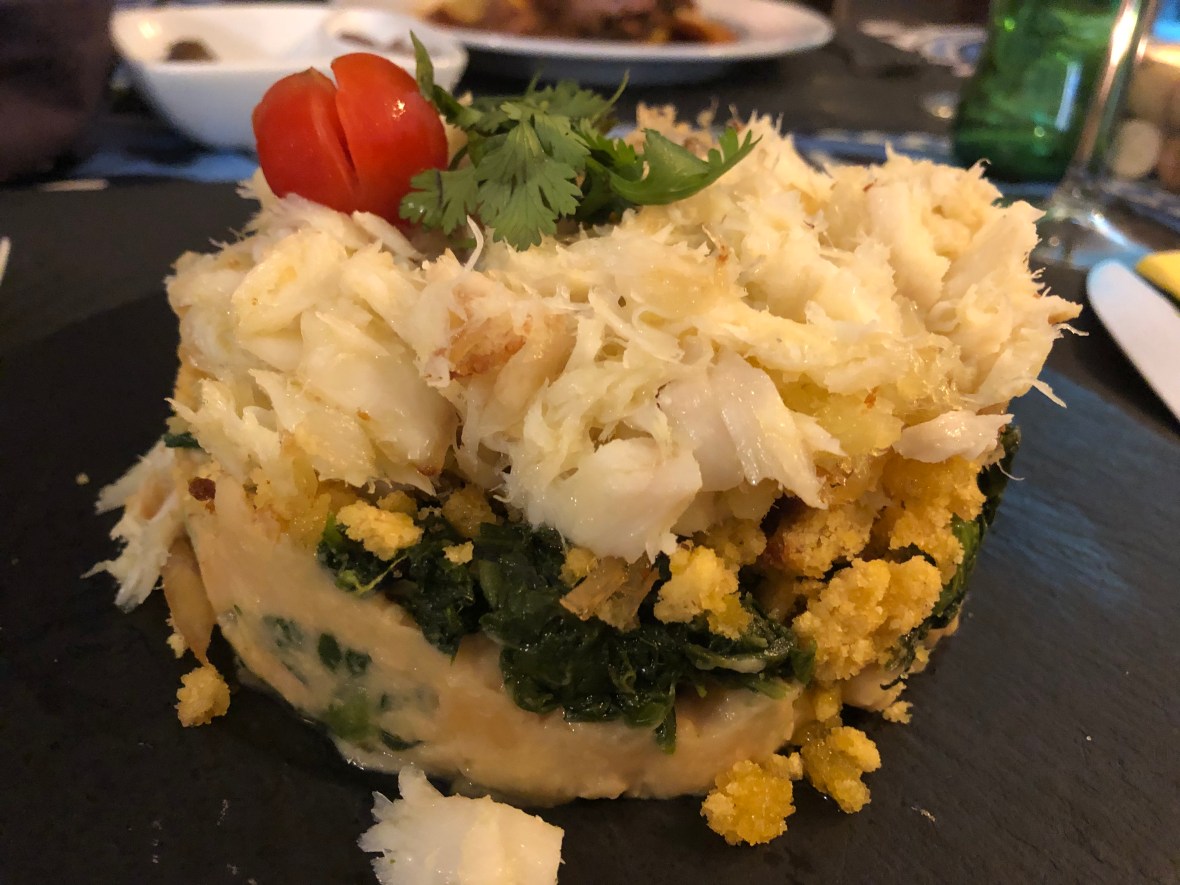
and the Iberian black pork cheeks, the latter as tender as we’ve had pork.
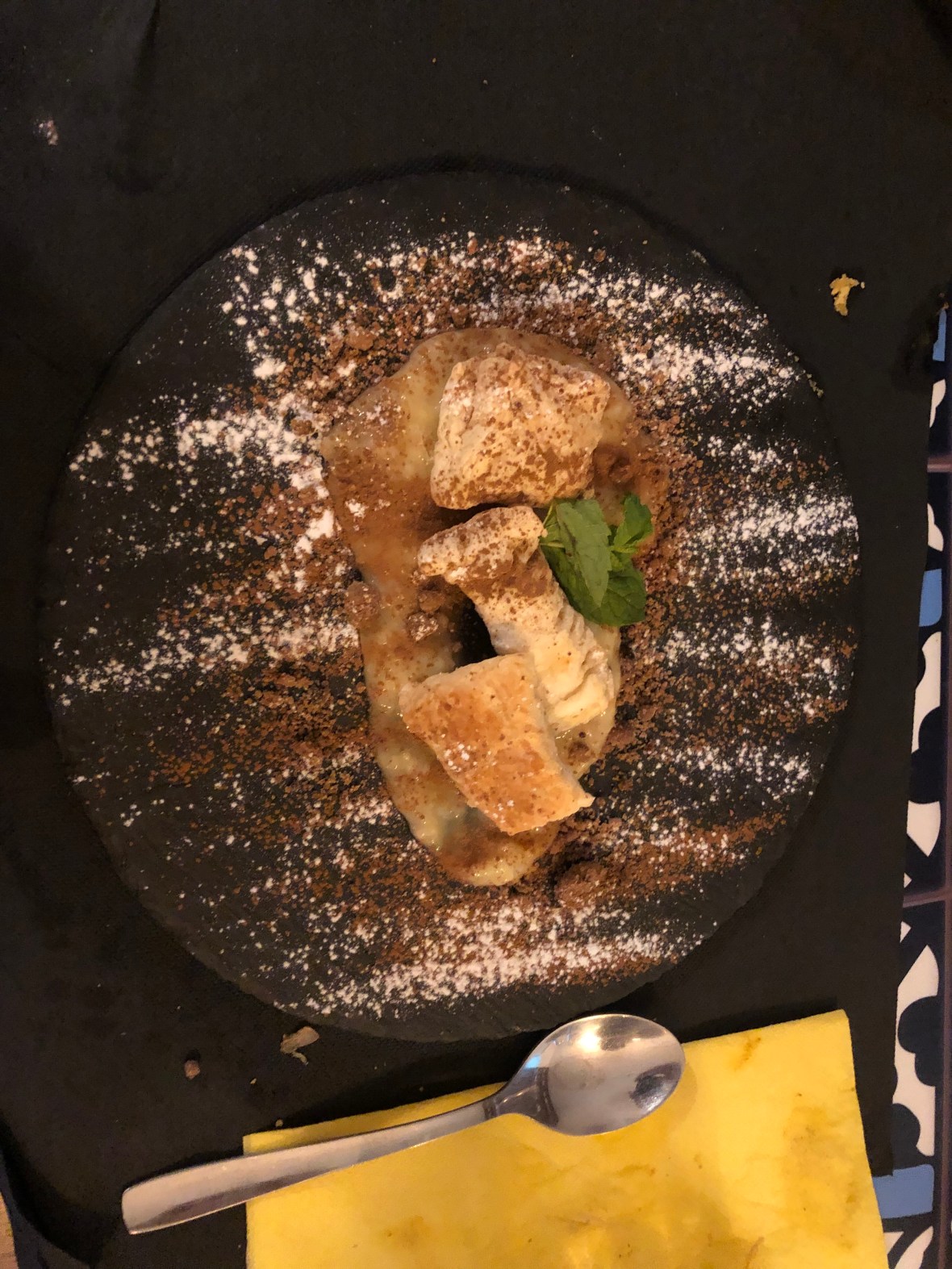
For dessert, we got the chocolate mousse and the super-local “travesseiro” (pastry-like strips with apple jam and cinnamon and sugar).
Our waiter Artur tried to talk us into moving to Sintra, giving us the names of several affordable nearby towns and writing down the phone number of his friend João, a ReMax realtor. (We’re thinking seriously about relocating to Portugal in the future, and when we told him that we had our sights set on Setúbal, he was moved to convert us: it’s cheaper there, sure, but in Sintra we have the mountains as well as the sea…..)
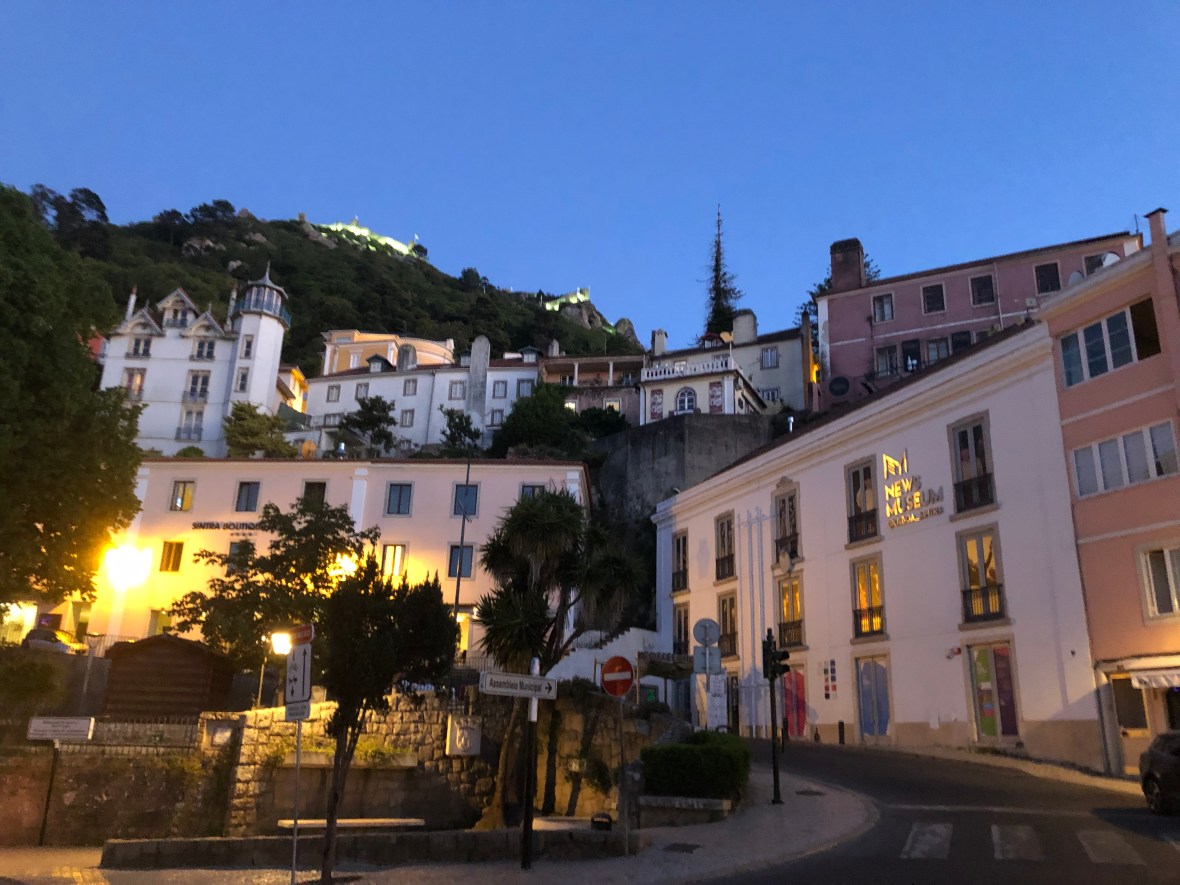
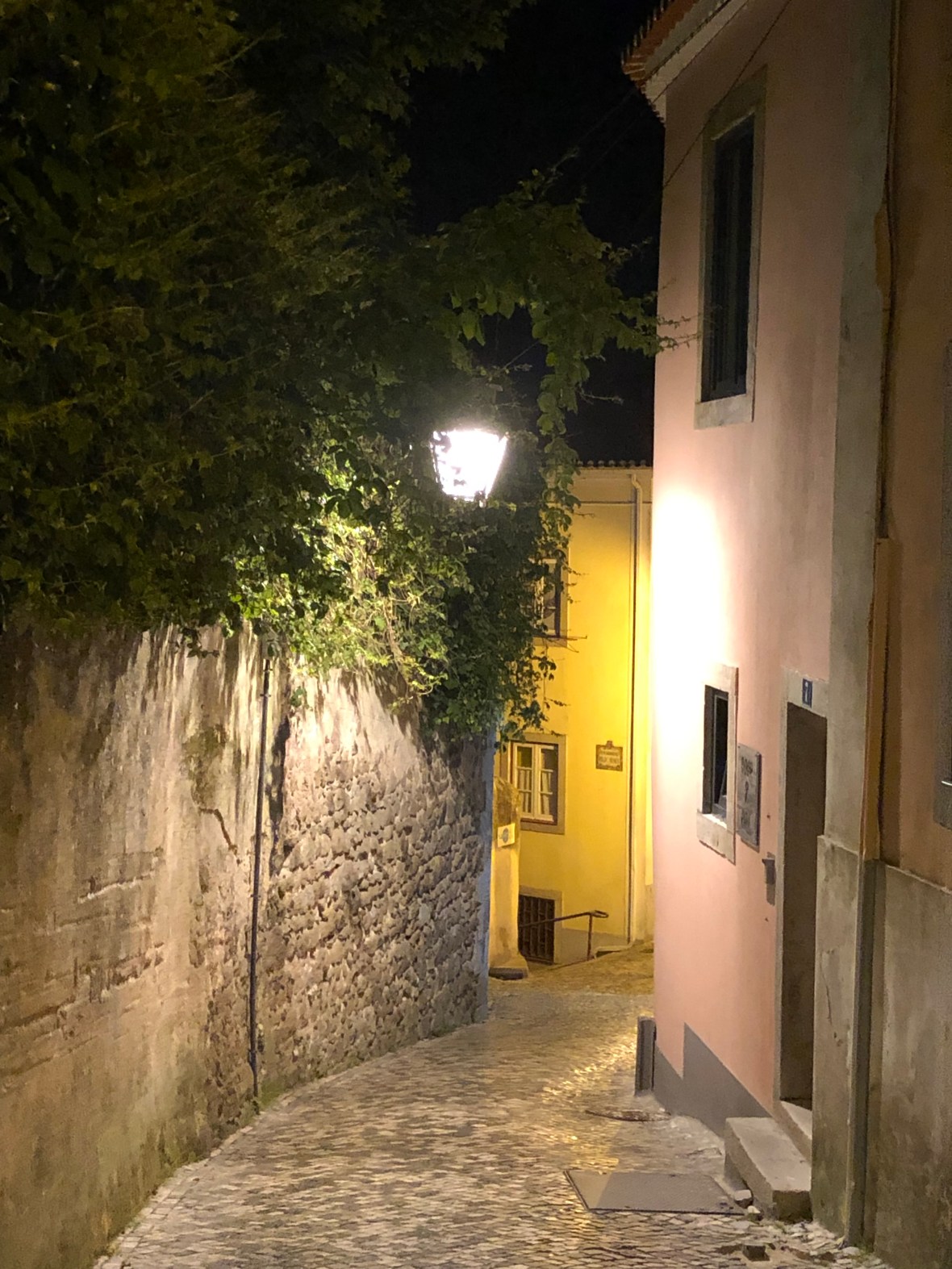
From there, we walked into the old town, where we found a bar the guidebook hails as a Sintra mainstay. Comfortable couches, the walls lined with drawings of major American and British musicians, and at that hour totally deserted.
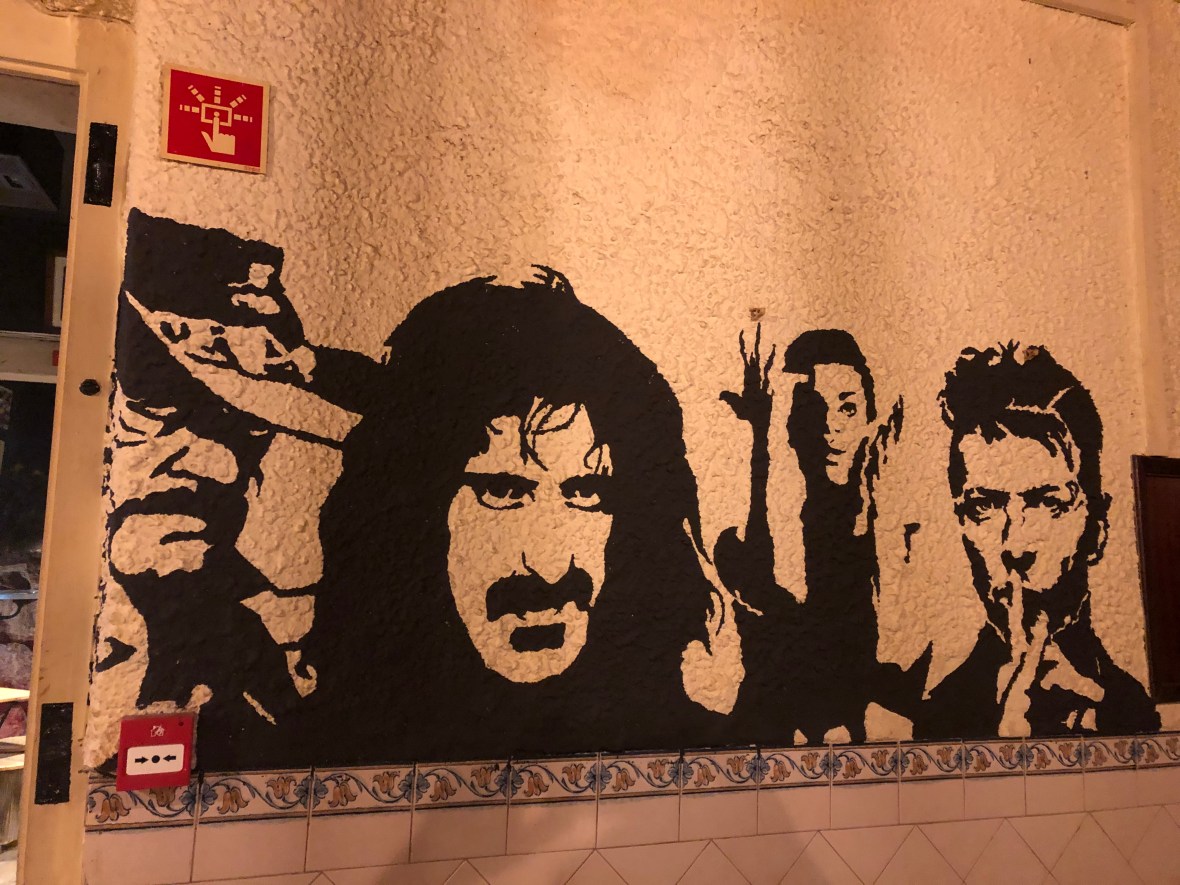
We watched the end of a UK football match over wine and water, and only as we left (10pm?) did any other patrons start to wander in, just getting ready to party as we went back to our blissful hotel to sleep, for the first time in seven days knowing we wouldn’t have climb back in the saddle the next morning. We looked forward to a day of sightseeing in Sintra, which Lord Byron once described as “a glorious Eden.”
Our final day totaled 54 miles, with 3,382 feet of climbing.
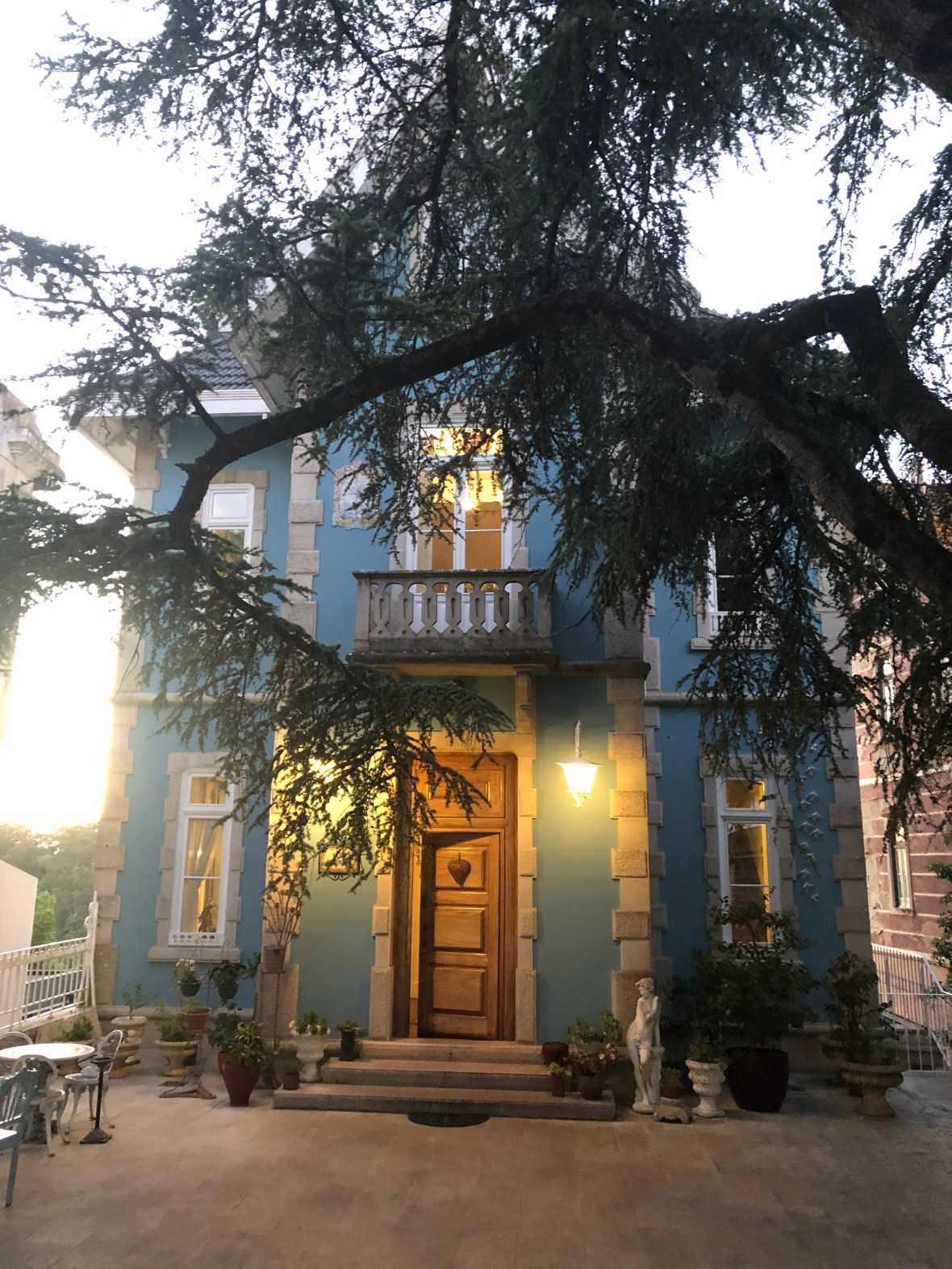
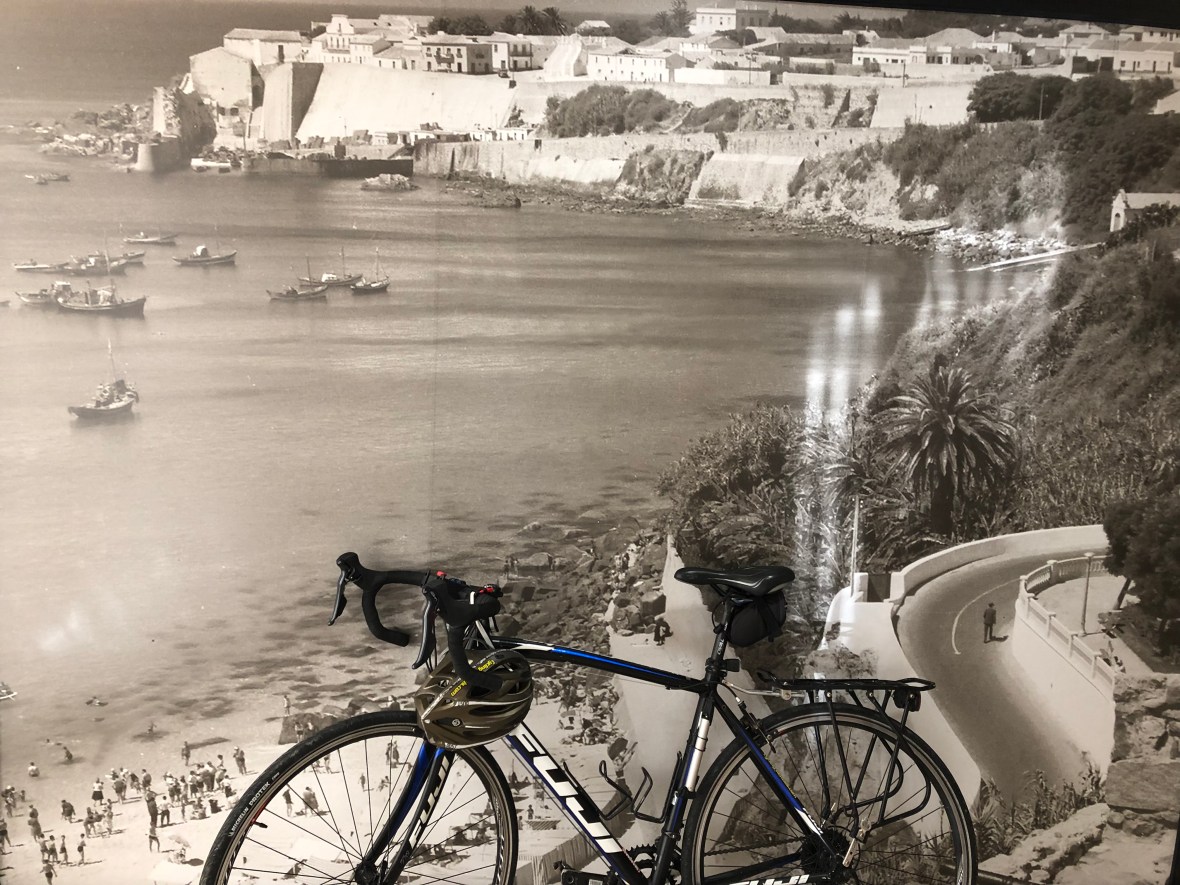
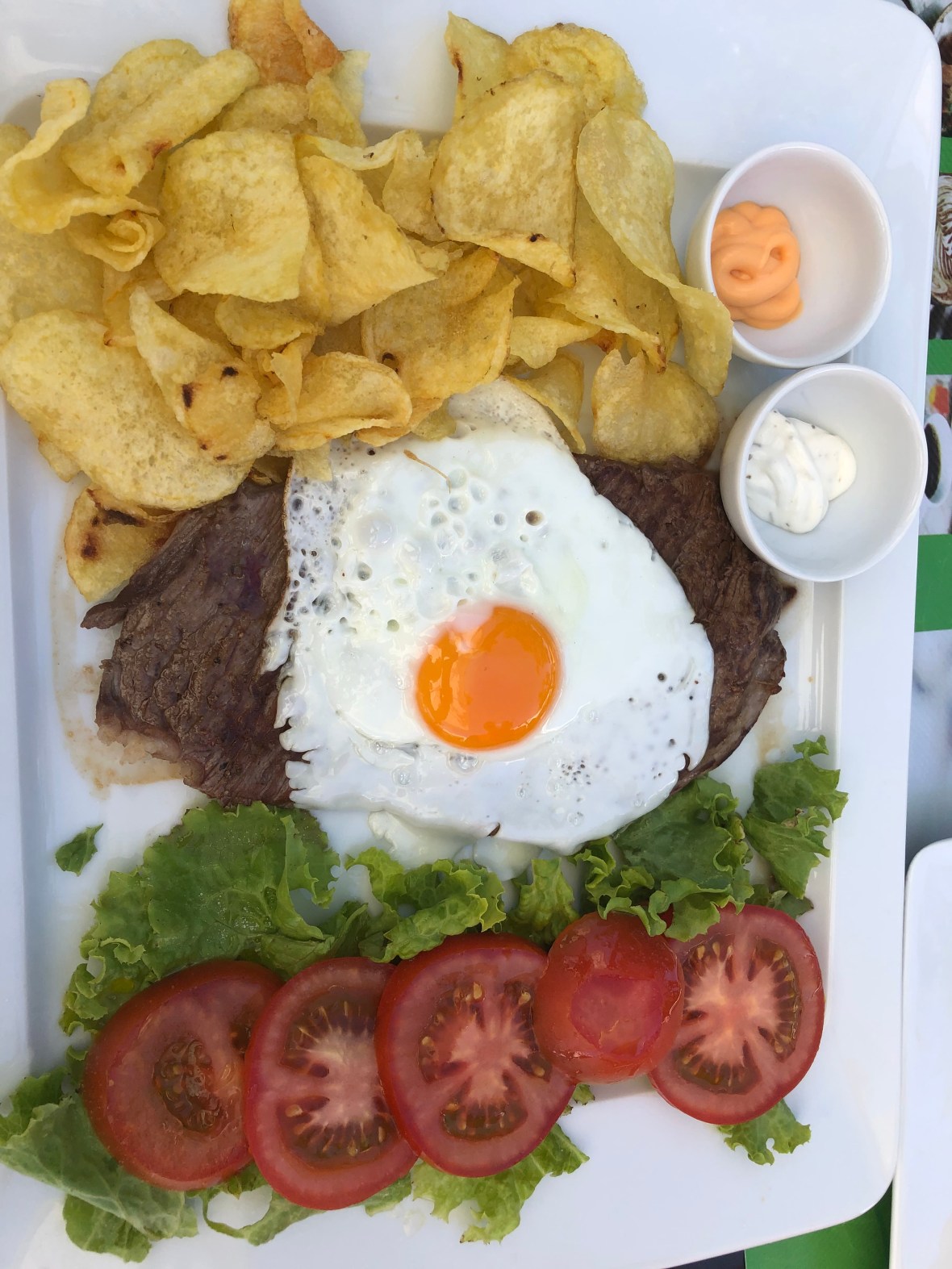
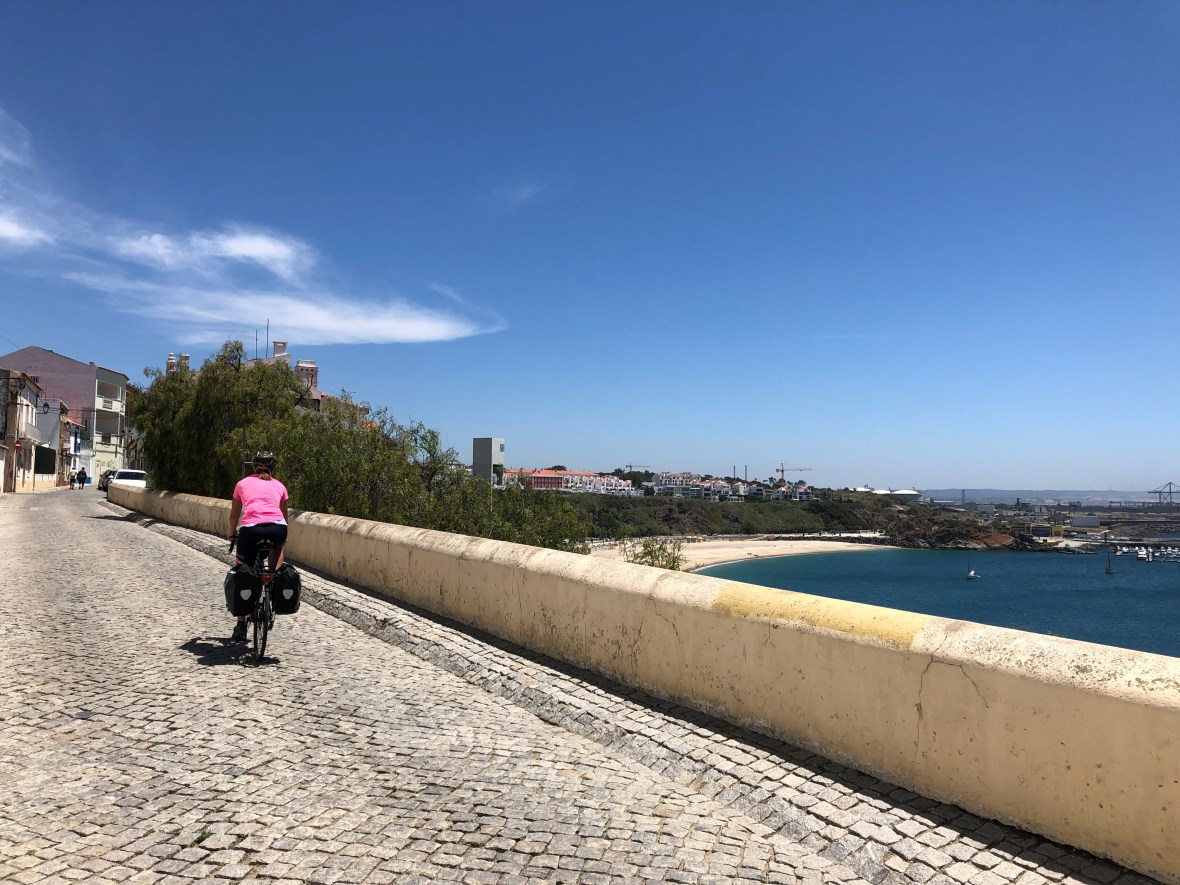
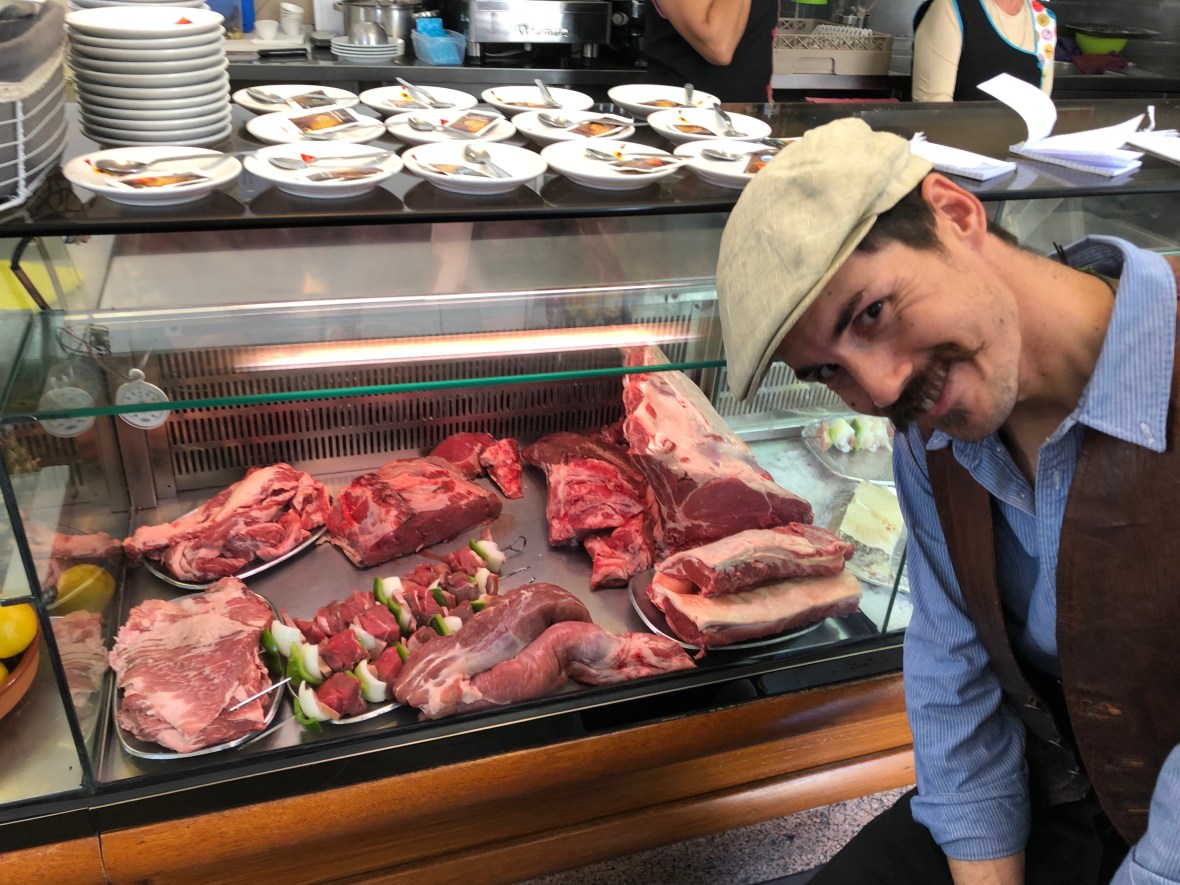
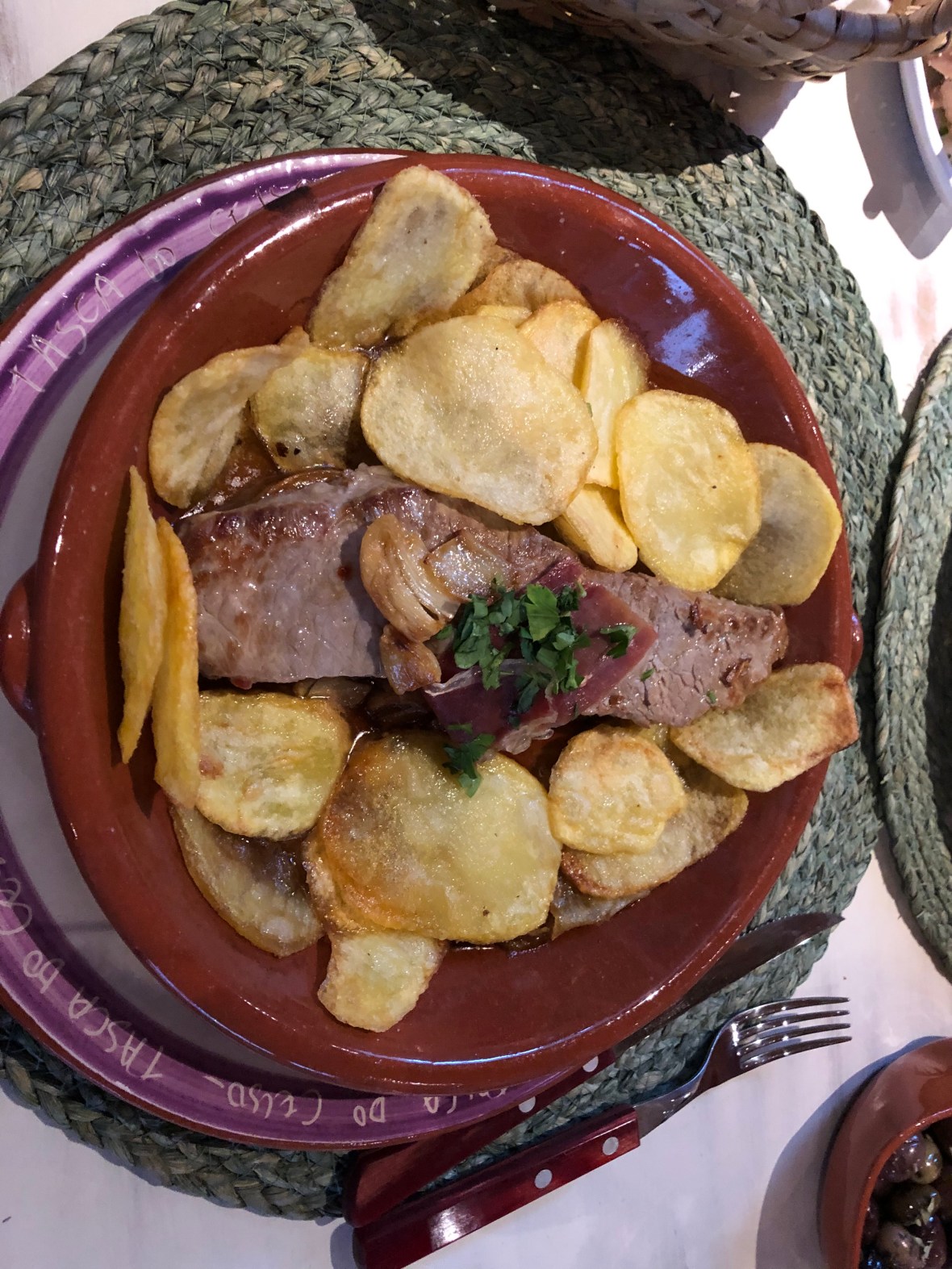
 It’s also about a 40-minute drive to the Lisbon airport, so should we ever actually decide to relocate abroad—our long-term plan—this would be a reasonable choice for those who want easy access to international connections….. Plus, we’d be able to bicycle back to Sines for our friend José’s black pork and perfectly grilled sirloin, probably the most mouth-watering and memorable meal of the trip, and that’s awfully tempting.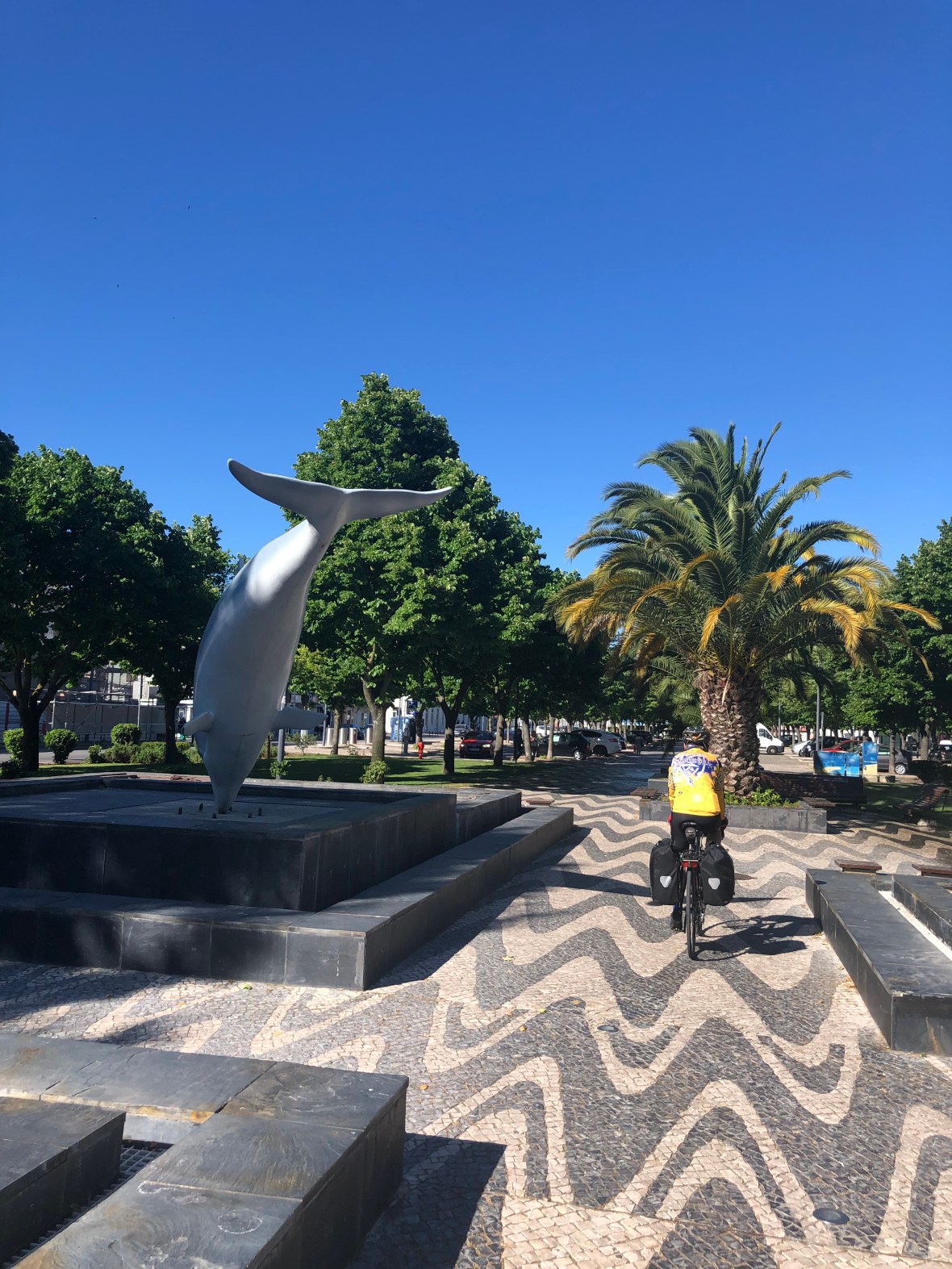





 Ashley & David on Tour