
“Hello, Marshall!”, called a cyclist riding in the opposite direction from us—or at least that’s what it sounded like. Ashley’s been posting photos on her Instagram account, on the theme of both #cycling and #Portugal, and we wondered…. More likely than not, “Marshall” is what some Portuguese cyclists’ greeting sounds like…..
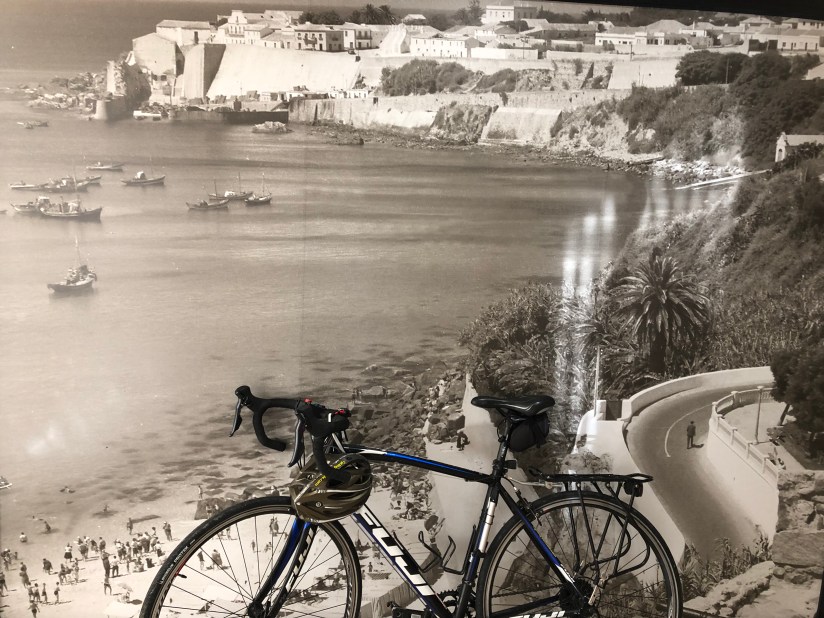
Leaving Sines this morning, after another underwhelming hotel breakfast, the cobblestone streets of the old town quickly gave way to a rural road heading north through rolling hayfields and small villages, each with its café/restaurant as a sort of local civic center and, for us, lifesaving station when we need a cold sparking water, and bag of potato chips. Our maps didn’t show much definite civilization ahead, and by 10am we were wondering if lunch was going to be a possibility. The road dipped and curved, its surface deteriorating rapidly, until just as it practically became gravel, we came upon an entrance ramp to a high-speed divided highway.
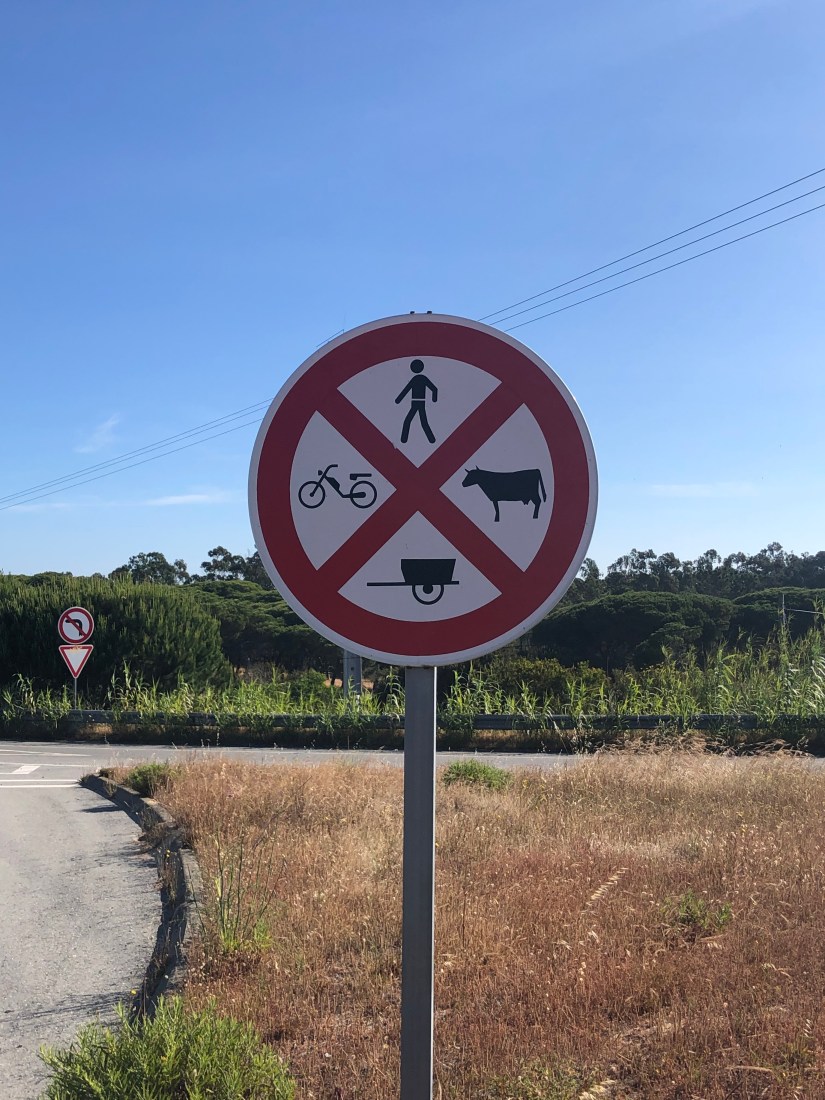
Despite the “No Bikes” sign (Ashley pointed out that technically it implied “No Unattended Bikes”) we rolled down the ramp and along well-maintained shoulders on a not-very-busy major artery.
Then, eight or nine miles later, it was as if the Portugal Department of Transportation ran out of money. The major road abruptly turned into a minor two-lane road, and so we continued north along another quiet country byway again. There was very little traffic on this two-lane rolling road, often so straight we could see two or three gentle up-and-downs ahead.
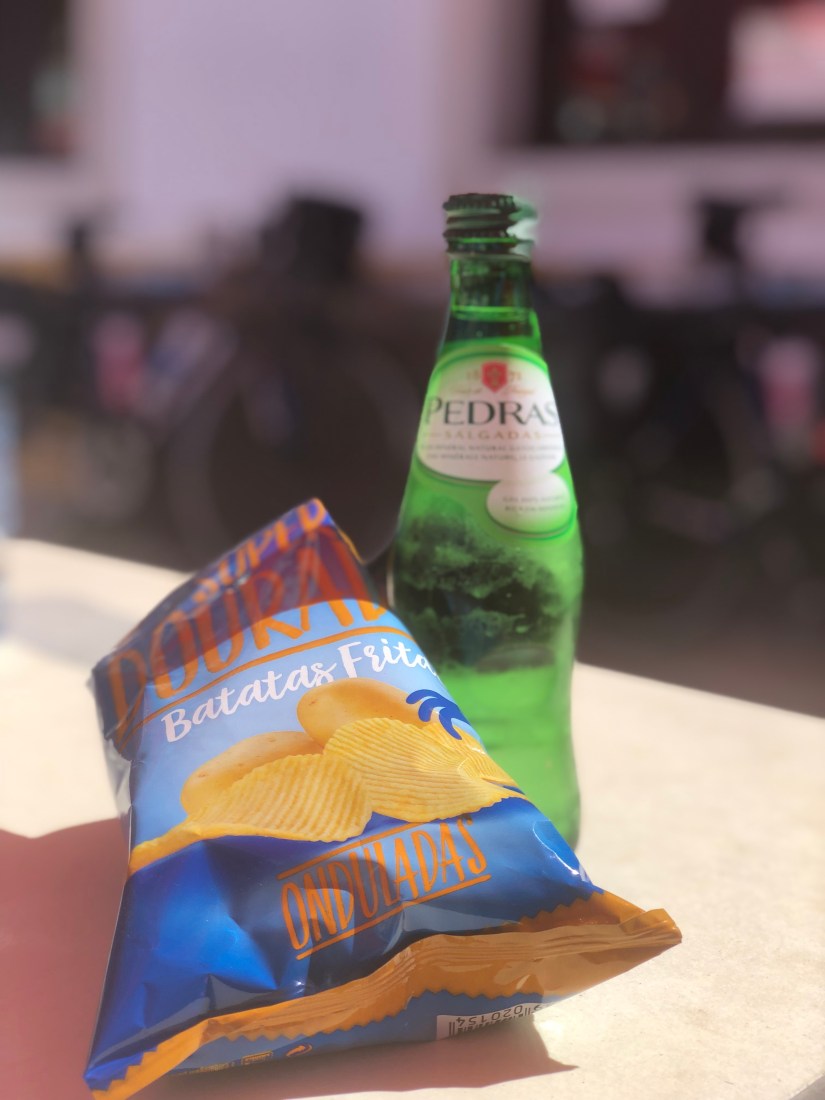
Potato chips and waters at Vila Nova de Santo Andre, and same again (later in the day) in Carvalhal, with a Coke and pastel de nata for David, where we also had to fend off an aggressive hawker, a young man peddling leggings for the señorita. Tenemos todo que necesitamos, said David to him, pointing towards our bulging panniers. It wasn’t Portuguese, but it seemed to work.
The roads were gentle and quiet, the headwind not too bad, and we quickly covered the 36 miles or so to lunch in the relatively big town of Comporta, just as we entered a peninsula bookended by the Rio Sado to the east and the mighty Atlantic to the west.
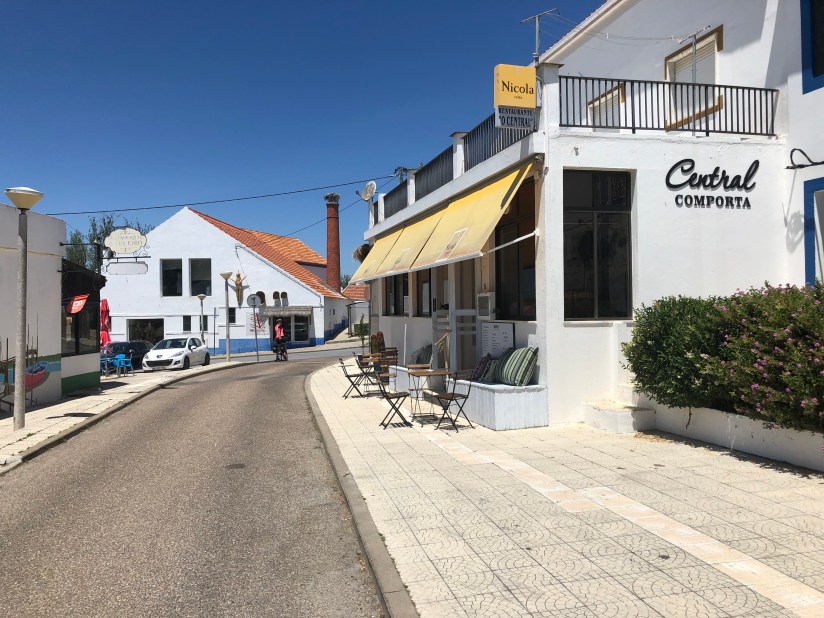
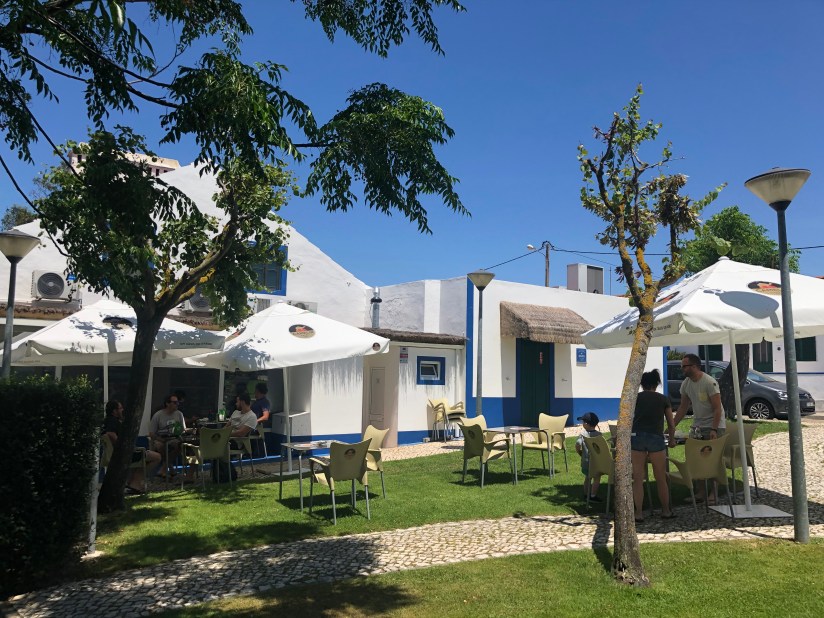
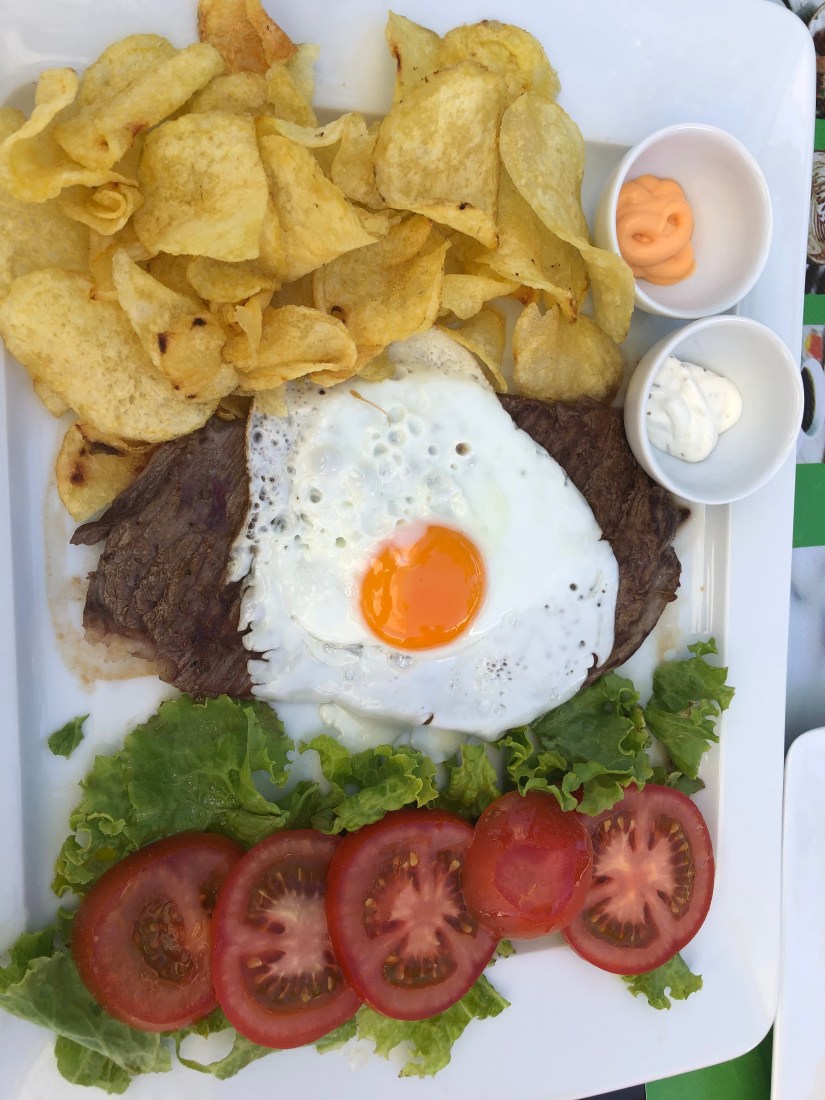
We took a hard right off the main avenue to find the town center and an attractive café. The first one we saw looked perfect, half a dozen small tables spread across a lawn, mostly with, by this point, much-appreciated shade. We were escorted inside by a no-nonsense, no-English waitress, who tapped on a poster on the door bearing images of three meal options, and then gestured toward the pastry case. We asked for two of the first image, something like steak-and-eggs. That turned out to be a very tender cut of meat with a perfectly fried egg over medium on top, accompanied by yet more potato chips (our third dose of the day) and a salad of lettuce and tomatoes. This plus two fizzy waters apiece left us ready for the last stretch.
By the way, in case you were wondering, the bikes are holding out well for the most part. Ashley ‘s seems to have self-tuned by day 3 or so,` but David’s isn’t shifting quite as smoothly, and both sets of brakes — well, the brakes have never been great. In fact, when we brake on anything resembling a hill, we have to do a “Flinstone stop”:
From Comporta, it was only another eight miles to the ferry at the top of the peninsula (near Troia), but those were eight beautiful miles, with river and salt marsh views on one side and the ocean—beyond rolling hills of sand—on the other.
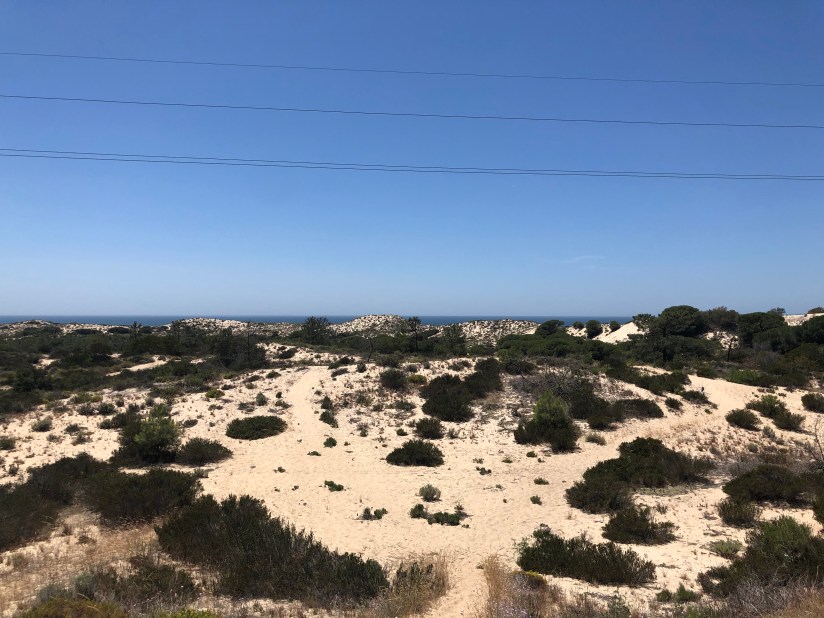
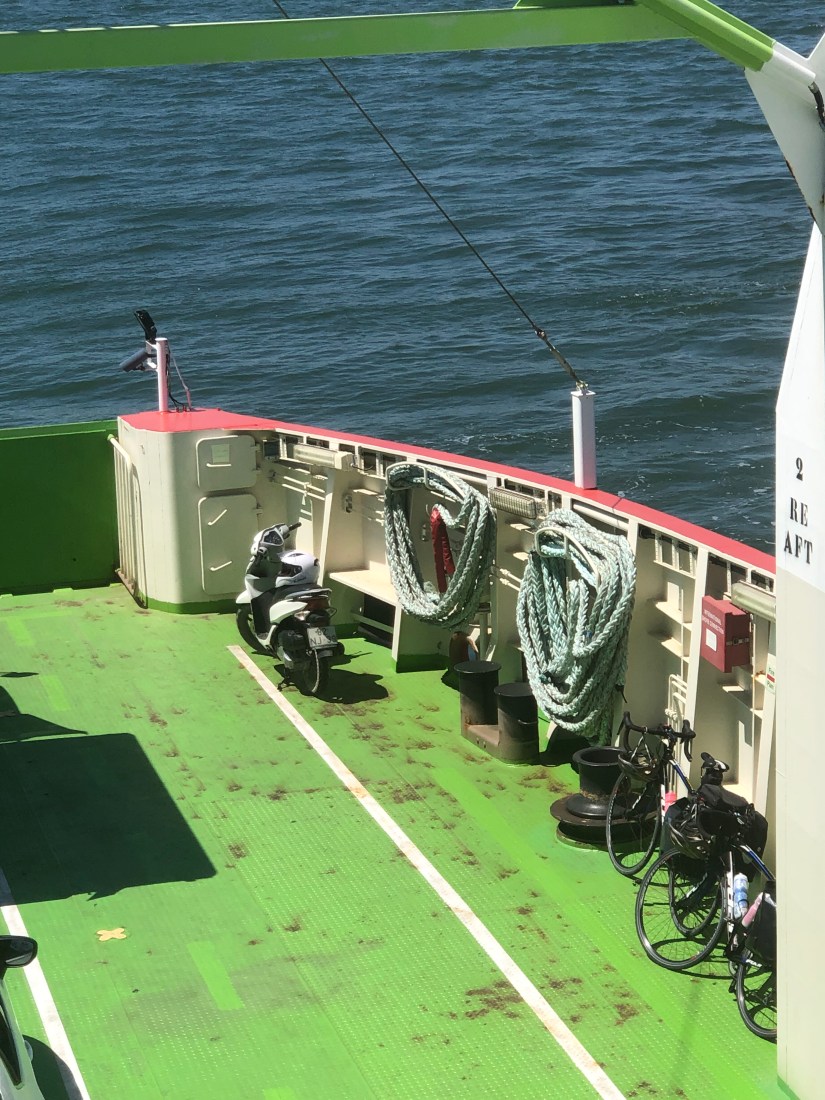
David was reminded of the New Jersey Pinelands — the scrubby pine forest, sandy soil, and views of an inlet to the right, and out to the blue Atlantic on the left. We were riding along steadily when all of a sudden it felt like someone had turned the climate control from nice and breezy and somewhat cool headwind to hot and dry headwind; it abruptly got dramatically warmer, and stayed that way. We pressed on, ever hotter and sweatier but enjoying riding along the flats in a relatively high gear, murdering the miles (as much as possible on relatively heavy bikes). The ferry landing was announced by a cluster of hotels, and we paused at the kiosk to buy our passage, then waited 45 minutes in a very basic shelter (vending machine, no beer or restrooms, only a few uncomfortable plastic chairs) for the next ferry to Setúbal.
We liked Setúbal (SHTEW-ball, we learned at check-in) right away, a bustling small (~125,000) port city which reminded us immediately of Bilbao and San Sebastián with its wide tree-lined boulevards fronted by Belle Époque apartment buildings, obvious signs of musical and artistic culture, and beautiful beaches.
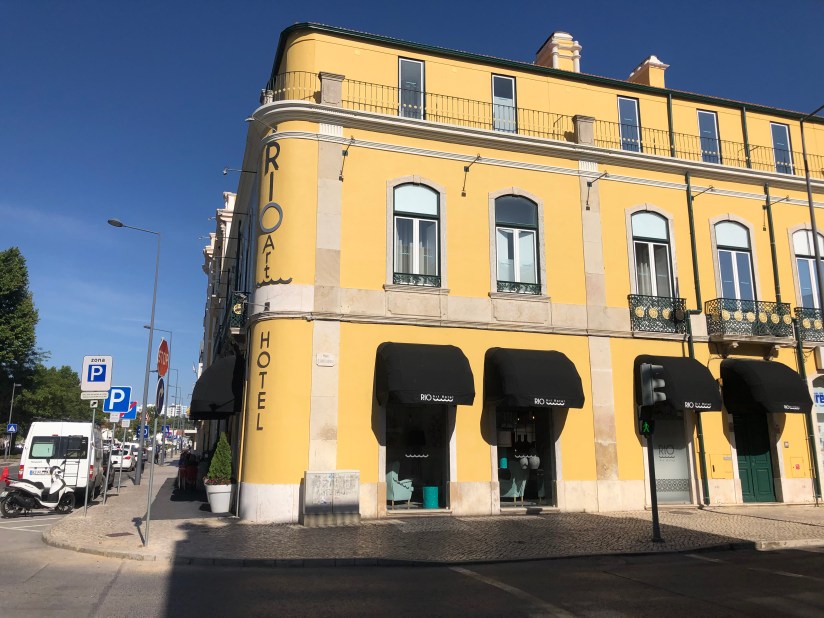
Check-in at the Hotel Rio Art couldn’t have been friendlier or more convenient, and when the desk clerk helped us stash the bikes in a storage locker and showed us to our spacious room, where wine and dessert was already laid out, she informed us, “no charge,” and gave us suggestions for nearby bars and restaurants to try. And even then, proved she wasn’t done with the Uber-hospitality by pouring us a taste of the local Muscatel (MOOSH-kah-tell) de Setúbal, a kind of sweet but not-too-sweet rosé. Clearly in the family of port, but not quite as heavy or sweet. If we weren’t on bikes, we’d buy a bottle for a future toast, when we’re back home and this whole experience seems a distant dream.

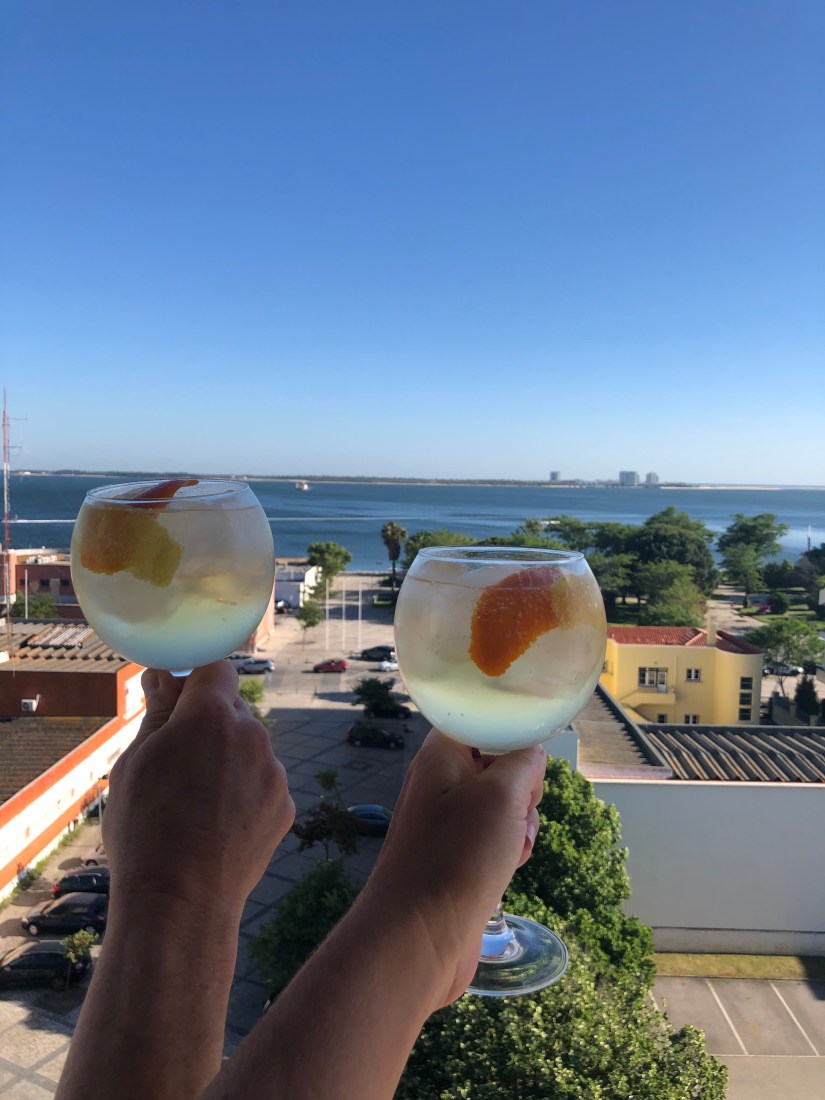
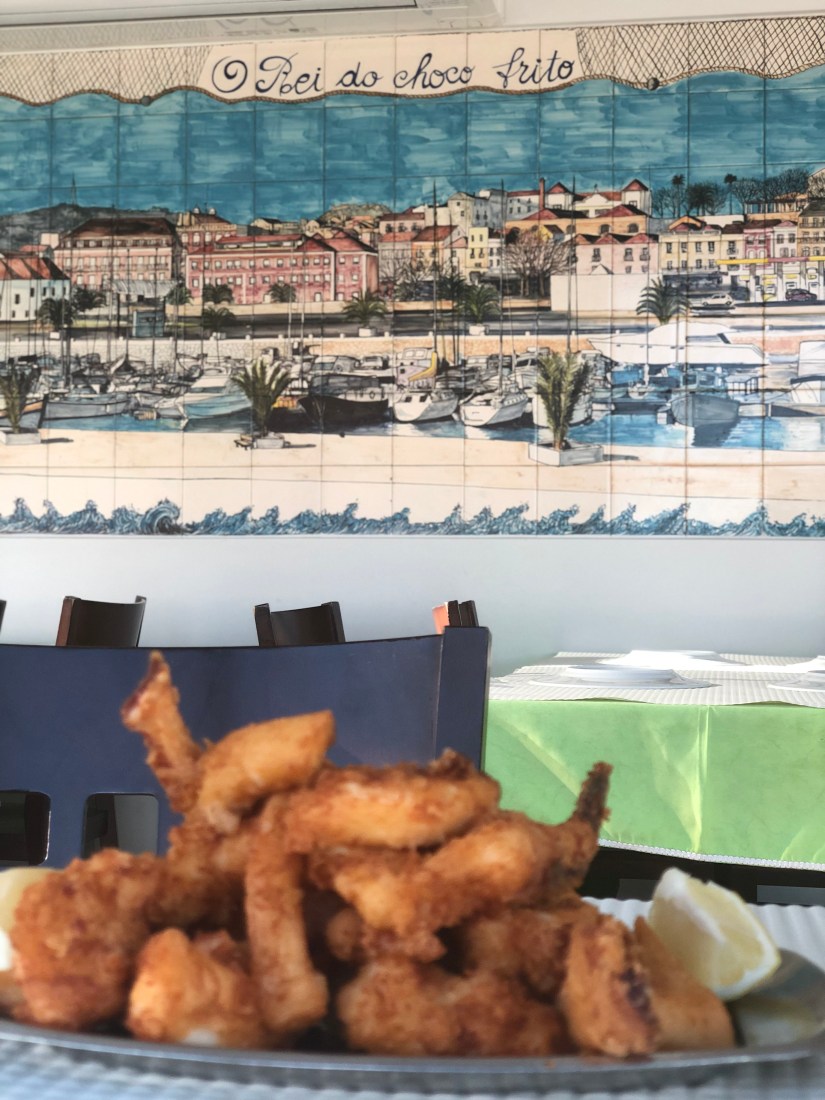
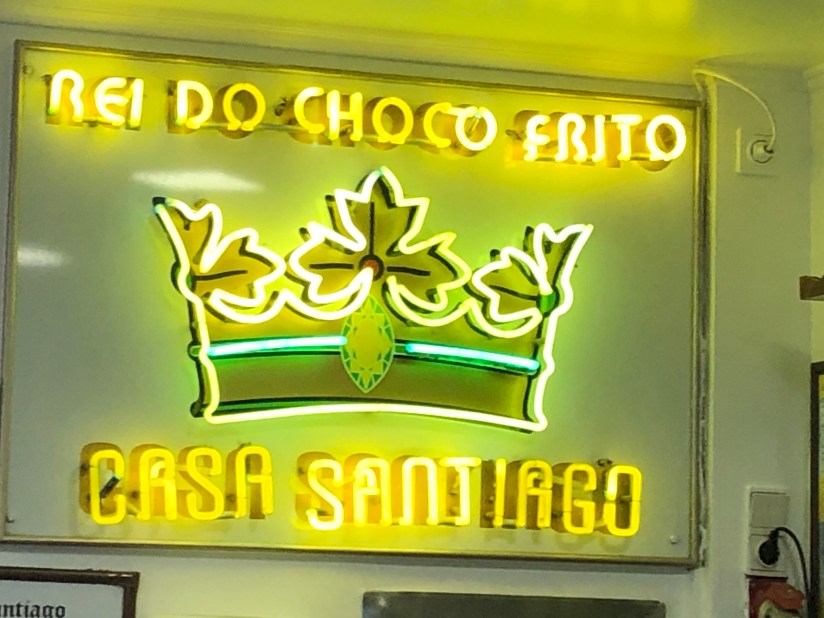
Turns out the local food specialty is something called “choco frito,” or deep-fried cuttlefish, and after a cold light beer at Rockalot beachside bar (the post-ride cool-down after a long walk away from city center) and a white port & tonic at Rooftop 61, with its panoramic sixth-floor views of Porto do Setúbal, we repaired to Casa Santiago, which bills itself “The King of Choco Frito.” (TripAdvisor reviews agree.) Kind of fast-foody in some ways, but crowded, efficient, and, thankfully, very good. The best kind of no-frills dining: a pile of said local speciality, plus a plate of really tasty fries, plus a plate of lettuce and salty tomatoes.
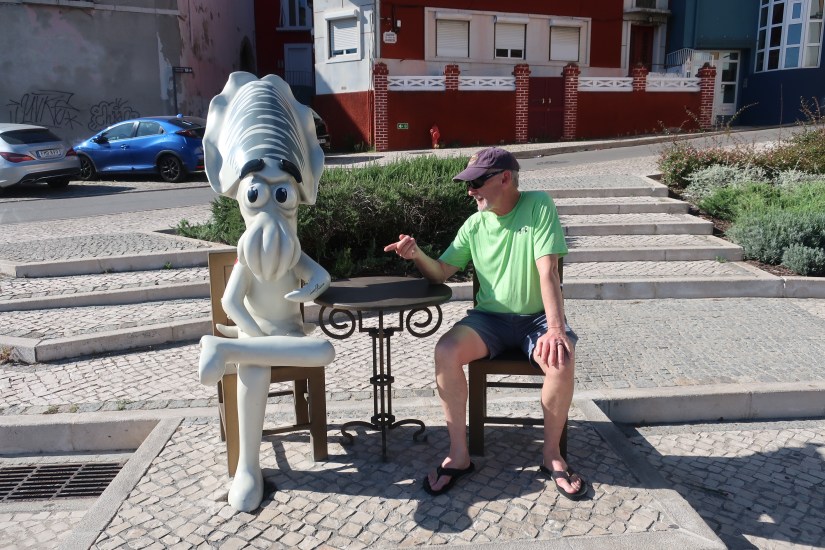
From there, we strolled the old town, settling on a small café in a square of several cafés—populated by locals, it seems, including young boys playing “football”—where we could sit and finish the blog and write more postcards.
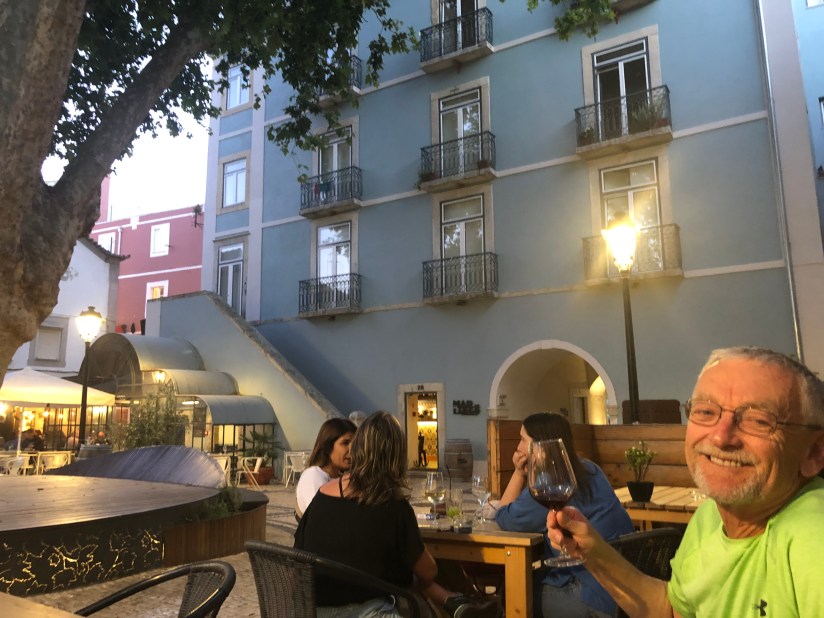
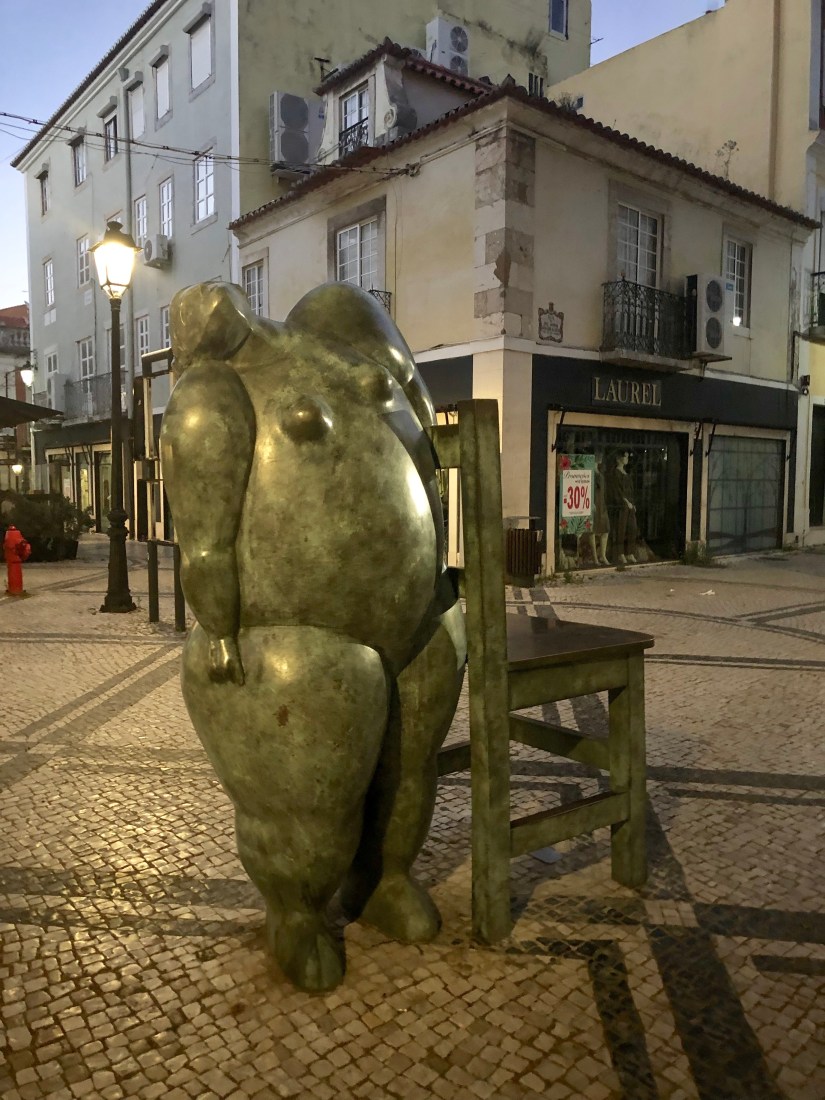
We’re very taken with Setúbal, which has some of the best features of Portugal (amazing cheap seafood and wine, narrow cobblestone streets, artful graffiti, old colorful buildings) and is the perfect size, not as overwhelming as Lisbon and nowhere near as sleepy as the Algarve towns we know a little better now.
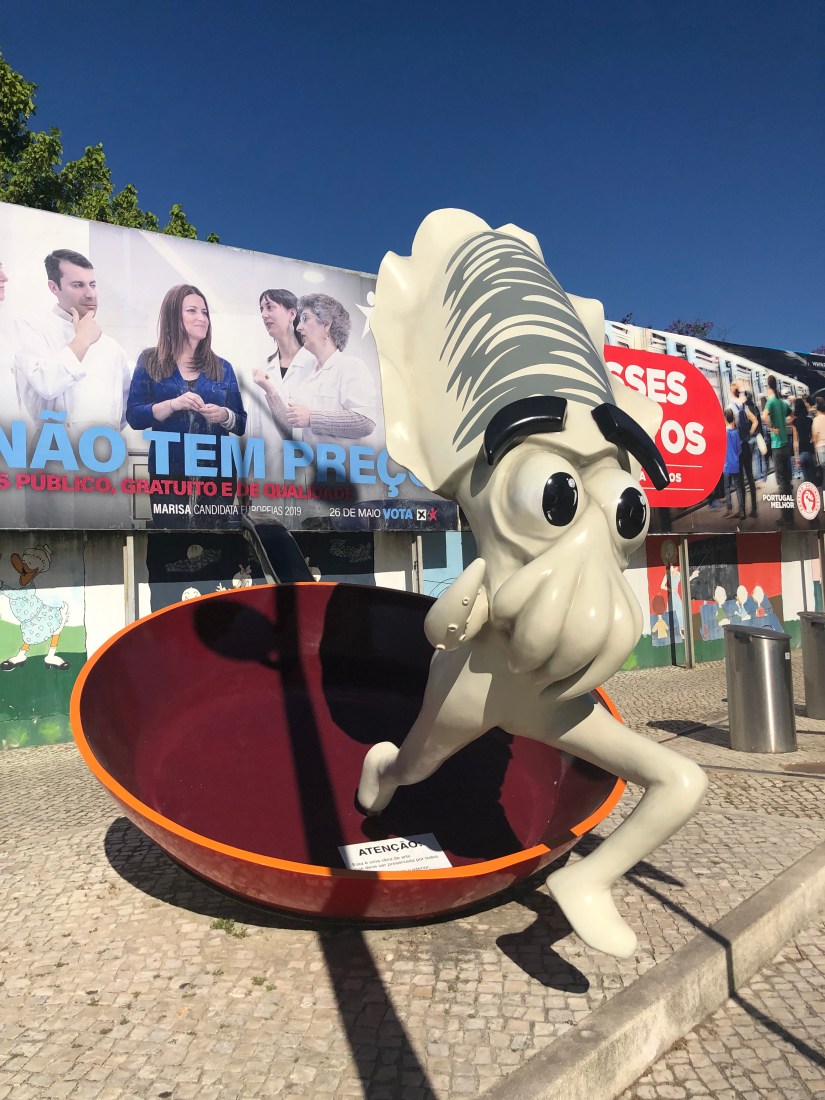
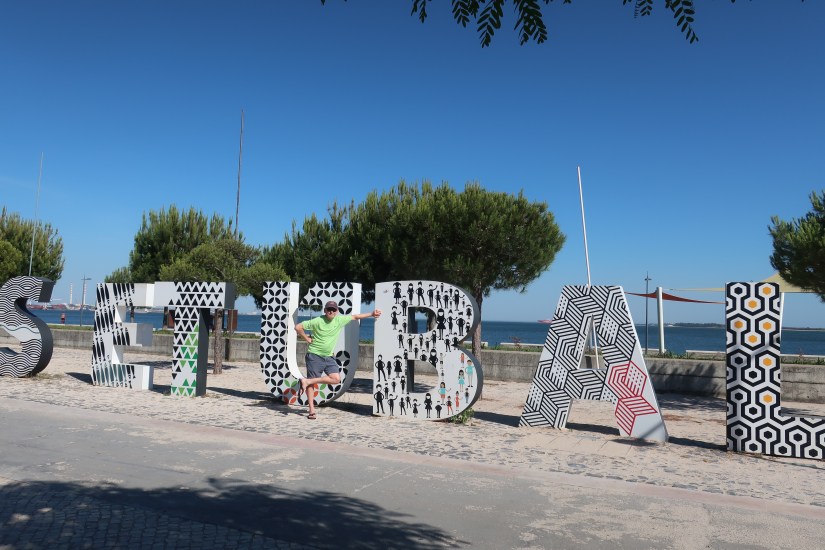 It’s also about a 40-minute drive to the Lisbon airport, so should we ever actually decide to relocate abroad—our long-term plan—this would be a reasonable choice for those who want easy access to international connections….. Plus, we’d be able to bicycle back to Sines for our friend José’s black pork and perfectly grilled sirloin, probably the most mouth-watering and memorable meal of the trip, and that’s awfully tempting.
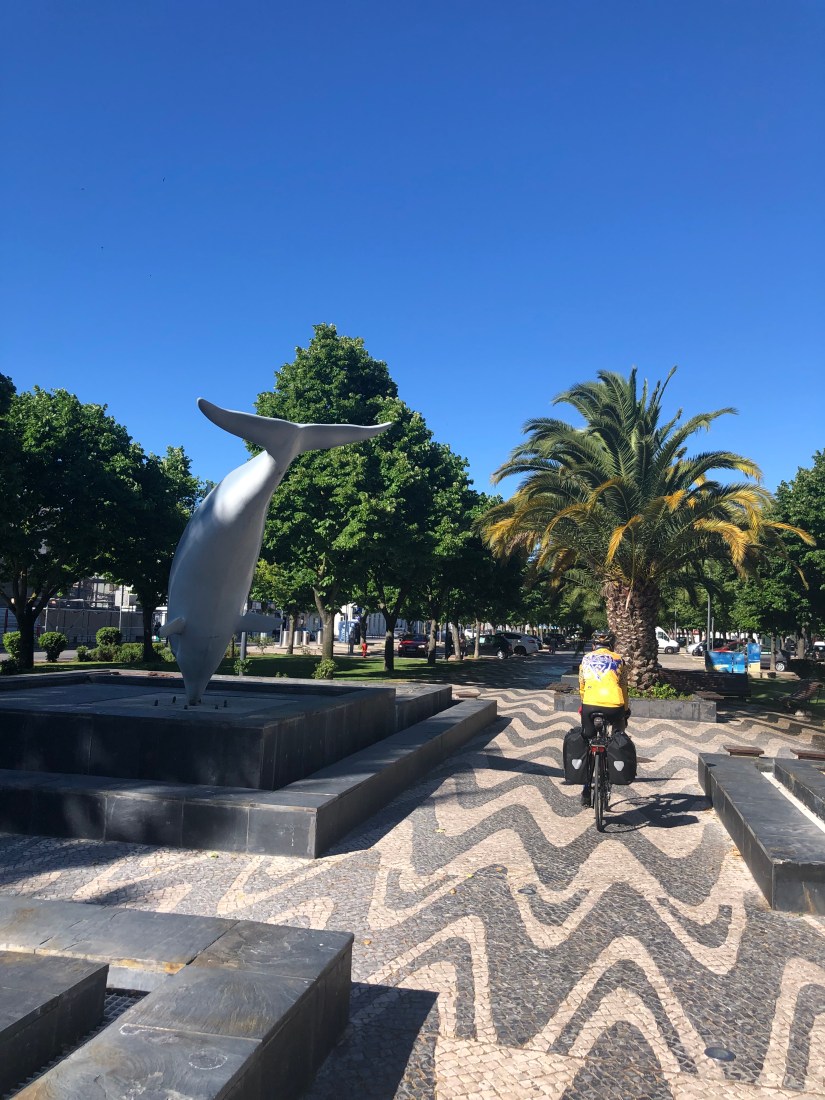
Today might have been the most pleasant riding day so far, despite a little criminal highway time…. All told, 45.67 miles with a gentle 1,314’ of climbing. Tomorrow is the last riding day, but we’re consoling ourselves by planning future tours: from Poland to Croatia? From Trondheim to Santiago de Compostela? From Cairo to Cape Town? With every touring day, we’ve become more and more sure that the best way to see the world is from the saddle of a sturdy bike, 12-14 miles per hour….

 Ashley & David on Tour
As before, thoroughly enjoying your excursion and tales thereof. And so glad you are doing the riding, not me!
LikeLike